

What is an Air Cooling Handheld Welding Machine?
2026-01-09
Article Summary:
This article explains what an air cooling handheld welding machine is, why it matters for modern metalworking, and how this technology solves common customer challenges. It covers core features, operational benefits, performance aspects, practical applications, comparison with traditional welding tools, and answers key questions buyers frequently have when evaluating or purchasing such a device. The goal is to provide clear, actionable guidance for professionals and businesses considering an air cooling handheld welding solution.
Introduction
Metalworking professionals, fabricators, and service technicians often struggle with welding processes that are cumbersome, immobile, or require extensive setup. Traditional welding tools with bulky cooling systems and complex operation can delay work and increase training costs. Air cooling handheld welding machines address these issues by delivering a compact, portable, and efficient solution that meets the needs of workshops and fieldwork alike.
What Is an Air Cooling Handheld Welding Machine?
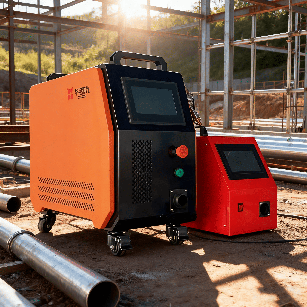
An air cooling handheld welding machine is a portable laser welding device that uses an air-based cooling system rather than an external water chiller. This design significantly reduces the size, weight, and maintenance requirements of the equipment, making it more accessible for on-site tasks and flexible metal processing applications. Unlike water-cooled systems, the air cooling approach streamlines operation and enables rapid deployment with fewer support components. :contentReference[oaicite:0]{index=0}
Key Features and Benefits
- Compact and Portable: Without a large water chiller, the system weighs less and can be easily transported between job sites. :contentReference[oaicite:1]{index=1}
- Air-Cooled System: Eliminates the need for coolant, reducing downtime and maintenance. :contentReference[oaicite:2]{index=2}
- Multi-Function Capability: Many models support welding, cutting, and surface cleaning in a single device. :contentReference[oaicite:3]{index=3}
- Low Heat Distortion: Laser welding produces minimal thermal impact, preserving the integrity of the workpiece. :contentReference[oaicite:4]{index=4}
- High Precision: Laser beam control enables tight, clean seams on metals such as stainless steel, aluminum, and carbon steel. :contentReference[oaicite:5]{index=5}
- Fast Setup and Operation: Quick start-up and straightforward control interfaces reduce training time. :contentReference[oaicite:6]{index=6}
Technical Specifications Overview
| Parameter | Typical Range | Notes |
|---|---|---|
| Laser Power | 800W – 1500W | Dependent on model selection. :contentReference[oaicite:7]{index=7} |
| Cooling Method | Air Cooling | No external chiller needed. :contentReference[oaicite:8]{index=8} |
| Material Compatibility | Carbon Steel, Stainless Steel, Aluminum | Typical for most handheld laser welders. :contentReference[oaicite:9]{index=9} |
| Operation Mode | Continuous or Pulse | Dependent on control interface and settings. :contentReference[oaicite:10]{index=10} |
| Weight | <30 kg (system) | Varies by configuration. :contentReference[oaicite:11]{index=11} |
Real-World Use Cases
- Metal Fabrication Workshops: For joining thin to medium thickness metals with minimal preparation.
- Field Repair and Maintenance: Quick setup and operation for on-site welding jobs in automotive repair, construction maintenance, and industrial service. :contentReference[oaicite:12]{index=12}
- Small Business Operations: Ideal for workshops with limited space or variable workflow demands. :contentReference[oaicite:13]{index=13}
- Prototyping and Custom Work: Precision laser welding suits bespoke fabrication and prototype assembly.
How to Choose the Right Air Cooling Handheld Welding Machine
When selecting a machine, consider the following criteria:
- Laser Power Requirements: Assess your typical material thickness and choose a model with adequate power. :contentReference[oaicite:14]{index=14}
- Portability Needs: If frequent movement is needed, opt for a lightweight design with integrated components. :contentReference[oaicite:15]{index=15}
- Control Interface: A user-friendly interface with presets can reduce training overhead. :contentReference[oaicite:16]{index=16}
- Service and Support: Evaluate warranty, spare parts availability, and after-sales support from the manufacturer. :contentReference[oaicite:17]{index=17}
Frequently Asked Questions
Q1: How does air cooling compare to water cooling?
A: Air cooling eliminates bulky water chillers, reducing machine footprint and maintenance needs, making the system easier to operate and transport. :contentReference[oaicite:18]{index=18}
Q2: Can these machines handle all metals?
A: They are optimized for common fabrication metals such as carbon steel, stainless steel, and aluminum. Material thickness and alloy type will influence performance. :contentReference[oaicite:19]{index=19}
Q3: Are they suitable for field use?
A: Yes. The compact air-cooled design makes them excellent for on-site repairs and mobile welding tasks. :contentReference[oaicite:20]{index=20}
Conclusion
Air cooling handheld welding machines present a practical evolution in laser welding technology, especially where mobility, ease of use, and reduced maintenance are priorities. Businesses that adopt this technology can achieve cleaner welds with less setup time and lower operating burdens, while expanding their capacity for precision work. If you are looking for a reliable and flexible welding tool, consider solutions from Huawei Laser Equipment Manufacturing Co., Ltd., backed by professional manufacturing quality and global support.
Contact us: For more information, pricing, and customized solutions for your operations, visit the product page or reach out directly to our team to request a quote and expert guidance.