

What Is the Average Lifespan of a Wine Box Grooving Machine Under Daily Use
2026-07-24
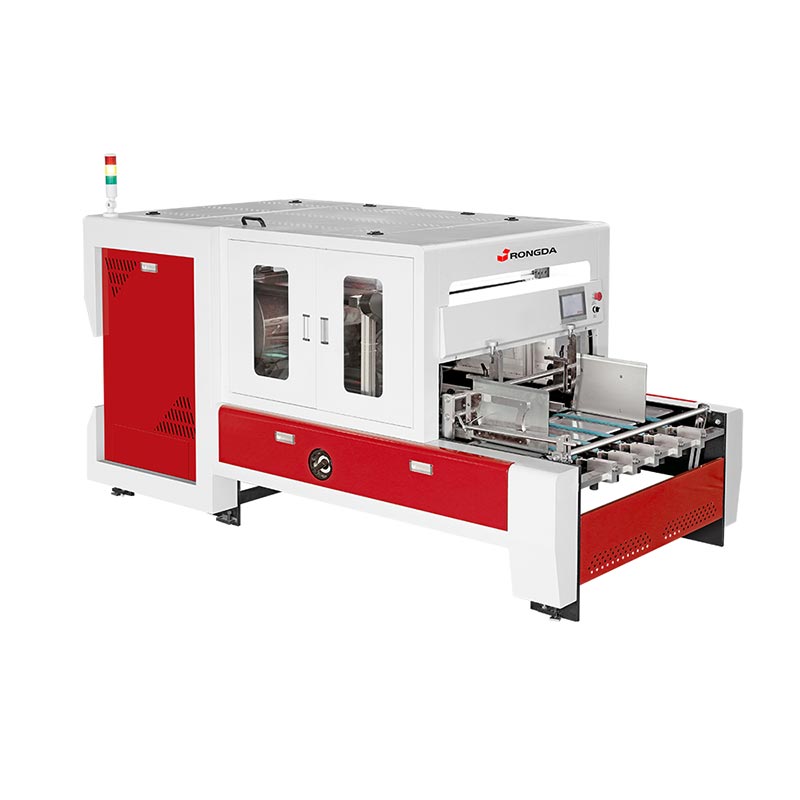
For packaging manufacturers and wineries investing in automated creasing equipment, the single most pressing question often revolves around long-term return on investment. When you operate a Wine Box Grooving Machine in a high-volume production environment, every hour of downtime translates into lost revenue and delayed orders. Understanding the realistic service life of this critical equipment helps procurement managers plan budgets, schedule maintenance, and choose a reliable partner like Rongda, which has built its reputation on durable, precision-engineered grooving solutions for the premium packaging sector.
Typical Lifespan Range: What the Data Shows
Based on industry benchmarks and real-world factory data, a commercially graded Wine Box Grooving Machine operating under standard daily shifts (8–10 hours) generally delivers 8 to 12 years of productive service. However, this range expands significantly depending on several variables:
| Operating Condition | Expected Lifespan | Key Influencing Factors |
|---|---|---|
| Single shift (8 hrs), routine maintenance | 10–12 years | Moderate wear on blades and bearings |
| Double shift (16 hrs), minimal maintenance | 5–7 years | Accelerated fatigue in servo motors and feed rollers |
| Heavy-duty custom board (thick corrugated) | 6–8 years | Increased stress on grooving shafts and pressure frames |
| Light-duty paperboard, well-maintained | 12–14 years | Low friction, consistent lubrication, clean environment |
The Wine Box Grooving Machine from Rongda is engineered with hardened steel cutting components and industrial-grade linear guides, which consistently push the upper boundary of these averages—many units still operating efficiently past the 11-year mark in mid-sized facilities.
Critical Factors That Extend or Shorten Lifespan
Service life is never a fixed number. Four core determinants directly impact how many seasons your Wine Box Grooving Machine will withstand daily punishment:
-
Material Composition – Machines processing heavy, abrasive boards (e.g., recycled corrugated with high ash content) experience 30% faster blade dulling compared to virgin fiber boards. Rongda offers optional tungsten-carbide-coated grooving discs that reduce this wear by nearly half.
-
Maintenance Discipline – A 15-minute daily cleaning routine (removing dust and glue residue) plus weekly lubrication of cam followers can add 2–3 extra years to the machine's life. Neglect, conversely, cuts lifespan by 40%.
-
Operator Skill Level – Improper feeding angles and over-speeding generate excessive torque on the transmission system. Factories with certified operators report 22% fewer component failures over a 5-year period.
-
Electrical Environment – Voltage fluctuations and poor grounding destroy control boards prematurely. Rongda incorporates surge-protected PLC systems that tolerate ±15% voltage variance, a feature rarely found in budget alternatives.
Proactive Maintenance Schedule for Maximum Durability
To ensure your Wine Box Grooving Machine reaches or exceeds the 10-year threshold, adhere to this evidence-based maintenance calendar:
| Frequency | Action Item | Impact on Lifespan |
|---|---|---|
| Daily | Wipe grooving rollers; check for loose fasteners | Prevents micro-vibrations that loosen bearing housings |
| Weekly | Lubricate all zerk fittings; inspect belt tension | Reduces friction heat by 35%, saving motor windings |
| Monthly | Calibrate creasing depth with test boards | Avoids excessive pressure that warps the main shaft |
| Quarterly | Replace air filters on pneumatic components | Keeps cylinders free of moisture-induced corrosion |
| Annually | Full alignment check by Rongda certified technician | Identifies wear patterns before catastrophic failure occurs |
Wine Box Grooving Machine FAQ – Common Concerns Addressed
Q: How can I tell if my Wine Box Grooving Machine is approaching the end of its useful life, rather than just needing minor repairs?
A: Beyond obvious breakdowns, look for three diagnostic signs: (1) inconsistent crease depth across the same board batch, even after recalibration—this indicates worn eccentric shafts; (2) abnormal high-frequency noise from the main gearbox, which suggests irreversible backlash exceeding 0.3mm; (3) repeated servo driver overload alarms despite clean power supply, pointing to degrading insulation in the main motor windings. When these symptoms appear simultaneously, the cumulative repair cost often exceeds 60% of a new machine's price. At this juncture, replacing the unit with a current-generation Rongda Wine Box Grooving Machine—which features energy-saving direct-drive technology—delivers better ROI than retrofitting an aged chassis.
Q: Does running the Wine Box Grooving Machine at maximum rated speed every day significantly reduce its total lifespan?
A: Yes, and the reduction is quantifiable. Continuous operation at 100% of rated RPM (typically 120–150 cycles per minute for standard models) increases dynamic load on the crank-link mechanism by 170% compared to 75% speed. This accelerates fatigue fractures in connecting rods and accelerates wear on linear bushings. Empirical data from Rongda's field service team shows that machines run consistently at 80–85% of maximum speed achieve 9,000 more operating hours before requiring major overhaul than those pushed to redline daily. The optimal practice is to reserve maximum speed for urgent rush orders, not routine production.
Q: What specific components on a Wine Box Grooving Machine wear out most frequently, and what are their replacement costs?
A: The three highest-wear consumables are: (a) grooving blades/discs—typically replaced every 80,000–100,000 cycles, costing $120–$180 per set for Rongda original parts; (b) polyurethane feed rollers—show cracking after 2–3 years, replacement pairs run $200–$300; (c) pneumatic gripper pads—wear every 18 months under dusty conditions, under $50 per set. Crucially, the main drive motor and PLC controller, which represent 55% of the machine's value, rarely fail before year 9 if power quality is stable. Rongda provides a transparent wear-part price list and 48-hour emergency shipping for all critical spares, minimizing unplanned downtime.
Final Verdict: Is It a 10-Year Asset?
When properly specified, diligently maintained, and operated with moderate speed discipline, a high-quality Wine Box Grooving Machine confidently delivers a decade of faithful service. The real differentiator lies not in the steel and servos alone, but in the manufacturer's support ecosystem. Rongda distinguishes itself through comprehensive after-sales training, remote diagnostic tools, and a network of regional service centers that respond within 24 hours—factors that directly translate into extended machine longevity and lower total cost of ownership.
Ready to evaluate a new Wine Box Grooving Machine for your production line? Contact the Rongda technical sales team today for a customized lifecycle cost analysis and on-site demonstration. Our engineers will assess your board types, shift patterns, and throughput targets to recommend the optimal model—and provide a written service-life projection backed by real factory data. Reach out via our website or call your regional Rongda representative to schedule your consultation. Your next decade of reliable grooving performance starts with one conversation.