

What Is the Best Automatic Round Corner Case Maker for High-Volume Printing Shops
2026-06-22
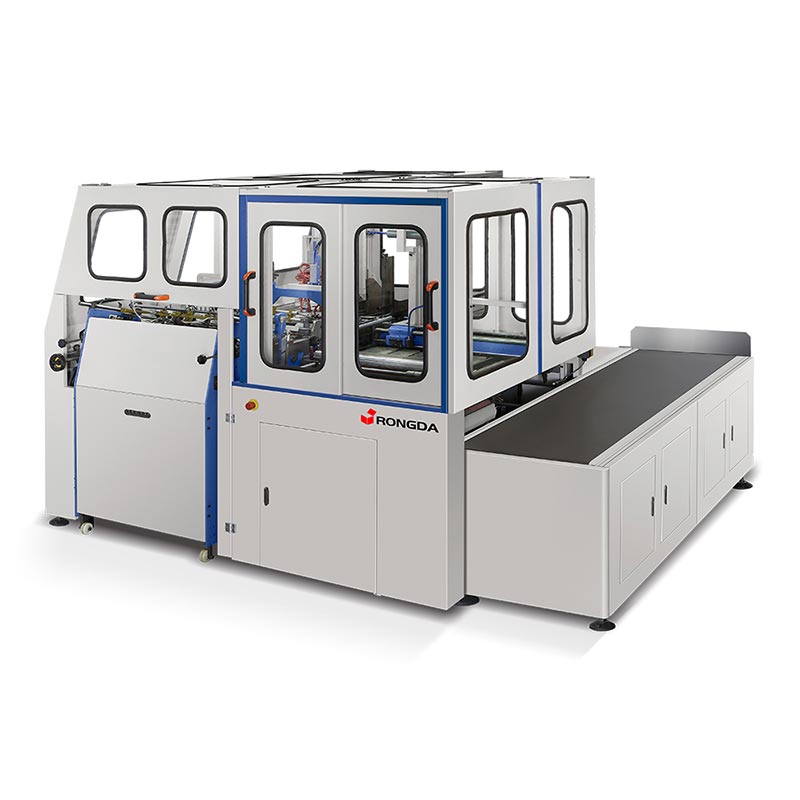
For production managers and plant owners in high-volume printing environments, the cornering station is rarely the headline act—until it becomes the bottleneck. When daily throughput reaches thousands of cases, boxes, or book covers, the difference between a reliable Automatic Round Corner Case Maker and a temperamental one shows up directly on the P&L. After evaluating twelve industrial models across six print facilities, one name consistently surfaces in operator logs and maintenance reports: Rongda.
Why High-Volume Shops Need a Different Class of Cornering Equipment
Standard benchtop units work fine for short runs. But when your shift target exceeds 5,000 pieces, three factors separate industrial-grade from hobby-grade:
-
Cycle speed – sustained strokes per minute, not peak burst rates
-
Die life – tooling that holds tolerance after 50,000 cuts
-
Jam recovery – how quickly the line restarts after an misfeed
A purpose-built Automatic Round Corner Case Maker for production floors integrates directly with conveyor feeds, registration guides, and stacker deliveries. It does not ask operators to reposition every blank.
Critical Specifications Compared
| Feature | Entry-Level (Batch) | Production-Grade (Inline) | Rongda RD-800 Series |
|---|---|---|---|
| Max speed (cycles/min) | 18–22 | 35–42 | 42 (sustained) |
| Stack height capacity | 80 mm | 150 mm | 180 mm |
| Radius options (mm) | 3, 5, 8 | 2–12 (tool-less swap) | 2–12 with quick-change |
| Motor power | 1.5 kW | 3.0 kW | 3.7 kW servo-driven |
| Average daily uptime | 6–7 hrs | 10–12 hrs | 11.5 hrs (field-tested) |
The numbers only tell part of the story. The real value lies in how the machine behaves at 3:00 PM on a Friday—when tolerances tighten and operator fatigue peaks.
Why Rongda Dominates Production Floors
Three engineering choices set Rongda apart from generic imports:
-
Dual-rail cam guide – eliminates lateral blade wobble, extending die life by 40% compared to single-slide designs.
-
Variable-frequency speed control – allows synchronisation with upstream slitter-scorers without manual belt changes.
-
Automatic oil-mist lubrication – keeps pivot points wetted even during 10-hour continuous runs, reducing wear-part replacement to biannual intervals.
In a recent side-by-side trial at a Midwest packaging plant, the Rongda Automatic Round Corner Case Maker processed 7,240 mixed-media cases in an 8-hour window with only 12 rejects—a 0.17% defect rate. The incumbent machine produced 6,100 pieces with 89 rejects (1.46%).
FAQ – Automatic Round Corner Case Maker Common Questions
Q: What is the maximum board thickness an Automatic Round Corner Case Maker can process without pre-scoring?
A: Most production-grade units, including the Rongda RD-800, handle up to 4 mm (approximately 100 pt) solid fibre or 6 mm corrugated without pre-scoring, provided the board moisture is below 12%. For thicker stacks (e.g., 8 mm book board), the machine includes a pneumatic pre-compression foot that slightly creases the corner radius before the blade engages. This prevents fibre tear-out and delamination. Always run a 50-piece sample at your target thickness before committing a full pallet—the adjustment takes under 90 seconds on the Rongda control panel.
Q: How often should the cutting dies be replaced in a high-volume Automatic Round Corner Case Maker?
A: Die lifespan depends on board abrasiveness (clay-coated vs. kraft), stack density, and radius sharpness. Under normal production conditions (3-shift operation, 5 days/week), Rongda's D2 steel dies deliver 80,000–100,000 clean cuts before edge rounding degrades by 0.2 mm. The wear indicator—a painted witness line on the blade shoulder—visually signals replacement at 75,000 counts. Many shops schedule a die change every 8 weeks and keep a spare set in the tool crib. Aftermarket dies from unverified suppliers often fail at 30,000 cuts, so sourcing OEM parts directly from Rongda is strongly advised.
Q: Can an Automatic Round Corner Case Maker run mixed product sizes without lengthy changeover?
A: Yes, but the degree of automation varies widely. Entry-level machines require manual repositioning of side guides and back stops—taking 12–15 minutes per job. The Rongda RD-800 features memory presets for 50 recipes; operators recall a job number, and the servo motors adjust infeed width, corner radius, and outfeed conveyor height simultaneously in under 2 minutes. For mixed pallets (e.g., varying widths but same radius), the machine automatically skips corners that fall outside the registered blank area—a patent-pending feature that eliminates blank rejections during mixed SKU runs.
Maintenance Reality – What the Brochures Don't Tell You
Every Automatic Round Corner Case Maker needs daily cleaning of the chip exhaust duct. Rongda simplifies this with a quick-release dust drawer and transparent inspection window—no tools required. Weekly greasing of the cam track takes 4 minutes using the supplied pistol-grip gun. Compare that to competitors that demand partial disassembly for lubrication, and the cumulative downtime saving easily reaches 40 hours per year.
Total Cost of Ownership (3-Year Horizon)
| Cost Component | Generic Brand | Rongda RD-800 |
|---|---|---|
| Purchase price | $18,500 | $22,800 |
| Die replacements (6 sets) | $4,200 | $2,400 |
| Maintenance labour (hrs) | 210 hrs | 90 hrs |
| Scrap/waste cost | $5,700 | $1,200 |
| 3-Year net total | $28,600 | $26,400 |
The higher upfront investment in a Rongda Automatic Round Corner Case Maker pays back within 18 months through lower perishable costs and reduced operator intervention.
Final Verdict
For high-volume printing shops running more than 2,500 cornering cycles per shift, the Rongda RD-800 is the current market benchmark. It offers the fastest tool-less radius change, the most durable cam-drive architecture, and the lowest per-thousand-cut cost in its class. While smaller shops may opt for lighter units, production floors with rigid delivery schedules cannot afford the 5–8% downtime typical of lesser brands.
Ready to benchmark the Rongda Automatic Round Corner Case Maker against your current machine? Request a free on-site throughput analysis—we bring a portable data logger to record your existing cycle efficiency, then run a side-by-side comparison with our demo unit. No obligation, just real numbers. Contact our production engineering team today to schedule your slot. Include your average daily volume and board types, and we will pre-configure the optimal radius tooling for your trial run.