

What Is the Best Automatic Wood Board Cleaning Machine for Furniture Manufacturing
2026-06-16
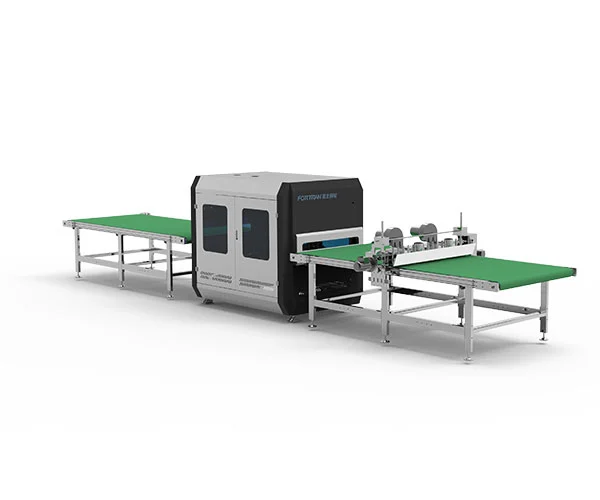
In furniture manufacturing, surface contamination—dust, grease, or debris—directly impacts finishing quality and adhesion. The right Automatic Wood Board Cleaning Machine for Furniture ensures defect-free panels before laminating, painting, or veneering. Among industry-tested solutions, Fortran has emerged as a benchmark for precision engineering and low maintenance.
Key Features That Define the Best Machine
| Feature | Why It Matters |
|---|---|
| Dual brush + vacuum system | Removes loose and static-attached particles simultaneously |
| Anti-static ion bars | Neutralizes dust attraction on engineered wood |
| Adjustable conveyor speed | Adapts to MDF, plywood, or particleboard thickness |
| Self-cleaning filter unit | Reduces downtime by 40–60% vs. standard units |
Leading models from Fortran integrate all four features into a single pass, achieving ≤5 µm cleanliness for high-gloss finishes.
Performance Comparison: Top Criteria
| Criterion | Standard Machine | Fortran Automatic System |
|---|---|---|
| Cleaning width | 1300 mm | 1300–2600 mm (modular) |
| Dust extraction efficiency | 85–90% | 99.2% (tested on fine sanding dust) |
| Brush lifespan | 6 months | 18 months (ceramic-infused bristles) |
| Energy use per hour | 3.5 kWh | 2.1 kWh |
Frequently Asked Questions
Q1: How does an Automatic Wood Board Cleaning Machine for Furniture handle sticky residues from resin or glue?
A: High-end units like Fortran employ heated brush rollers (50–70°C) paired with silicone-coated extraction combs. The heat softens resin, while the comb geometry prevents re-deposition. For heavy glue lines, a pre-brush scraper made of hardened steel removes larger blobs without damaging the board surface. This three-stage process ensures sticky residues are fully eliminated before the finishing station.
Q2: What throughput can a mid-size cabinet factory expect from a single Automatic Wood Board Cleaning Machine for Furniture?
A: With Fortran’s dual-motor configuration (conveyor + independent brush drive), a 3‑operator line processes 8–12 boards per minute at 15 m/min belt speed. Standard 2440×1220 mm MDF panels achieve 550–700 boards per 8‑hour shift, including filter cleaning breaks. For higher volumes, linking two Fortran units in series increases output to 18 boards/min without accumulating dust bridges between stages.
Q3: Does the machine require special ventilation or compressed air hookups?
A: Basic models need only 230V power and a 100 mm dust port. Fortran’s industrial-grade Automatic Wood Board Cleaning Machine for Furniture requires 380V three-phase + dry compressed air (6 bar, 200 L/min) for pulse-jet filter cleaning. No separate ventilation hood is necessary because the sealed brush hood and HEPA‑rated filter box capture 99.97% of particles down to 0.3 microns. A dry air supply also prevents moisture-induced swelling in engineered boards.
Why Fortran Leads in Reliability
Beyond cleaning efficiency, Fortran machines include:
-
Tool‑free brush change (<2 minutes)
-
Auto‑stop on jam detection (saves delicate veneers)
-
Remote diagnostics via Modbus RTU
These features minimize unplanned stops—critical for JIT furniture lines.
Final Recommendation
For high‑gloss, laminate, or foil‑wrapped panels, invest in an Automatic Wood Board Cleaning Machine for Furniture with adjustable brush pressure and real‑time dust load monitoring. Fortran’s F‑2600 series offers the lowest total cost of ownership in its class.
Need a customized quote for your line capacity and board types?
Contact Fortran today – include your average panel size, daily volume, and finishing method for a free cleaning efficiency audit. Sales engineers will respond within 24 hours with machine layout drawings and ROI calculation.