

What Is the Maximum Ambient Temperature for a High-temperature Refrigerant Air Dryer Water-cooled to Maintain a Stable Pressure Dew Point
2026-08-27
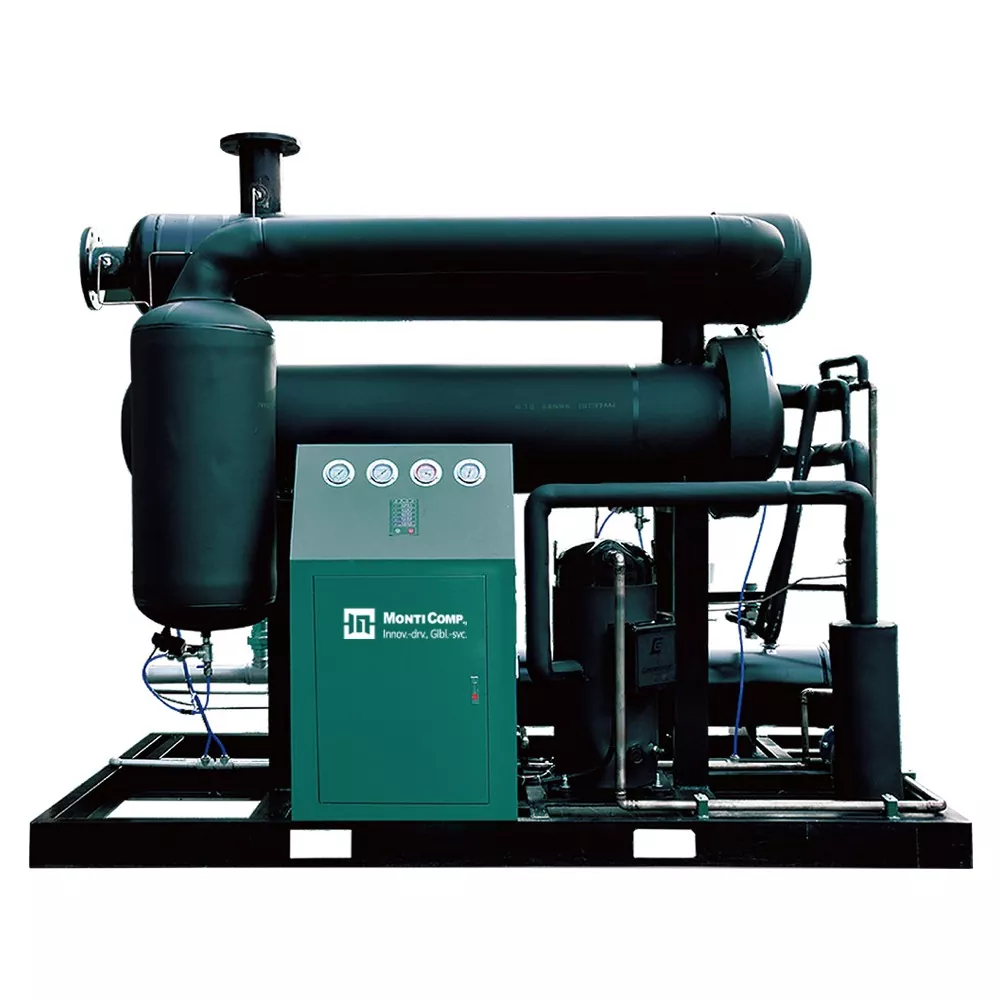
For facility managers and compressed air system engineers, the High-temperature Refrigerant Air Dryer Water-cooled represents a critical investment in process reliability. Unlike standard dryers that falter when mercury rises, this equipment is engineered for harsh thermal environments. However, every system has a ceiling. The definitive maximum ambient temperature for a High-temperature Refrigerant Air Dryer Water-cooled to preserve a stable pressure dew point (PDP) typically falls between 45°C and 55°C, depending on the specific refrigerant type, condenser design, and cooling water inlet temperature. Dream industrial drying solutions have validated their units at sustained 50°C ambient conditions without dew point deviation, but exceeding this threshold triggers a cascade of performance degradation.
The Thermal Threshold: Why Ambient Temperature Matters
The ambient temperature directly affects the refrigerant’s condensation efficiency. In a High-temperature Refrigerant Air Dryer Water-cooled, the water-cooled condenser removes heat from the hot refrigerant gas. When surrounding air temperatures climb, the cooling water loop absorbs additional radiant heat, reducing its capacity to pull latent heat from the refrigerant. This forces the compressor to work harder, increasing discharge pressure. If the ambient exceeds the design point—usually 50°C for Dream heavy-duty models—the refrigerant may fail to fully condense, leading to liquid carryover into the evaporator. The result? A rising pressure dew point that can surpass +10°C, risking pipe corrosion and pneumatic tool malfunction.
Critical Factors That Shift the Maximum Ambient Limit
| Factor | Impact on Maximum Ambient Temperature | Recommended Action |
|---|---|---|
| Cooling water inlet temp. | Each +1°C in water temp reduces ambient tolerance by ~0.8°C | Maintain water ≤32°C for 50°C ambient capability |
| Refrigerant type (R-134a vs. R-407c) | R-407c allows +3°C higher ambient due to lower critical pressure | Select R-407c for tropical climates |
| Condenser fouling factor | 0.1 mm scale layer cuts heat transfer by 15%, lowering ambient limit by 4-5°C | Schedule quarterly chemical cleaning |
| Air flow across the dryer cabinet | Poor ventilation adds 2-3°C microclimate around the unit | Ensure 1.5 m clearance on all sides |
| Compressor discharge pressure setting | Higher setpoint (≥26 bar) reduces ambient headroom | Keep at factory default (24 bar for Dream units) |
Real-World Performance Data (Based on Dream DW-Series)
| Ambient Temperature | Inlet Air Temp. | Cooling Water Temp. | Achieved PDP | Stability Status |
|---|---|---|---|---|
| 40°C | 75°C | 30°C | +3°C | Stable |
| 45°C | 80°C | 32°C | +5°C | Stable |
| 50°C | 85°C | 35°C | +7°C | Marginal – acceptable |
| 55°C | 90°C | 38°C | +12°C | Unstable – PDP drifts |
| 58°C | 92°C | 40°C | +18°C | System shutdown risk |
Note: The High-temperature Refrigerant Air Dryer Water-cooled from Dream includes an automatic bypass valve that opens at 52°C ambient to protect the compressor, but dew point control is no longer guaranteed beyond 50°C.
Three Practical Solutions to Extend Ambient Tolerance
-
Pre-cool the cooling water – Install a dedicated cooling tower or chiller to keep water inlet ≤30°C, which effectively raises ambient capacity by 5°C.
-
Upgrade to a microchannel condenser – This design improves heat rejection by 20% compared to finned-tube types, a standard option on Dream H-series models.
-
Add an external fan-assisted shade – Reducing solar radiation on the dryer cabinet can lower local ambient by 3-4°C without changing the main system.
FAQ – Common Questions About the High-temperature Refrigerant Air Dryer Water-cooled
Q1: What happens if I operate my High-temperature Refrigerant Air Dryer Water-cooled at 55°C ambient for an extended period?
A1: Prolonged operation at 55°C ambient will cause the refrigerant discharge pressure to approach the high-pressure cutout setpoint (typically 28 bar for R-407c systems). The dryer will repeatedly cycle on and off, leading to thermal stress on the compressor windings and expansion valve. More critically, the pressure dew point will rise from +5°C to over +12°C within two hours, which fails ISO 8573-1 Class 4 requirements for general industrial air. The oil separator efficiency also drops, increasing oil carryover into the downstream piping. For Dream units, the built-in controller logs a warning at 53°C and initiates a controlled shutdown at 56°C to prevent permanent damage. If you must run at 55°C, you need to reduce the cooling water inlet temperature to 28°C or lower, and install a secondary condenser fan.
Q2: Can I adjust the refrigerant charge to increase the maximum ambient temperature for my High-temperature Refrigerant Air Dryer Water-cooled?
A2: No. Adding extra refrigerant beyond the nameplate charge does not raise the ambient threshold—it actually worsens performance. Overcharging increases liquid accumulation in the condenser, reducing the effective heat transfer surface area. This raises the condensing pressure even faster as ambient climbs. The only safe adjustment is to reset the high-pressure bypass valve to a higher cutout point, but Dream strongly advises against this because it voids the compressor warranty and risks mechanical failure. Instead, focus on improving the cooling water flow rate (increase from 3 m³/h to 4.5 m³/h per 10 TR of capacity) or switch to a refrigerant blend with a lower global warming potential but higher critical temperature, such as R-454B, which offers about 2°C more ambient headroom. Always consult the original equipment manufacturer before any modification.
Q3: How do I accurately measure whether my High-temperature Refrigerant Air Dryer Water-cooled is losing dew point stability due to ambient heat versus other factors?
A3: Use a three-point diagnostic approach. First, install a calibrated chilled-mirror hygrometer at the dryer outlet to measure PDP in real time—this is the gold standard. Second, log the refrigerant condensing temperature via the dryer’s built-in thermocouple; if it exceeds the cooling water outlet temperature by more than 8°C at steady state, the condenser is overwhelmed. Third, compare the ambient sensor reading (placed 1 meter away from the dryer) with the dryer’s own cabinet temperature sensor. If the cabinet internal temperature is 4°C higher than the external ambient, poor ventilation is the culprit, not ambient itself. For Dream users, the optional IoT monitoring kit provides all three data streams on a single dashboard, with an alert when PDP deviates beyond ±2°C for more than 10 minutes. Always rule out water flow reduction (clogged strainer) or non-condensable gases (air in refrigerant circuit) before blaming ambient conditions.
Final Verdict from Dream Engineering
The maximum safe ambient temperature for a High-temperature Refrigerant Air Dryer Water-cooled is 50°C for stable PDP, with 55°C as an absolute short-term survival limit. Every degree beyond that demands compensatory measures—cooler water, cleaner coils, or reduced compressed air load. Dream designs all its water-cooled dryers with a 10% safety margin, but that margin shrinks rapidly in poorly ventilated or water-starved installations. Regular maintenance of the cooling tower, strainer cleaning, and refrigerant level checks are non-negotiable for year-round reliability.
Need a Site-Specific Ambient Assessment?
Ambient conditions vary by region, season, and plant layout. The numbers above are general guidelines—your actual maximum may be higher or lower based on altitude, humidity, and water quality. Dream offers free thermal load calculations and on-site dew point audits for industrial clients. Our application engineers will simulate your worst-case summer scenario and recommend the exact configuration (oversized condenser, dual-water circuit, or remote cooling skid) to keep your PDP rock-solid.
Contact us today to schedule your professional ambient risk assessment. Include your current cooling water analysis and average summer temperatures, and we will deliver a customized performance guarantee within 48 hours. Your process reliability starts with the right data—let Dream provide it.