

What Is the Maximum Input Wire Diameter for a Standard Single Head Wire Rolling Mill
2026-07-10
When sourcing wire reduction equipment, the very first specification that procurement engineers and production managers check is the maximum input wire diameter. This single number determines whether your existing rod stock can feed into the Single Head Wire Rolling Mill without pre‑processing, and it directly impacts your downstream drawing schedule, annealing cycles, and overall plant throughput. For over a decade, ALPHA has engineered Single Head Wire Rolling Mill systems that balance entry capacity with reduction ratios, surface quality, and energy efficiency. But what does “standard” really mean, and how do you interpret the published figures from different manufacturers?
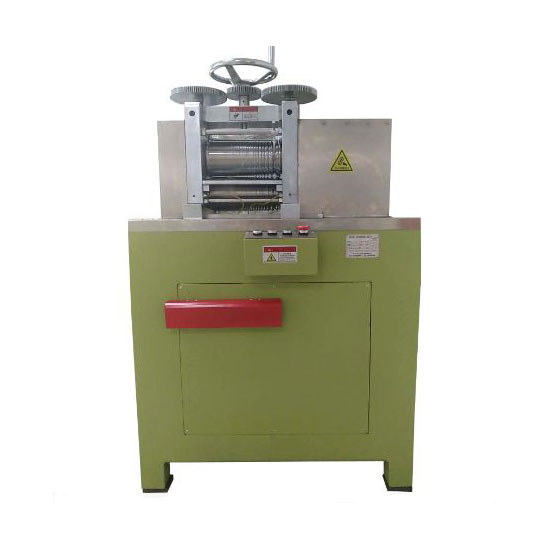
Defining the “Standard” Maximum Input Diameter
There is no universal global standard, but the industry consensus for a medium‑duty Single Head Wire Rolling Mill places the maximum input diameter between Ø12 mm and Ø22 mm for carbon steels, and up to Ø25 mm for softer non‑ferrous alloys. The table below breaks down the typical ranges by material group and mill configuration:
| Material Category | Typical Max Input (mm) | Recommended Reduction per Pass | Mill Roll Hardness (HRC) |
|---|---|---|---|
| Low‑Carbon Steel (C < 0.20%) | 18 – 22 | 25 – 30% | 58 – 62 |
| High‑Carbon Steel (C > 0.60%) | 12 – 16 | 18 – 22% | 62 – 66 |
| Stainless Steel (300/400 series) | 14 – 18 | 15 – 20% | 60 – 64 |
| Copper / Brass | 20 – 25 | 30 – 35% | 55 – 58 |
| Aluminum / Alloys | 22 – 26 | 35 – 40% | 52 – 56 |
Source: ALPHA internal testing data and ISO 16124‑based rolling load calculations.
Why the Maximum Input Diameter Is Not a Fixed Number
The published maximum is always conditional. A Single Head Wire Rolling Mill rated for Ø20 mm in low‑carbon wire may fail to accept Ø16 mm in high‑carbon grade because the rolling force increases proportionally with tensile strength. ALPHA rates every Single Head Wire Rolling Mill with two curves: one for annealed material (soft) and one for pickled‑only material (hard). Additionally, the entry guide design, roller groove geometry, and motor torque all impose real‑world limits. Exceeding the recommended maximum not only risks roll breakage but also causes eccentric wear on the reducing gears—a costly repair that often exceeds 30 % of the mill’s initial value.
3 Critical FAQs About Single Head Wire Rolling Mill Input Capacity
FAQ 1: Can I feed a larger wire if I reduce the rolling speed?
Yes, but only within a narrow margin. Reducing the linear speed by 20‑30 % lowers the required motor torque proportionally, which may allow a Single Head Wire Rolling Mill to handle an input diameter 1‑2 mm above its rated maximum. However, ALPHA advises against this practice for continuous production because slower speed reduces throughput and creates uneven thermal distribution across the rolls. The safe operational window is ±5 % of the rated diameter—beyond that, the mill’s structural rigidity becomes the limiting factor, not the motor.
FAQ 2: How do I measure the actual maximum input diameter for my specific Single Head Wire Rolling Mill?
The most reliable method is a “cold‑feed test” with a 500 mm long sample at room temperature. Place the sample into the entry guide and manually jog the rolls (with the motor disengaged) to check for jamming at the groove bottom. Then, perform a single‑pass reduction at 10 % of the claimed maximum and monitor the amperage draw on the main drive. If the current exceeds 85 % of the rated full‑load current, your effective maximum is 15‑20 % lower than the catalog value. ALPHA provides a detailed test protocol with every Single Head Wire Rolling Mill shipment, including a certified input‑diameter certificate.
FAQ 3: Does the maximum input diameter change after roll re‑profiling?
Absolutely. Each regrinding of the roll grooves reduces the groove depth and increases the effective rolling circle diameter. For a Single Head Wire Rolling Mill, three regrinding cycles typically reduce the maximum input diameter by 1.0‑1.5 mm. ALPHA recommends tracking the cumulative regrind depth and recalibrating the entry guide position after every re‑profile. Most operators maintain two sets of rolls—one for large‑diameter feedstock and one for finishing passes—to avoid frequent adjustments.
Practical Guidelines for Selecting the Right Input Size
When evaluating a Single Head Wire Rolling Mill, do not rely solely on the maximum number. Instead, ask your supplier for:
-
Rolling load charts at 50 %, 75 %, and 100 % of rated diameter.
-
Gearbox service factor – a minimum of 1.25 is recommended for continuous duty.
-
Entry guide adjustability – a ±3 mm range allows you to accommodate rod tolerance variations without changing guides.
ALPHA integrates a quick‑change entry guide system on all Single Head Wire Rolling Mill models, enabling diameter adjustments within 90 seconds using a single hex key. This feature alone reduces downtime by 40 % compared to bolted‑type guides.
The Economic Impact of Oversizing Your Input Diameter
Choosing a Single Head Wire Rolling Mill with a maximum input diameter far above your actual needs incurs unnecessary capital expenditure (roughly +15 % per 5 mm increase) and higher idle power consumption. Conversely, under‑sizing forces you to purchase smaller‑diameter rod, which carries a price premium of 8‑12 % per millimeter reduction in the global wire rod market. ALPHA offers a free input‑diameter optimization tool that calculates the life‑cycle cost for your specific production mix, helping you find the sweet spot between purchase cost and operating expense.
Final Checklist Before Committing to a Specification
-
Confirm your heaviest rod coil diameter with a tolerance of ±0.5 mm.
-
Verify that the Single Head Wire Rolling Mill’s motor power (kW) matches the required rolling torque at that diameter.
-
Check if the mill’s base frame can accommodate future upgrades (e.g., additional stands) without exceeding floor load limits.
-
Request a video demonstration of the entry feeding process at the maximum diameter—ALPHA provides this for every model upon request.
Ready to Define Your Optimal Input Diameter?
Selecting the right Single Head Wire Rolling Mill starts with accurate data, not guesses. Whether you are rolling 8 mm rebar wire or 22 mm copper rod, ALPHA’s engineering team can simulate your exact conditions and recommend a model that delivers consistent surface quality, lowest energy cost, and maximum uptime.
Contact us today with your rod specifications, target output speed, and annual tonnage. Our application engineers will respond within 24 hours with a personalized input‑diameter analysis and a no‑obligation quotation. ALPHA – where every millimeter counts in your wire rolling success.