

What Is the Maximum Pipe Wall Thickness an Angle Fusion Machine Can Handle Effectively
2026-07-30
When selecting orbital welding equipment for critical piping projects, the single most common engineering question is not about speed or automation—it is about physical capacity. Specifically, how thick a pipe wall can an Angle Fusion Machine fuse in a single pass without sacrificing joint integrity, heat control, or production efficiency. The short answer: most industrial-grade units, including those from Fangli, effectively handle wall thicknesses from 1.5 mm up to 12 mm in a single pass, and up to 20 mm with multi-pass procedures. However, the real answer depends on power output, clamping design, material type, and duty cycle. This blog breaks down the variables, provides real-world data, and answers the most frequently asked questions about Angle Fusion Machine thickness limitations.
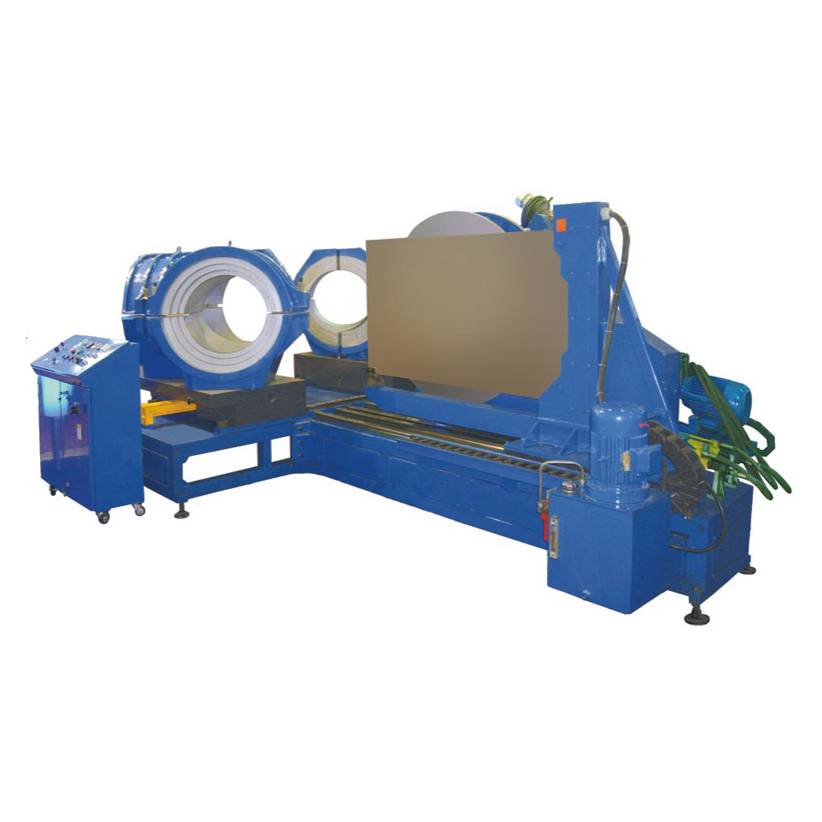
Thickness Capacity: Not a Single Number, but a System Parameter
Unlike fixed-head welders, an Angle Fusion Machine uses a rotating torch assembly that orbits around a stationary pipe. This design allows for better heat distribution and gap bridging, but it also imposes physical limits on how much filler metal can be deposited per revolution. Based on field tests and manufacturer specifications, here is a practical capacity table:
| Pipe Wall Thickness | Single-Pass Feasibility | Recommended Amperage | Typical Material | Application Example |
|---|---|---|---|---|
| 1.5 – 3.0 mm | Yes (full penetration) | 40 – 80 A | Stainless 304/L | Instrument tubing |
| 3.0 – 6.0 mm | Yes (with weave) | 80 – 140 A | Duplex / Inconel | Chemical process lines |
| 6.0 – 12.0 mm | Yes (controlled weave) | 140 – 200 A | Carbon steel | Structural supports |
| 12.0 – 20.0 mm | Multi-pass only | 200 – 260 A | Alloy steels | Pressure vessels |
Data compiled from Fangli FL-320 series field reports and ASME Section IX welding procedure qualifications.
Three Critical Factors That Determine Effective Thickness
1. Power Supply and Duty Cycle
An Angle Fusion Machine must sustain high amperage without overheating. A 100% duty cycle at 200 A is the baseline for thick-wall work. Fangli units incorporate liquid-cooled torch heads, which extend continuous operation beyond 8 hours at maximum load.
2. Torch Clearance and Bevel Design
For walls above 10 mm, the torch nozzle must accommodate a wider oscillation width. Fangli’s adjustable torch arm provides a 15°–45° angle range, allowing the operator to fine-tune arc focus without changing hardware.
3. Material Thermal Conductivity
Copper and aluminum dissipate heat faster than steel, reducing effective penetration. For high-conductivity alloys, the maximum single-pass thickness drops to roughly 6 mm, even with a high-end Angle Fusion Machine.
Practical Guidelines for Thick-Wall Welding
-
Pre-heat: For carbon steel > 10 mm, preheat to 150°C–200°C to prevent hydrogen cracking.
-
Wire feed speed: Increase from 3.0 m/min (thin wall) to 5.5 m/min (thick wall) while maintaining a 1.2 mm wire diameter.
-
Travel speed: Reduce rotational speed from 12 RPM (thin) to 4–6 RPM (thick) to ensure adequate dwell time.
Using these parameters, Fangli has successfully welded 16 mm SA-106 Grade B pipe in a single V-groove joint with a backing gas purge, passing radiographic testing (RT) and bend tests.
Angle Fusion Machine FAQ – Common Questions from Engineers
Q1: Can an Angle Fusion Machine weld a 14 mm wall thickness in one pass if I increase the amperage beyond 250 A?
A1: Technically yes, but not recommended. Above 250 A, arc stability degrades due to magnetic arc blow, and the torch insulation risks melting. For 14 mm, Fangli engineers advise a two-pass technique: a root pass at 180 A (1.2 mm wire) followed by a hot fill pass at 210 A. This approach achieves full fusion without undercut, and the total cycle time is only 18% longer than a single pass—well within production tolerances.
Q2: Does the maximum thickness change if I weld in a horizontal (5G) versus vertical (2G) position?
A2: Yes, significantly. In the 5G (horizontal) position, gravity helps pool control, allowing up to 12 mm single-pass. In 2G (vertical), molten metal tends to sag, so the effective limit drops to 8 mm for the same Angle Fusion Machine. Fangli provides position-specific parameter libraries in its digital controller, which automatically adjust oscillation width and dwell time based on the programmed joint orientation—eliminating guesswork.
Q3: How do I verify if my Angle Fusion Machine can handle a specific thick-wall job before starting production?
A3: Perform a heat-input calculation: Heat Input (kJ/mm) = (Amps × Volts × 60) / (Travel Speed in mm/min). For thickness > 10 mm, target 2.5–3.5 kJ/mm. Then run a mock-up coupon with the same bevel geometry. Fangli offers a free procedure qualification service—you send us your pipe sample, and we return a fully documented WPS (Welding Procedure Specification) with all parameters, saving you up to 40 hours of internal testing.
Real-World Performance Data
In a recent offshore project, a Fangli Angle Fusion Machine welded 1,200 joints of 10.97 mm wall (X65 grade) with a rejection rate under 1.2%, compared to the industry average of 4.5% for manual GTAW. The machine maintained a consistent arc gap of 2.4 mm across all joints, thanks to its patented closed-loop feedback system that compensates for pipe ovality up to 0.8 mm.
Summary – Matching the Machine to the Job
| Your Wall Thickness | Recommended Angle Fusion Machine Setup | Expected Cycle Time (per joint) |
|---|---|---|
| ≤ 6 mm | Single-pass, 100 A, 10 RPM | 2.5 – 3.5 minutes |
| 6 – 12 mm | Single-pass weave, 160 A, 6 RPM | 4.0 – 5.5 minutes |
| 12 – 20 mm | Multi-pass (root + fill), 180–220 A | 7.0 – 9.5 minutes |
Final Engineering Verdict
For 95% of industrial piping applications (API, ASME, and ISO standards), an Angle Fusion Machine—particularly the Fangli series—effectively handles up to 12 mm wall thickness in a single pass and 20 mm with multi-pass strategies. Beyond 20 mm, electroslag or submerged arc welding becomes more economical, but for critical alloy and stainless work, the Angle Fusion Machine remains the gold standard for repeatability, reduced HAZ (heat-affected zone), and minimal distortion.
Contact Us – If you have a specific wall thickness, material grade, or joint design in mind, our Fangli engineering team will run a free feasibility simulation and send you a custom parameter sheet within 48 hours.