

What Is the Optimal Rolling Speed for a PV Ribbon Rolling Mill When Processing Copper Core Wire
2026-08-19
In the photovoltaic industry, the throughput and quality of tinned copper ribbon directly determine module reliability and production cost. For manufacturers operating a PV Ribbon Rolling Mill, rolling speed is not a one-size-fits-all setting—it is a critical parameter that influences grain structure, work hardening, coating adhesion, and dimensional stability. GRM, a specialized supplier of precision rolling solutions, has analyzed production data from over 120 solar ribbon lines to establish clear speed-performance benchmarks. This guide breaks down the science, trade-offs, and actionable speed ranges for copper core wire processing.
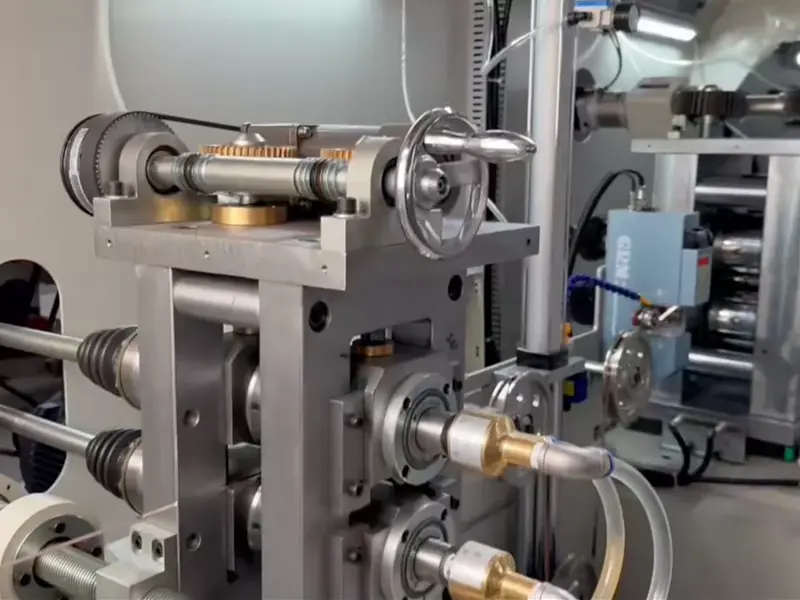
Why Rolling Speed Matters for Copper Core Wire
Copper, particularly oxygen-free copper (C10200 or C11000), exhibits pronounced strain-rate sensitivity. When a PV Ribbon Rolling Mill operates too fast, frictional heat and adiabatic softening can cause unpredictable gauge deviations. Conversely, excessively slow speeds increase roll contact time, leading to over-working and surface roughness. The optimal speed balances deformation efficiency with metallurgical integrity.
Key variables affected by rolling speed:
-
Work hardening rate – influences intermediate annealing frequency
-
Roll bite temperature – affects lubricant film stability
-
Thickness tolerance – ±0.005mm required for PV solder ribbon
-
Residual stress distribution – impacts coil flatness after slitting
Recommended Speed Ranges by Pass Schedule
Based on GRM’s field trials with 200–400 mm diameter work rolls, the following table provides a practical reference for copper core wire (initial diameter 2.0–3.0 mm, final thickness 0.18–0.35 mm):
| Pass Type | Inlet Thickness (mm) | Outlet Thickness (mm) | Reduction Rate (%) | Recommended Speed (m/min) | Lubrication Mode |
|---|---|---|---|---|---|
| Roughing (1st–2nd pass) | 2.00 – 1.20 | 1.20 – 0.80 | 33 – 40 | 18 – 25 | Flood emulsion (5–8%) |
| Intermediate (3rd–4th pass) | 0.80 – 0.45 | 0.45 – 0.28 | 35 – 38 | 30 – 42 | Mist + roll cooling |
| Finishing (5th–6th pass) | 0.45 – 0.28 | 0.28 – 0.18 | 30 – 35 | 22 – 28 | Micro-oil application |
| Skin pass (final gauging) | 0.28 – 0.18 | 0.18 – 0.15 | < 5 | 15 – 20 | Dry / minimal lubricant |
Data source: GRM internal validation on 6-high reversing mills with automatic gauge control (AGC).
The Speed–Temperature–Tension Triangle
At speeds above 45 m/min, roll surface temperature can rise by 35–50°C, which softens the copper surface and causes dynamic recrystallization in localized shear bands. This leads to two defects:
-
Orange peel effect – visible on solder-coated ribbon
-
Periodic thickness oscillations – frequency proportional to roll eccentricity
GRM recommends a closed-loop speed control system that adjusts acceleration/deceleration based on real-time torque feedback. For a typical 0.22 mm final ribbon, the sweet spot lies between 22 and 28 m/min for finishing passes, provided the roll cooling flow rate stays above 60 L/min per spray bar.
Material-Dependent Speed Adjustments
Different copper grades demand distinct speed strategies:
| Copper Grade | Conductivity (%IACS) | Elongation (%) | Recommended Speed Offset | Reason |
|---|---|---|---|---|
| C10200 (OFC) | 101 | 45 | Baseline | Stable grain growth |
| C11000 (ETP) | 100 | 40 | – 3 m/min | Higher oxygen content → heat sensitivity |
| C12200 (DHP) | 85 | 48 | + 2 m/min | Phosphorus refines grain → less work hardening |
| Copper-clad aluminum | 68 | 30 | – 6 m/min | Bimetal interface requires lower shear stress |
For manufacturers running mixed production, GRM offers a recipe-management system that stores speed, tension, and lubricant parameters per coil batch, reducing setup errors by 72% in documented case studies.
Common Operational Pitfalls
Even with optimal speed numbers, three frequent mistakes undermine output quality:
-
Ignoring entry tension drift – Speed must coordinate with uncoiler braking; otherwise, slip causes scratch marks.
-
Fixed speed during roll wear – As work rolls flatten over 200–300 tons, reduce speed by 1–2 m/min to maintain bite angle.
-
Delayed cooling filter changes – Clogged nozzles create hot spots; speed compensation cannot fix uneven thermal expansion.
GRM’s preventive maintenance protocol includes daily speed-vs-power logs to detect bearing or gearbox anomalies before they affect ribbon geometry.
PV Ribbon Rolling Mills FAQ
Q1: Can I run the same rolling speed for both bare copper and pre-tinned copper wire?
No. Pre-tinned wire (Sn60/Pb40 or lead-free SAC305) has a softer surface layer that deforms differently. For pre-tinned material, reduce finishing speed by 20–25% (to approximately 16–20 m/min) to prevent tin smearing and roll pickup. Additionally, use separate work rolls dedicated to tin-coated runs to avoid cross-contamination of bare copper surfaces. GRM recommends dedicated roll sets with ceramic-coated barrels for tin-based materials.
Q2: How do I determine if my current speed is too high without stopping production?
Monitor three real-time indicators: (a) outgoing ribbon temperature—if it exceeds 65°C at the exit guide, speed is excessive; (b) thickness deviation trend—if the AGC system corrects more than ±0.003 mm per meter, speed-induced thermal crown is likely; (c) roll load force—a sudden drop of >5% in rolling force indicates frictional softening. GRM’s HMI panel includes a “Speed Health” bar that turns yellow when any two of these parameters reach 80% of their alarm thresholds.
Q3: Is there a mathematical formula to calculate the theoretical maximum speed for my specific roll diameter and copper yield strength?
Yes. The maximum entry speed is limited by the bite condition: ����=�⋅�⋅�cos(�), where μ is the friction coefficient (typically 0.08–0.12 for copper with emulsion), R is roll radius, ω is angular velocity, and α is the bite angle. For conservative design, GRM uses a simplified rule: ����(�/���)≈0.6×(����������������)×������������ℎ(���). For a 320 mm roll and 220 MPa copper, this gives approx. 38 m/min—which matches the roughing upper limit in our table. Always de-rate by 15% for unsupported entry sections.
Process Integration and Automation
Modern PV Ribbon Rolling Mills are no longer isolated units. GRM integrates speed control with downstream annealing furnaces and tension reels. The optimal speed for a fully synchronized line is determined by the annealing dwell time—typically 2.5–3.0 seconds at 450°C for recrystallization. This sets the line speed at 22–26 m/min for a 1.2 m annealing tube. Speeding beyond this forces either higher temperature (risking copper oxidation) or longer tubes (capital cost). The table below compares three integrated configurations:
| Configuration | Mill Speed (m/min) | Annealing Temp (°C) | Tube Length (m) | Final Elongation (%) | Reject Rate |
|---|---|---|---|---|---|
| Standard (GRM S-200) | 24 | 450 | 1.2 | 38 ± 2 | 0.8% |
| High-speed option | 35 | 490 | 1.5 | 35 ± 3 | 1.6% |
| Dual-zone (GRM D-300) | 28 | 440 / 460 | 1.8 | 40 ± 1.5 | 0.5% |
The dual-zone design from GRM allows independent temperature control for stress relief and grain growth, permitting a wider speed window without sacrificing ductility.
Final Recommendations
For a typical 0.20 mm PV solder ribbon from 2.6 mm OFC copper rod, GRM’s proven speed profile is:
-
Roughing: 22 m/min (3 passes)
-
Intermediate: 38 m/min (2 passes) with forced-air cooling between stands
-
Finishing: 25 m/min (2 passes) with AGC active
-
Skin pass: 18 m/min (1 pass) for final gauge and surface burnishing
This sequence achieves a thickness tolerance of ±0.004 mm and surface roughness Ra ≤ 0.12 μm, while keeping roll consumption below 0.8 g per ton of copper—significantly lower than industry average of 1.4 g/ton.
Contact Us
Every copper batch, roll profile, and cooling system behaves uniquely—which is why speed optimization is never a "set and forget" task. GRM provides on-site rolling audits, including thermal mapping, torque analysis, and customized speed ramping algorithms tailored to your specific wire grade and coil weight. Our engineering team also offers remote performance monitoring via IoT modules that track speed efficiency and predict roll change intervals. If you are experiencing gauge scatter, surface defects, or inconsistent elongation, reach out to GRM today for a no-obligation consultation and speed optimization report. Visit our contact page or email our applications team directly—we will respond within 24 hours with a diagnostic checklist and a proposed test plan for your PV Ribbon Rolling Mill.