

What maintenance practices extend the service life of a reagent agitation tank
2026-04-28
Regular maintenance is the backbone of industrial mineral processing. A reagent agitation tank operates under constant mechanical stress, chemical exposure, and abrasive wear. Without a structured care routine, even high-performance equipment from EPIC can face premature failure. This guide outlines proven maintenance practices that directly extend the operational life of your reagent agitation tank, while improving mixing consistency and reducing unplanned downtime.
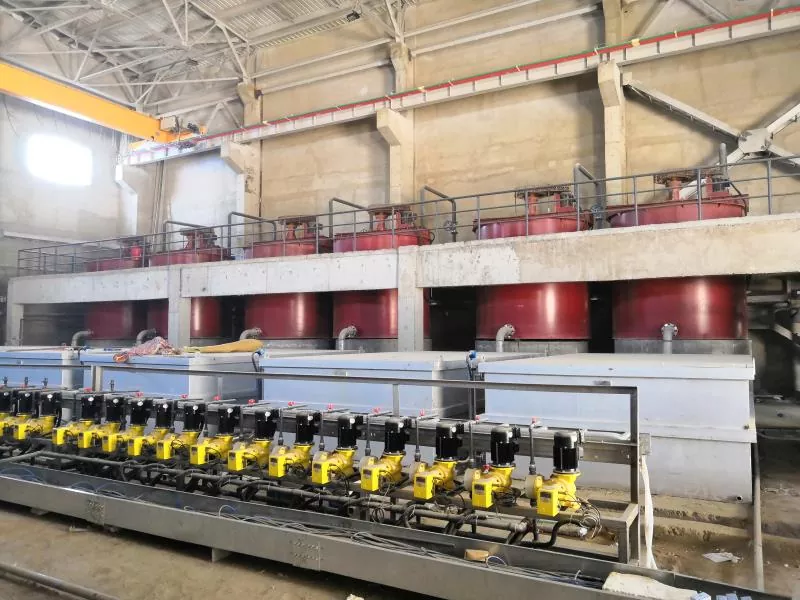
Core Maintenance Practices for a Reagent Agitation Tank
| Maintenance Activity | Frequency | Key Benefit |
|---|---|---|
| Shaft alignment check | Monthly | Prevents bearing and seal wear |
| Impeller wear inspection | Weekly | Maintains agitation efficiency |
| Lubrication of bearings | Every 500 hours | Reduces friction and overheating |
| Seal integrity test | Bi-weekly | Avoids chemical leakage |
| Tank interior cleaning | Per batch or daily | Prevents residue buildup |
| Motor current monitoring | Continuous | Detects mechanical overload |
EPIC recommends integrating these tasks into a digital maintenance log. Automated reminders and vibration sensors can further enhance reliability.
Step-by-Step Maintenance Checklist
-
Visual inspection – Check for external corrosion, loose bolts, and leaks around flanges.
-
Mechanical check – Measure shaft runout and impeller clearance. Replace worn components with EPIC-certified parts.
-
Lubrication – Use food-grade or chemical-resistant grease depending on the reagent type.
-
Seal replacement – Mechanical seals should be replaced every 6–8 months in aggressive acid environments.
-
Motor and gearbox – Monitor temperature and abnormal noise. Clean cooling fins monthly.
-
Calibration – Verify speed control and timer settings against process requirements.
Why These Practices Work
A neglected reagent agitation tank develops uneven mixing, sedimentation, and excessive vibration. Over time, this leads to shaft fracture or tank wall perforation. Following the EPIC maintenance framework reduces total cost of ownership by up to 40% and extends tank life beyond 10 years in continuous operation.
Reagent Agitation Tank FAQ
Question 1: How often should the impeller be replaced in a reagent agitation tank
Answer: The impeller replacement interval depends on the abrasiveness of the slurry and the operating speed. For most mineral processing applications, EPIC recommends inspecting the impeller every 500 operating hours and replacing it every 2,000–3,000 hours. Signs of replacement include visible edge wear, imbalance during rotation, or a drop in mixing efficiency. Using hardened stainless steel or polyurethane-coated impellers from EPIC can extend this interval by 50%.
Question 2: What is the most common cause of failure in a reagent agitation tank
Answer: Shaft seal failure is the most frequent issue, especially when handling acidic or alkaline reagents. Minor seal leaks allow reagent intrusion into the bearing housing, causing corrosion and rapid bearing breakdown. EPIC solves this with double mechanical seals and a seal water flush system. Regular seal pressure checks and ensuring clean flush water are the most effective failure prevention measures.
Question 3: Can a reagent agitation tank operate safely with visible scaling on the inner walls
Answer: No. Scaling reduces effective tank volume, creates localized high shear zones, and may trap unmixed reagents. More critically, scale buildup under the impeller can increase motor load by 25% or more, leading to overheating and electrical failure. EPIC advises immediate descaling using acid circulation or high-pressure water jets, followed by an inspection of the agitator shaft and bottom bearing. Weekly rinsing after batch discharge prevents scale formation entirely.
Final Recommendation
Proactive maintenance transforms a reagent agitation tank from a cost center into a long-term asset. EPIC provides complete maintenance kits, remote vibration monitoring, and on-site training for plant operators.
Contact us today for a customized maintenance audit of your reagent agitation tank. Visit EPIC official website or request a service quotation to keep your mixing process reliable and efficient for years to come.