

What Makes an Electrophoresis Production Line Essential for Modern Industrial Coating?
2026-09-03
Article Summary:
An Electrophoresis Production Line is an advanced surface treatment system designed to provide uniform, durable, and corrosion-resistant coatings for metal components. With increasing demands for product quality, environmental protection, and production efficiency, manufacturers in automotive, hardware, machinery, and household appliance industries are turning to electrophoretic coating technology as a reliable solution. This article explains the working principle, major components, advantages, applications, common production challenges, and selection considerations of an electrophoresis production line. It also introduces how Qingguo Intelligent helps manufacturers achieve stable coating performance through customized industrial coating solutions.
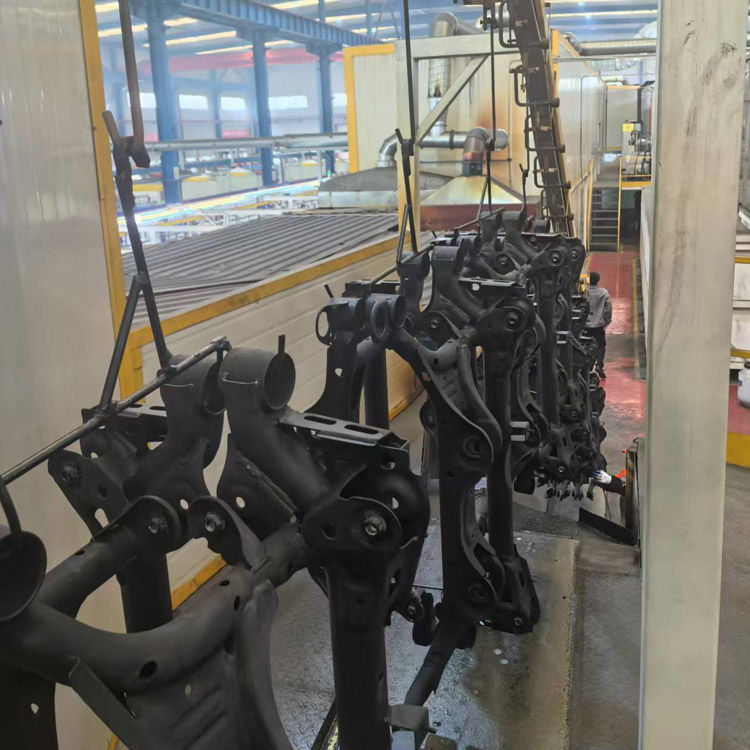
Table of Contents
- 1. Overview of Electrophoresis Production Line
- 2. Why Is an Electrophoresis Production Line Important for Manufacturers?
- 3. How Does an Electrophoresis Production Line Work?
- 4. Main Components of an Electrophoresis Production Line
- 5. Key Advantages of Using an Electrophoresis Production Line
- 6. Industrial Applications of Electrophoresis Production Lines
- 7. Common Coating Problems and How the Production Line Solves Them
- 8. How to Choose the Right Electrophoresis Production Line
- 9. Frequently Asked Questions
- 10. Conclusion
1. Overview of Electrophoresis Production Line
An Electrophoresis Production Line is an integrated industrial coating system that uses an electric field to deposit charged coating particles onto conductive workpieces. Unlike traditional painting methods, electrophoretic coating technology allows paint materials to reach complex surfaces, internal cavities, edges, and hidden areas, creating a consistent protective film.
Modern manufacturers require coatings that provide not only attractive appearance but also excellent corrosion resistance, strong adhesion, and long-term durability. An electrophoresis production line combines surface pretreatment, electrophoretic deposition, rinsing, curing, conveying, and intelligent control systems to achieve these goals.
Qingguo Intelligent specializes in designing and manufacturing advanced coating equipment solutions. The company's Electrophoresis Production Line is developed to meet different production requirements, including automotive components, metal hardware, machinery parts, and industrial products.
Compared with conventional spraying processes, electrophoretic coating offers better coating consistency and higher material utilization, making it suitable for manufacturers that need stable quality and large-scale production.
2. Why Is an Electrophoresis Production Line Important for Manufacturers?
In modern manufacturing, surface protection directly affects product lifespan, customer satisfaction, and production costs. Metal components are often exposed to moisture, chemicals, temperature changes, and outdoor environments. Without effective surface protection, corrosion and coating failure can reduce product reliability.
An Electrophoresis Production Line addresses these challenges by creating a dense and uniform coating layer. The technology is especially valuable for manufacturers dealing with complicated structures where traditional coating methods may leave uncovered areas.
| Manufacturing Challenge | Traditional Coating Problems | Electrophoresis Production Line Solution |
|---|---|---|
| Uneven coating thickness | Manual spraying may create inconsistent coverage | Electric field ensures uniform coating deposition |
| Complex product structures | Difficult to reach corners and internal surfaces | Coating particles penetrate difficult areas |
| High material waste | Excess paint loss during spraying | Higher coating utilization through recovery systems |
| Quality instability | Dependence on operator skills | Automatic control improves repeatability |
| Environmental requirements | High solvent emissions from some coating methods | Water-based coating systems reduce pollution risks |
For manufacturers aiming to improve production efficiency while maintaining consistent coating quality, investing in a professional electrophoresis production system is becoming an increasingly practical choice.
3. How Does an Electrophoresis Production Line Work?
The working principle of an Electrophoresis Production Line is based on the movement of charged coating particles under an electric field. When a metal workpiece is placed into an electrophoresis tank and electrical power is applied, coating particles migrate toward the workpiece surface and form a uniform protective layer.
The entire process includes several carefully controlled stages. Each stage influences the final coating performance, including adhesion, thickness, appearance, and corrosion resistance.
| Process Stage | Main Function | Quality Impact |
|---|---|---|
| Surface Pretreatment | Removes oil, dust, rust, and contaminants | Improves coating adhesion |
| Conversion Treatment | Creates a protective conversion layer | Enhances corrosion resistance |
| Electrophoresis Coating | Deposits paint particles through electric current | Forms a uniform coating film |
| Ultrafiltration Rinsing | Removes excess paint and recovers coating materials | Reduces waste and improves efficiency |
| Curing Process | Hardens coating through controlled heating | Creates durable final protection |
A complete electrophoresis production line integrates these steps into one continuous automated system, allowing manufacturers to achieve stable production results.
4. Main Components of an Electrophoresis Production Line
A high-performance Electrophoresis Production Line consists of multiple functional systems working together. Each component plays an important role in ensuring coating quality and operational stability.
| Component | Function |
|---|---|
| Pretreatment System | Cleans the workpiece surface through degreasing, washing, and conversion treatment. |
| Electrophoresis Tank | Provides the environment where coating particles are deposited onto metal surfaces. |
| Power Supply System | Controls electrical parameters required for stable coating deposition. |
| Ultrafiltration System | Recovers coating materials and maintains bath quality. |
| Drying and Curing Furnace | Uses controlled heating to solidify and strengthen the coating film. |
| Automatic Conveyor System | Transfers workpieces between different production sections. |
| PLC Control System | Monitors and manages production parameters automatically. |
The combination of these systems allows manufacturers to reduce manual operations, improve production consistency, and maintain reliable coating performance.
5. Key Advantages of Using an Electrophoresis Production Line
The increasing adoption of Electrophoresis Production Line systems is mainly driven by their ability to improve coating quality, reduce operating costs, and support automated manufacturing. For companies producing metal components in large quantities, a stable coating process is essential for maintaining competitiveness.
Compared with traditional painting technologies, electrophoretic coating provides several technical advantages that directly solve common manufacturing challenges.
- Excellent Coating Uniformity: The electric deposition process allows coating materials to distribute evenly across the entire surface, including complicated shapes, corners, and recessed areas.
- Strong Corrosion Protection: The dense coating film provides effective resistance against moisture, chemicals, and environmental damage, extending product service life.
- High Material Utilization: Most coating materials can be recovered and reused through circulation and filtration systems, reducing production waste.
- Stable Product Quality: Automated control systems reduce human operation errors and maintain consistent coating thickness.
- Improved Production Efficiency: Continuous operation and automatic transportation systems help manufacturers increase production capacity.
- Environment-Friendly Processing: Water-based electrophoretic coatings generally produce fewer harmful emissions compared with some solvent-based coating processes.
| Feature | Electrophoresis Production Line | Traditional Spray Coating |
|---|---|---|
| Coating Uniformity | Highly consistent even on complex surfaces | Depends heavily on operator experience |
| Paint Utilization Rate | High recovery and recycling efficiency | More overspray waste |
| Internal Surface Coverage | Can coat difficult-to-reach areas | Limited coverage capability |
| Automation Level | Suitable for automated mass production | Often requires more manual operation |
| Coating Durability | Strong adhesion and corrosion resistance | Varies depending on process control |
These advantages make electrophoresis technology an ideal choice for manufacturers seeking long-term production reliability and improved product performance.
6. Industrial Applications of Electrophoresis Production Lines
Electrophoresis Production Lines are widely used in industries where metal surface protection and appearance quality are important. The technology can handle different product sizes, structures, and coating requirements.
| Industry | Typical Products | Why Electrophoresis Coating Is Used |
|---|---|---|
| Automotive Industry | Vehicle frames, body components, metal accessories | Provides long-lasting corrosion protection and uniform appearance |
| Hardware Manufacturing | Locks, tools, metal fittings | Improves durability and surface quality |
| Electrical Equipment | Electrical cabinets, metal enclosures | Protects against oxidation and environmental exposure |
| Home Appliance Industry | Appliance metal structures and components | Creates attractive and durable surfaces |
| Machinery Manufacturing | Industrial equipment parts | Enhances resistance to wear and corrosion |
Because of its flexibility and reliability, electrophoresis coating has become a preferred surface treatment solution for manufacturers that require high-quality metal finishing.
7. Common Coating Problems and How the Production Line Solves Them
During industrial coating operations, manufacturers often encounter problems such as uneven thickness, poor adhesion, coating defects, and high maintenance costs. A properly designed Electrophoresis Production Line can effectively minimize these issues.
| Common Problem | Possible Cause | Electrophoresis Solution |
|---|---|---|
| Uneven coating thickness | Unstable manual spraying process | Automatic electrical deposition creates consistent film thickness |
| Poor coating adhesion | Insufficient surface preparation | Integrated pretreatment improves surface bonding |
| Rust after coating | Weak protective layer | Dense electrophoretic film increases corrosion resistance |
| High paint consumption | Large coating material loss | Recovery systems reduce coating waste |
| Production instability | Manual parameter adjustment | Intelligent control maintains process accuracy |
Selecting equipment with proper process design is essential. Qingguo Intelligent focuses on developing coating solutions that help manufacturers overcome these production challenges and achieve stable operation.
8. How to Choose the Right Electrophoresis Production Line
Choosing an Electrophoresis Production Line requires careful consideration of production capacity, product characteristics, coating requirements, and future expansion plans. A suitable system should match the manufacturer's actual operating environment.
Important factors to evaluate include:
- Production Capacity: The equipment should match daily output requirements and allow room for future growth.
- Product Size and Structure: Different workpieces require different tank dimensions, conveyor designs, and processing methods.
- Automation Requirements: Fully automatic systems are suitable for high-volume production, while semi-automatic solutions may fit smaller production needs.
- Energy Efficiency: Heating systems, filtration systems, and control technologies should minimize energy consumption.
- Maintenance Convenience: Equipment design should allow easy inspection, cleaning, and replacement of components.
- Technical Support: Professional equipment suppliers should provide installation guidance, commissioning support, and after-sales service.
| Selection Factor | Key Questions |
|---|---|
| Production Requirement | What is the expected production volume and operating schedule? |
| Coating Quality | What level of corrosion resistance and appearance quality is required? |
| Equipment Configuration | Does the system include pretreatment, curing, and automatic control? |
| Supplier Capability | Can the manufacturer provide customized engineering solutions? |
A reliable equipment supplier can analyze production conditions and provide a customized electrophoresis coating solution instead of a standard one-size-fits-all system.
9. Why Choose Qingguo Intelligent for Electrophoresis Production Line Solutions?
Qingguo Intelligent provides professional industrial coating equipment solutions designed to meet different manufacturing requirements. The company focuses on integrating advanced automation technology, efficient coating processes, and practical production experience into its Electrophoresis Production Line systems.
By understanding customer production challenges, Qingguo Intelligent develops solutions that improve coating consistency, reduce operating costs, and enhance production efficiency. From system planning and equipment manufacturing to technical support, the company aims to provide reliable solutions for modern industrial coating applications.
- Customized production line design according to customer requirements
- Integrated coating process solutions for different industries
- Advanced automation control for stable operation
- Focus on efficiency, quality, and long-term reliability
10. Frequently Asked Questions About Electrophoresis Production Line
Q1: What is an Electrophoresis Production Line used for?
An Electrophoresis Production Line is used for applying protective and decorative coatings to conductive metal products. It is widely applied in automotive parts, machinery components, hardware products, and electrical equipment.
Q2: How does electrophoresis coating improve product quality?
The process creates a uniform coating layer with strong adhesion and excellent corrosion resistance. It can cover complex surfaces more effectively than many traditional coating methods.
Q3: Is an electrophoresis production line suitable for mass production?
Yes. The system is designed for continuous industrial production and can be integrated with automated conveyors and intelligent control systems to improve efficiency.
Q4: What maintenance does an electrophoresis production line require?
Regular maintenance includes checking coating bath conditions, cleaning tanks, inspecting filtration systems, and maintaining electrical and mechanical components.
Q5: Can Qingguo Intelligent customize an electrophoresis production line?
Yes. Qingguo Intelligent provides customized coating equipment solutions based on product specifications, production capacity, factory layout, and coating requirements.
11. Conclusion: Building Better Coating Performance with an Electrophoresis Production Line
As manufacturing industries continue to demand higher product quality, longer service life, and more efficient production processes, the Electrophoresis Production Line has become an important solution for modern surface treatment requirements. By combining automatic processing, precise electrical deposition technology, and advanced control systems, this coating method helps manufacturers achieve stable and reliable results.
Compared with traditional coating methods, electrophoresis technology provides advantages such as excellent coating uniformity, strong corrosion resistance, reduced material waste, and improved production efficiency. These benefits make it suitable for industries that require high-performance surface protection and consistent product appearance.
However, achieving the best coating results depends on selecting the right equipment configuration and working with an experienced supplier. A well-designed production line should match the manufacturer's products, production volume, quality standards, and future development plans.
Qingguo Intelligent continues to focus on providing professional Electrophoresis Production Line solutions that help manufacturers improve production efficiency and coating quality. Through customized engineering design, reliable equipment manufacturing, and comprehensive technical support, Qingguo Intelligent helps customers create more efficient and competitive coating operations.
If you are looking for a reliable electrophoresis coating solution that matches your production requirements and improves your manufacturing performance, please contact us today to discuss your customized Electrophoresis Production Line project.
Complete Outline of Electrophoresis Production Line Article
- Introduction: Explains the importance of electrophoresis coating technology in modern manufacturing.
- Working Principle: Describes how electrical deposition creates a uniform coating layer.
- Main Equipment Structure: Introduces pretreatment systems, electrophoresis tanks, curing furnaces, filtration systems, and automation controls.
- Industrial Benefits: Explains how manufacturers reduce waste, improve quality, and increase production efficiency.
- Application Fields: Covers automotive, hardware, electrical equipment, machinery, and household appliance industries.
- Problem Solutions: Shows how electrophoresis systems solve common coating defects and production challenges.
- Equipment Selection: Provides guidance for choosing suitable production line configurations.
- Supplier Selection: Highlights the importance of professional technical support and customized solutions.
- Future Development: Discusses the role of intelligent manufacturing in improving coating processes.
Key Considerations Before Investing in an Electrophoresis Production Line
| Consideration | Why It Matters | Recommended Action |
|---|---|---|
| Product Characteristics | Different products require different coating parameters and equipment designs. | Analyze product dimensions, materials, and surface requirements before planning. |
| Production Volume | Capacity determines equipment size and automation level. | Select a system that supports current and future production needs. |
| Factory Layout | Equipment installation depends on available production space. | Plan conveyor routes and processing areas in advance. |
| Coating Requirements | Different industries require different protection levels. | Choose suitable coating materials and process parameters. |
| Supplier Experience | Professional support affects long-term operation performance. | Work with manufacturers capable of providing complete solutions. |
Future Trends of Electrophoresis Production Technology
With the development of intelligent manufacturing, Electrophoresis Production Line technology is continuously improving. Future coating systems are expected to focus more on automation, energy efficiency, environmental protection, and intelligent monitoring.
Modern production lines are increasingly equipped with digital control systems that allow manufacturers to monitor coating parameters in real time. These technologies help reduce human errors, improve process stability, and provide valuable production data for optimization.
Energy-saving designs are also becoming increasingly important. Efficient curing systems, optimized circulation systems, and improved filtration technologies can help reduce operating costs while maintaining coating quality.
Environmental requirements are another major factor influencing the development of coating technology. Manufacturers are paying more attention to cleaner production methods, lower waste generation, and sustainable coating processes.
Companies that invest in advanced electrophoresis production technology can achieve better production flexibility and maintain stronger competitiveness in changing markets.
Final Checklist for Evaluating an Electrophoresis Production Line
- Does the system provide stable coating quality?
- Can the equipment handle your product size and production capacity?
- Does the supplier provide customized engineering support?
- Are automatic control and monitoring systems included?
- Can the production line reduce material waste and operating costs?
- Is maintenance convenient for long-term operation?
- Does the solution meet current and future production requirements?
A carefully selected Electrophoresis Production Line can become a valuable investment for manufacturers seeking better coating performance, higher efficiency, and stronger product competitiveness.
Qingguo Intelligent provides advanced electrophoresis coating equipment solutions designed for different industrial applications. With professional engineering capabilities and customized production line design, Qingguo Intelligent supports manufacturers in achieving reliable surface treatment performance. For more information about Electrophoresis Production Line solutions and customized coating systems, contact us today and let our team provide a suitable solution for your business needs.