

What Makes Auxiliary Equipment the Hidden Engine of a Reliable Production Line?
2025-11-17
I spend my days building complete lines, and the lesson that keeps paying off is simple: the main machine only shines when the supporting cast is tuned. As a customized line designer at INTOP, I’ve seen profits swing on choices most teams call “peripheral.” Pick the right Auxiliary Equipment and output climbs with fewer stoppages; pick poorly and you chase alarms all week. This isn’t about buying larger hardware—it’s about matching intent to specification with a calm, evidence-first plan.
Why do bottlenecks usually come from supporting systems rather than the headline machine?
- Because flow, temperature, and shear decide product quality long before packaging touches it.
- Because transfer, cooling, mixing, and sanitation each add small delays that compound into lost shifts.
- Because controls and connectivity on Auxiliary Equipment often lag behind the PLC on the core machine.
How do I map jobs to the right tools without overspending?
- Thermal management needs clear setpoints and ramp rates, so I match plate exchangers for clean, low-viscosity duties and tubular paths when pulp or fibers show up.
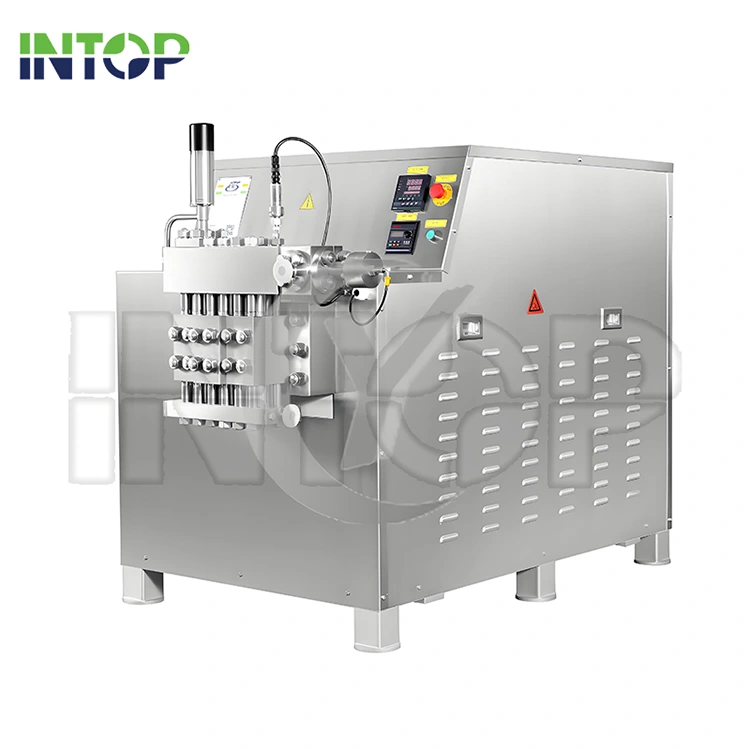
- Mixing and dispersion calls for powder–liquid inducers when dusting and clumping slow you down, and high-pressure homogenizing when I must break droplet size for stable emulsions.
- Product transfer is about shear and solids: I go centrifugal for bright, thin liquids; rotary lobe or progressive cavity when texture must stay intact.
- Fermentation and holding demand insulation, cooling jackets, gentle agitation, and CIP-ready internals to keep microbes predictable.
- Carbonation and blending benefit from skid modules that meter gas and syrup inline for repeatable Brix and volumes of CO₂.
- Connectivity and hygiene rely on sanitary stainless fittings with the surface finish and gasket chemistry aligned to your media.
Which pump choice protects shear-sensitive products the best?
- Rotary lobe when I want low shear, accurate metering, and easy CIP across sauces, dairy concentrates, or fruit prep.
- Progressive cavity when viscosity spikes and solids must stay whole during steady, pulse-free dosing.
- Centrifugal when thin liquids need quick transfer with minimal footprint and simple maintenance.
What heat exchange path keeps quality and energy balanced?
- Plate stacks deliver tight approach temperatures and quick changeovers for clear beverages and thin soups.
- Tubular designs add clearance and turbulence control for pulpy juices, viscous dairy, or anything with particles.
- Either way, I pair the exchanger with a chiller sized to worst-case ambient so Auxiliary Equipment doesn’t become the afternoon weak link.
Where do specifications quietly drain OPEX if I’m not watching?
- Surface finish that is rougher than the microbe load demands, raising CIP cycles and chemical spend.
- Seal and gasket materials that swell or shed under your solvent or acid profile.
- Drives and VFDs without feedback, forcing operators to chase flow by feel.
- Skids without spool-piece flowmeters, making “trial and error” your only commissioning plan.
What acceptance checklist helps me sleep the first week after go-live?
- Hit temperature setpoints under full flow with ambient at your seasonal worst, not the lab-perfect day.
- Verify NPSH and suction piping so pumps don’t cavitate when tanks run low.
- Run powder induction with your noisiest SKU to confirm dust control and wet-out time.
- Prove CIP coverage with conductivity and time–temperature records, not just a rinse that “looks clean.”
Can I compare typical field-proven pairings before I commit?
| Process goal | Recommended supporting set | Key spec to watch | Typical failure symptom | Upgrade trigger |
|---|---|---|---|---|
| Stable emulsion for creamy beverages | High-pressure homogenizing skid, tubular cooler, rotary lobe transfer | Pressure stage geometry and droplet D90 | Phase separation after 48 hours | Viscosity shift or new fat profile |
| Fast powder wet-out for batching | Inline powder–liquid mixer, plate heat recovery, hopper with anti-bridge | Induction rate at target viscosity | Clumps and long blend times | SKU count doubles or dust complaints rise |
| Clean carbonation and flavor blending | CO₂ metering skid, syrup dosing, sanitary manifolds | Gas volumes and Brix repeatability | Flat taste or foaming at filler | Seasonal temperature swings exceed spec |
| Gentle transfer of textured products | Progressive cavity pump, jacketed hold tank, tubular cooler | Shear rate and solids integrity | Pulp shredding or seed breakage | New fruit prep or higher solids |
| Aseptic-lean sanitation with uptime | CIP-ready vessels, hygienic fittings, validated CIP loop | Surface finish and dead-leg design | Biofilm hotspots and rework | Tighter micro specs or audit findings |
How do I keep quality steady when demand spikes without rebuilding the plant?
- I modularize Auxiliary Equipment so a second pump, mixer, or chiller circuit drops in without touching the main line.
- I standardize valve blocks and fittings so spares serve every skid, cutting downtime to minutes.
- I add inline sensing for flow, pressure, and conductivity so operators act on data, not instinct.
What step-by-step plan helps me select and justify upgrades?
- List SKUs by viscosity, solids, and temperature windows, then rank by profit and complaint rate.
- Time the longest tasks—cooling, wet-out, transfer—and translate minutes into daily tons lost.
- Shortlist two Auxiliary Equipment options per task and score them on shear, cleanability, and controls.
- Ask vendors for witnessed trials using your actual ingredients, not water.
- Lock in a maintenance kit and training block before the PO so the handover is real.
Where does investing in Auxiliary Equipment pay back the fastest?
- Powder induction that cuts blend time by 30–50% on thick mixes.
- Heat recovery on plate stacks that trims utility spend each shift.
- Low-shear pumping that lowers rework and protects texture your customers notice.
Why do I treat suppliers like partners instead of catalogues?
That is why I prefer modular, custom-fit skids and vessels configured to the way your crew actually works. With tailored Auxiliary Equipment, I can meet today’s spec and leave headroom for tomorrow’s SKU—without tearing the floor up a year later.
Would a quick review of your line help identify the next quiet win?
If this sounds like the kind of calm, measurable upgrade you want, tell me what slows you down now and what must never change about your product. I’ll align the Auxiliary Equipment to those boundaries and map the fastest path to payback.
Ready to move from guesswork to evidence?
Share your process targets, the three no-compromise quality metrics, and a recent downtime report. I’ll come back with a focused plan that pairs the right Auxiliary Equipment to each job on your line. If you’re set to talk options or book a trial, please contact us today and leave an inquiry with your throughput, viscosity range, and temperature limits—let’s turn small changes into steady output.