

What Makes Brick Manufacturing Machine Mold Critical for Modern Production?
2026-05-08
In today's rapidly evolving construction industry, efficiency, precision, and durability have become the core requirements for producing high-quality bricks. Among all components in a production line, the Brick Manufacturing Machine Mold plays a decisive role in determining the shape accuracy, surface finish, production speed, and overall consistency of bricks. Whether for standard building blocks, hollow bricks, or interlocking pavers, the mold is the heart of the forming process and directly impacts the final product quality.
Modern brick factories increasingly rely on advanced mold technology to improve automation levels and reduce production errors. A well-designed mold not only enhances output but also reduces machine wear and maintenance costs, making it a critical investment for manufacturers worldwide.
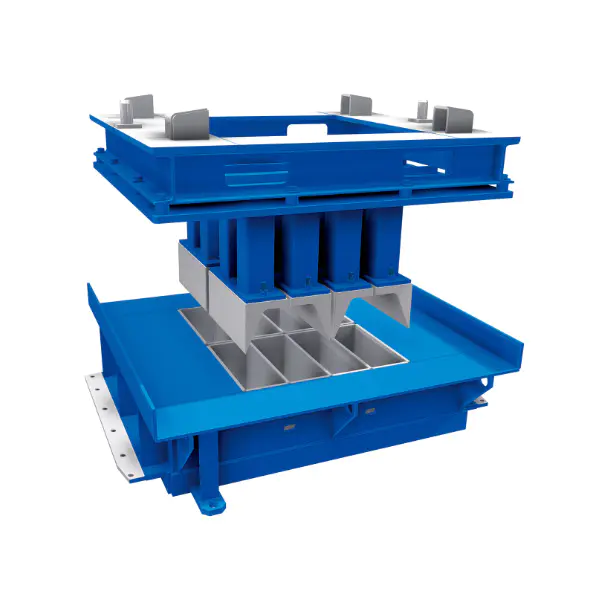
1. The Core Function of Brick Manufacturing Machine Mold
The primary function of a Brick Manufacturing Machine Mold is to shape raw materials such as cement, sand, fly ash, or aggregates into precise brick forms under hydraulic or mechanical pressure. It ensures:
- Consistent brick dimensions
- Smooth surface finishing
- Accurate structural strength distribution
- High production efficiency
Without a high-quality mold, even the most advanced brick machine cannot achieve stable production results.
2. Why Mold Quality Matters in Brick Production
A mold is not just a forming tool—it defines the entire production outcome. Poor-quality molds often lead to defects such as cracking, uneven edges, and dimensional inconsistency. In contrast, precision-engineered molds offer:
- Longer service life
- Reduced downtime
- Improved product uniformity
- Lower rejection rates
This is why manufacturers like Fujian Quangong Mould Co.,Ltd focus heavily on precision engineering and wear-resistant materials to ensure their molds meet international standards.
3. Types of Brick Manufacturing Machine Mold
Different production needs require different mold designs. Below is a simplified comparison:
| Mold Type | Application | Key Advantage |
|---|---|---|
| Hollow Block Mold | Construction walls | Lightweight & insulation efficiency |
| Paver Mold | Road & landscaping | High surface aesthetics |
| Solid Brick Mold | Load-bearing structures | High strength & durability |
| Interlocking Mold | Pavement systems | Easy installation & stability |
Each type of Brick Manufacturing Machine Mold is designed to meet specific engineering requirements, ensuring optimal performance in different construction scenarios.
4. Key Features of High-Quality Mold Design
A professional-grade mold must integrate several engineering features:
- High-strength alloy steel construction for durability
- Precision CNC machining for dimensional accuracy
- Heat treatment process for enhanced hardness
- Wear-resistant coating to extend service life
- Modular design for easy replacement and maintenance
These features significantly improve productivity while minimizing operational costs.
5. Advantages of Using Advanced Brick Manufacturing Machine Mold
Investing in high-end molds brings multiple long-term benefits:
- Increased production efficiency
- Stable brick quality across batches
- Reduced machine downtime
- Lower maintenance frequency
- Improved energy utilization
In modern automated factories, molds are no longer simple tools but integrated components of intelligent production systems.
6. How to Choose the Right Mold for Your Production Line
Selecting the right Brick Manufacturing Machine Mold depends on several factors:
- Type of brick products required
- Production capacity of the machine
- Raw material composition
- Desired surface finish quality
- Budget and maintenance expectations
Manufacturers often consult experienced suppliers like Fujian Quangong Mould Co.,Ltd to customize mold solutions tailored to specific production needs.
7. Maintenance and Lifespan Optimization
Proper maintenance significantly extends mold life. Key practices include:
- Regular cleaning after production cycles
- Lubrication of moving parts
- Inspection for wear and cracks
- Timely replacement of damaged components
With correct maintenance, a high-quality mold can operate efficiently for years without major performance degradation.
8. Industry Application and Market Demand
The demand for advanced molds continues to grow in:
- Infrastructure development projects
- Urban housing construction
- Industrial paving systems
- Eco-friendly building materials production
As global construction standards rise, the importance of precision molds becomes even more critical.
Conclusion
The Brick Manufacturing Machine Mold is a fundamental component that directly influences the efficiency, quality, and profitability of brick production lines. From structural accuracy to long-term durability, every detail of mold design matters in modern manufacturing.
With strong engineering capabilities and industry experience, Fujian Quangong Mould Co.,Ltd provides high-performance mold solutions that meet global standards and support efficient, large-scale production.
If you are looking for reliable, durable, and precision-engineered mold solutions for your brick production line, contact us today to learn how we can help optimize your manufacturing performance and product quality.