

What Makes Low-Temperature Evaporators the Future of Efficient Industrial Wastewater Treatment?
2025-10-29
A Low-Temperature Evaporator is a specialized system designed to efficiently treat and reduce industrial wastewater by utilizing the principle of evaporation under low-temperature and low-pressure conditions. Unlike conventional high-heat evaporators, this advanced technology operates at temperatures typically ranging from 35°C to 50°C, making it an ideal choice for industries that handle heat-sensitive liquids or require energy-efficient water recovery solutions.
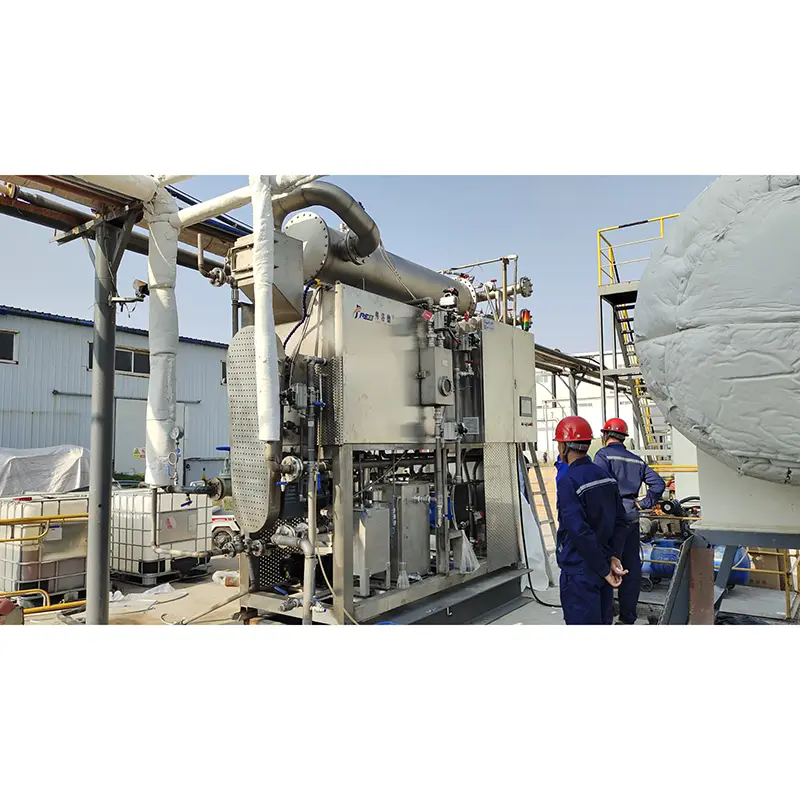
The core of this technology lies in its vacuum-assisted evaporation process, which lowers the boiling point of water, allowing evaporation to occur at much lower energy levels. This results in substantial cost savings, improved operational safety, and reduced environmental impact. It’s widely used across sectors such as chemical processing, plating, pharmaceuticals, food manufacturing, and electronics—where wastewater contains high concentrations of dissolved solids or toxic contaminants.
The main goal of using a Low-Temperature Evaporator is to separate pure water (distillate) from industrial waste streams, thereby reducing disposal costs and enabling water recycling. As industries move toward zero liquid discharge (ZLD) and stricter sustainability goals, this equipment has become a central technology for eco-friendly operations.
Below is a detailed overview of typical technical parameters for a modern Low-Temperature Evaporator system:
| Parameter | Specification Range | Description |
|---|---|---|
| Evaporation Capacity | 20–2500 L/h | Suitable for small to large-scale industrial applications |
| Operating Temperature | 35°C–50°C | Energy-efficient low-boiling operation |
| Vacuum Pressure | -0.85 to -0.95 bar | Ensures low-temperature evaporation and reduced boiling point |
| Power Consumption | 0.08–0.12 kWh/L | Significantly lower than traditional high-heat systems |
| Construction Material | Stainless Steel 316L / Titanium | Resistant to corrosion and aggressive chemicals |
| Cooling Type | Air-cooled or Water-cooled | Adaptable to various installation environments |
| Control System | PLC + Touch Screen | Intelligent control with automatic cleaning and fault alarms |
| Recovery Rate | Up to 95% | High efficiency in water recovery for reuse |
With these specifications, the Low-Temperature Evaporator offers an ideal balance between performance, reliability, and sustainability, helping industries manage wastewater responsibly while lowering operational costs.
Why Are Industries Switching to Low-Temperature Evaporators for Wastewater and Solvent Recovery?
In recent years, industries have faced increasing pressure from environmental regulations and operational cost challenges. Traditional wastewater treatment methods—such as chemical neutralization, filtration, and biological treatment—are no longer sufficient for handling complex industrial effluents containing oils, acids, heavy metals, or solvents.
Low-Temperature Evaporators address these issues by delivering high efficiency with minimal environmental impact. The following are key reasons why industries are rapidly adopting this technology:
-
Energy Efficiency and Cost Reduction
By operating under vacuum, the evaporator significantly reduces the boiling point of water, cutting down electricity consumption by nearly 70% compared to standard thermal evaporators. This translates directly into lower energy bills and faster return on investment. -
Environmental Compliance
The ability to reduce wastewater volume by up to 90–95% minimizes the need for expensive disposal and aligns with global sustainability goals. The recovered distillate can often be reused in production, cooling, or cleaning processes, supporting circular water management. -
Safety for Heat-Sensitive Materials
Many industrial processes involve volatile or thermally unstable compounds. The gentle, low-temperature evaporation ensures product integrity while effectively separating contaminants. -
Compact Design and Low Maintenance
Low-Temperature Evaporators feature a modular design, allowing for easy integration into existing facilities without significant space or infrastructure requirements. The self-cleaning system and corrosion-resistant materials reduce downtime and maintenance costs. -
Adaptability Across Industries
From electroplating baths and pharmaceutical residues to food waste concentrates, these evaporators handle a wide range of liquids with varying viscosities and chemical compositions. -
High-Quality Distillate Output
The resulting distillate often meets industrial reuse standards, enabling companies to reclaim up to 95% of their water. This dramatically lowers the overall water footprint and strengthens compliance with strict discharge regulations.
As global industries move toward resource conservation and sustainable manufacturing, the Low-Temperature Evaporator stands out as a vital solution for modern water and waste management.
How Does a Low-Temperature Evaporator Work and What Innovations Define Its Efficiency?
The operation of a Low-Temperature Evaporator relies on a vacuum-assisted boiling process, in which the boiling point of water is reduced through the application of negative pressure. This allows water to vaporize at lower temperatures, separating clean water from contaminants without excessive energy input.
Here’s a simplified breakdown of the working process:
-
Feed Collection – Industrial wastewater is collected in a feed tank.
-
Preheating – The liquid is gently heated under vacuum conditions, reaching its lowered boiling point.
-
Evaporation – Water vapor separates from the waste mixture as the temperature rises slowly.
-
Condensation – The vapor is condensed into a pure distillate and collected for reuse.
-
Concentration Discharge – The remaining concentrated waste is automatically discharged and prepared for proper disposal.
Modern systems integrate PLC-based control panels, real-time monitoring, and automatic descaling functions, ensuring high operational precision and continuous performance.
Recent innovations have enhanced the effectiveness of Low-Temperature Evaporators through:
-
Heat pump integration, enabling energy recovery from vapor condensation.
-
Closed-loop circulation, reducing environmental emissions and improving distillate purity.
-
Automatic defoaming technology, which ensures uninterrupted evaporation even for high-foaming liquids.
-
Advanced anti-corrosion coatings for extended equipment lifespan.
These innovations contribute to lower operational costs, longer equipment life, and consistent water quality output.
Frequently Asked Questions
Q1: Can a Low-Temperature Evaporator handle high-salinity wastewater?
A1: Yes. The system is designed to handle high concentrations of dissolved salts, heavy metals, and oils. The vacuum process prevents scaling and corrosion, allowing stable operation even with brine-rich solutions. For extremely high salinity, multiple-effect evaporators can be implemented for staged separation and improved recovery efficiency.
Q2: How often does the system require maintenance?
A2: Maintenance frequency depends on wastewater characteristics and operating hours. Generally, routine cleaning and inspection every 3–6 months ensure optimal efficiency. Advanced models come with automatic cleaning (CIP) systems that significantly reduce manual maintenance, minimizing downtime and operational costs.
What Are the Future Trends of Low-Temperature Evaporators and How Is Fred Tech Leading the Change?
As industries pursue net-zero water goals and sustainable production standards, the demand for smart and energy-efficient evaporation systems continues to grow. Future trends for Low-Temperature Evaporators include:
-
AI-based process optimization for real-time energy control and predictive maintenance.
-
Hybrid systems that combine low-temperature evaporation with membrane filtration or crystallization to achieve zero liquid discharge.
-
Integration with renewable energy sources, such as solar-assisted heating for decentralized operations.
-
Compact modular designs for mobile and on-site wastewater treatment units, reducing transportation and logistics costs.
-
Circular water reuse models, promoting full recovery of valuable resources from industrial waste streams.
These trends highlight a global movement toward smart water management—a direction in which Low-Temperature Evaporators will remain indispensable.
Fred Tech, a leader in industrial evaporation technology, continues to innovate in this field by offering custom-engineered Low-Temperature Evaporator systems designed for maximum efficiency, durability, and adaptability. Each system is tailored to the customer’s specific wastewater composition, production scale, and energy requirements.
With decades of technical expertise and commitment to sustainability, Fred Tech provides not only high-performance equipment but also comprehensive engineering support, from design and installation to after-sales service and system optimization.
To explore how a Low-Temperature Evaporator can transform your industrial wastewater management and align your business with sustainable development goals — contact us to learn more about Fred Tech’s advanced solutions.