

What Safety Features Should a Modern Profile Rolling Machine Have
2026-06-22
In the metal fabrication industry, the Profile Rolling Machine is indispensable for shaping steel, aluminum, and other structural sections into precise curves and rings. However, with high hydraulic pressure, rotating rolls, and heavy material handling, operator safety is non‑negotiable. A modern Profile Rolling Machine must integrate advanced protective systems that go beyond basic guarding. At GRM, we engineer every Profile Rolling Machine with a safety‑first philosophy, ensuring that productivity never comes at the cost of human well‑being. This article examines the critical safety features that define today’s best‑in‑class equipment, helping you make an informed, risk‑aware purchase.
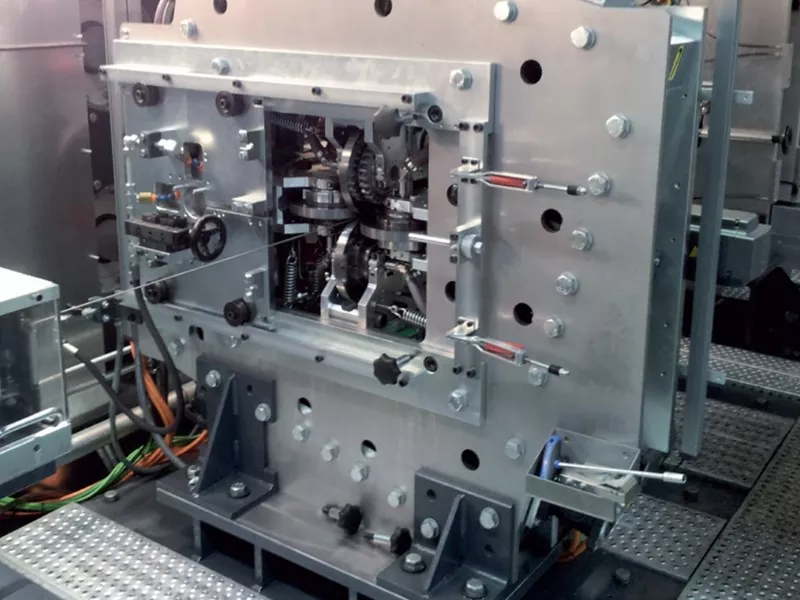
Core Safety Systems Every Profile Rolling Machine Needs
The following table outlines the primary safety components, their functions, and the operational benefits they deliver on a GRM Profile Rolling Machine.
| Safety Feature | Function | Benefit to Operator & Plant |
|---|---|---|
| Emergency Stop (E‑Stop) Push‑Buttons | Instantly cuts all power and hydraulic pressure when pressed. Multiple stations placed around the machine. | Reduces response time to <0.5 seconds; prevents crush injuries during jams or mis‑feeds. |
| Two‑Handed Control System | Requires both hands on separate push‑buttons to initiate roll movement. | Eliminates the risk of one hand entering the pinch point while the machine cycles. |
| Light Curtains / Safety Photoelectric Sensors | Creates an invisible infrared barrier around the loading zone. Breaks the beam → machine stops immediately. | Protects operators from accidental contact with moving rolls during material feeding. |
| Overload Protection (Hydraulic & Electronic) | Monitors motor current and hydraulic pressure. Shuts down if values exceed preset safe thresholds. | Prevents catastrophic roll breakage or hydraulic hose bursts; extends machine life. |
| Emergency Lowering Valve | Manually or automatically releases hydraulic pressure to drop the top roll in case of power failure. | Prevents suspended loads from falling; allows safe material removal during blackouts. |
| Anti‑Kickback Devices | Mechanical pawls or clamps that hold the material securely against the roll. | Stops sections from violently springing back when bending stress is released. |
| Safety Signage and Warning Lights | Highly visible decals, strobe lights, and audible alarms during start‑up and cycle. | Alerts all floor personnel that the Profile Rolling Machine is in operation. |
Beyond Hardware: Operational Safety Integration
While hardware protects in a split second, a truly safe Profile Rolling Machine from GRM also embeds safety into the control logic. Our PLC‑based systems include:
-
Slow‑speed jog mode – Allows fine positioning of the profile at reduced speed (≤ 2 m/min) for initial setup, reducing reaction distance.
-
Automatic brake monitoring – Detects brake pad wear and prevents cycle start if braking distance exceeds factory limits.
-
Data logging – Records every emergency stop, overload event, and operator intervention for root‑cause analysis and OSHA/ISO compliance reporting.
These digital layers transform the Profile Rolling Machine from a passive tool into an active safety partner – a principle that GRM has championed for over two decades.
FAQ – Common Questions About Profile Rolling Machine Safety
Q1: What regular inspections are mandatory for the emergency stop system on a Profile Rolling Machine?
A1: On every GRM Profile Rolling Machine, we recommend a daily visual check of all E‑Stop buttons for physical damage and proper latching. A weekly functional test must be performed – press each E‑Stop while the machine is idling and verify that the main contactor drops out and hydraulic pump de‑energises within 200 ms. Additionally, a monthly resistance test of the safety relay circuit (using a calibrated multimeter) ensures that contact welding has not occurred. All results must be logged in a maintenance register. If any button fails the latch‑and‑reset sequence, the Profile Rolling Machine must be locked out and tagged out until the switch is replaced – never bypass a faulty E‑Stop for “one quick job.”
Q2: How do light curtains differ from physical barriers, and which is better for my Profile Rolling Machine?
A2: Physical barriers (fixed guards) are permanent steel fences that prevent any access to the rolls – they offer maximum protection but limit visibility and material access. Light curtains are optoelectronic devices that project multiple infrared beams across the danger zone. When a hand or object breaks any beam, the Profile Rolling Machine stops within one machine cycle (typically 50‑80 ms). For GRM, the optimal solution is a hybrid approach: use fixed guards on the rear (non‑operator) side and light curtains with a muting function on the front feed side. Muting temporarily suspends the light curtain only during the actual material feeding movement (detected by through‑beam sensors), so the operator can load long sections without nuisance tripping, while still being fully protected if an unintended entry occurs. This gives you both safety and productivity – a balance that fixed guards alone cannot achieve.
Q3: Can overload protection be reset by the operator, or does it require a technician?
A3: On a standard Profile Rolling Machine, overload protection has two tiers. Tier 1 – Electronic thermal overload (motor current) can be reset by the operator after a 5‑minute cool‑down period, by pressing the reset button on the motor starter. However, the operator must first identify and clear the cause (e.g., excessive material thickness or incorrect roll gap). On GRM machines, the HMI screen displays the exact overload code (e.g., E‑23 for hydraulic pressure exceedance). Tier 2 – Hydraulic pressure relief valve activation requires a qualified technician to recalibrate the valve setting using a pressure gauge, because the relief valve is a precision safety component. Under no circumstances should an operator increase the pressure set‑point to bypass the protection – this voids the warranty and creates a serious burst hazard. Our GRM service protocol recommends calling technical support if the overload trips more than twice in one shift, as this indicates a setup error or worn hydraulic oil that needs professional attention.
Ergonomic Safety – The Overlooked Factor
Physical injury is not the only risk. Repetitive bending on a Profile Rolling Machine can lead to musculoskeletal disorders if the control interface is poorly positioned. GRM addresses this with:
-
Adjustable control pendants – Operators can position the handheld unit at waist height, reducing shoulder strain.
-
Low‑noise hydraulic pumps – Keeping continuous sound levels below 78 dB(A) to prevent long‑term hearing damage.
-
Anti‑fatigue floor mats – Included as a standard accessory for all stationary units.
These ergonomic considerations are part of GRM’s holistic safety approach, because a comfortable operator is an alert operator – and alertness is the ultimate safety device.
Certification and Compliance
A modern Profile Rolling Machine must carry clear markings for CE, ANSI B11.3, or AS/NZS 4024.1, depending on your region. GRM machines are independently tested by TÜV‑certified laboratories, and we provide a full risk assessment report with every delivery. This report identifies each hazard zone, the corresponding safeguard, and the residual risk level – giving your EHS manager complete traceability for audits.
Final Thought – Safety Is an Investment, Not a Cost
When comparing Profile Rolling Machine quotes, remember that the cheapest unit often omits light curtains, uses single‑channel E‑Stops, and has no data logging. Retrofitting these features later costs 3‑5 times more than factory integration. GRM builds safety into the DNA of every machine, not as an option, but as a standard – because we believe that no production target is worth an operator’s finger or spine.
Ready to upgrade to a safer, smarter Profile Rolling Machine?
Contact GRM today for a free safety consultation and a customized quote. Our engineering team will walk you through our full range of hydraulic and CNC Profile Rolling Machines, provide on‑site or virtual demonstrations, and help you select the exact model that fits your section profiles and production volume. Your safety is our priority; your productivity is our promise. Get in touch with GRM now.