

What Safety Features Should a Standalone Baghouse Dust Collector Include for Combustible Dust
2026-10-19
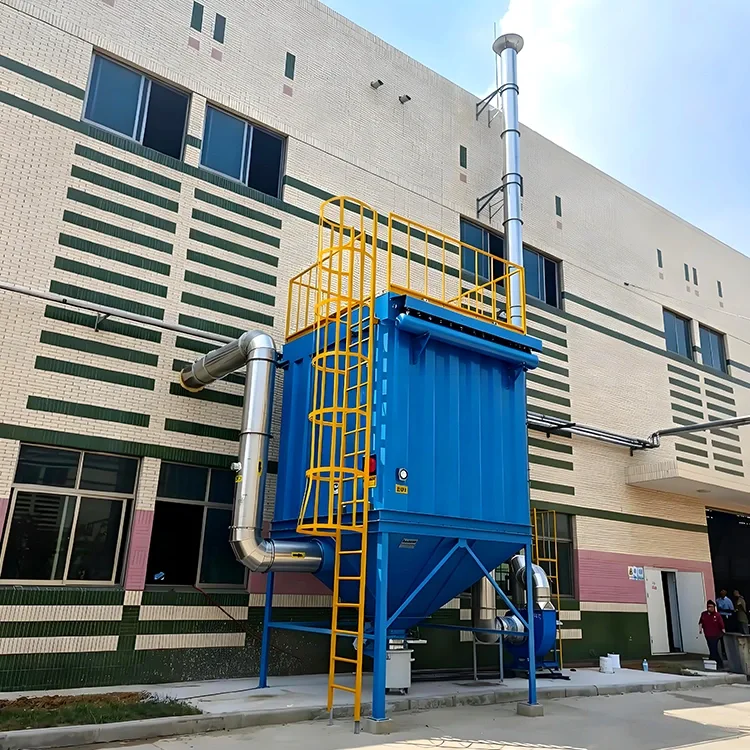
Combustible dust incidents remain one of the most costly and preventable hazards in manufacturing, and the specification of a Standalone Baghouse Dust Collector plays a decisive role in whether a facility achieves NFPA-compliant protection. Jiangteng engineers dust collection systems for metalworking, wood processing, chemical, and food production environments where fine particulate can create deflagration risk, and the safety features outlined below reflect the design practices that separate a compliant installation from a liability.
Core Safety Features for Combustible Dust Applications
A Standalone Baghouse Dust Collector handling combustible dust must be engineered as a holistic system rather than a filtration unit alone. The following features form the minimum safety baseline:
-
Explosion venting sized per NFPA 68, directed away from occupied areas and ignition sources
-
Chemical isolation or fast-acting valve isolation to prevent flame propagation back into the process ductwork
-
Spark detection and extinguishing systems upstream of the collector inlet
-
Conductive, grounded filter bags and cage assemblies to dissipate static charge
-
Explosion-proof motors, fans, and electrical components rated for the classified zone
-
Differential pressure monitoring with alarm interlocks to detect bag failure or blockage
-
High-temperature and ember detection at the inlet plenum
-
Passive or active deflagration suppression where venting is not feasible
-
Access doors with safety interlocks to prevent opening during operation
-
Grounding continuity testing points for routine verification
Feature Comparison by Risk Level
| Safety Feature | Low Risk (Starch, Sugar) | Medium Risk (Wood, Plastic) | High Risk (Aluminum, Magnesium) |
|---|---|---|---|
| Explosion venting | Recommended | Required | Required with suppression |
| Chemical isolation | Optional | Required | Required |
| Spark detection | Optional | Required | Required with dual sensors |
| Explosion-proof electricals | Recommended | Required | Required |
| Conductive filter media | Optional | Required | Required |
| Deflagration suppression | Not required | Situational | Required |
| Inlet ember detection | Optional | Recommended | Required |
Design and Installation Considerations
Every Standalone Baghouse Dust Collector should be located outdoors or in a dedicated room with blowout panels, with vent ducts routed to a safe discharge area. Ductwork must maintain sufficient transport velocity to prevent dust accumulation, and the system should include isolation devices on both inlet and outlet. Jiangteng integrates these elements during the engineering phase, so the collector, ductwork, and safety devices function as a validated system rather than mismatched components.
Maintenance and Verification
Safety features only perform when maintained. Establish a written program covering grounding continuity checks, vent panel inspection, isolation valve testing, and filter integrity verification. Document every inspection, because compliance audits increasingly require traceable maintenance records for any Standalone Baghouse Dust Collector installed in a combustible dust environment.
FAQ
What is the difference between explosion venting and deflagration suppression?
Explosion venting relieves pressure by directing the flame and pressure wave outdoors through a certified panel, while deflagration suppression injects a suppressant agent within milliseconds to extinguish the flame front inside the vessel; venting is generally preferred when outdoor discharge is safe, and suppression is used when venting is impractical or the collector sits indoors.
How often should grounding and bonding be tested on a baghouse handling combustible dust?
Grounding continuity should be verified at installation, after any modification or filter change, and at least quarterly as part of a documented preventive maintenance program, with resistance readings recorded to confirm static dissipation paths remain intact.
Can a standalone unit be retrofitted with explosion protection after installation?
Yes, most collectors can be retrofitted with venting, isolation valves, spark detection, and suppression systems, but the retrofit must be re-evaluated by a qualified engineer because panel sizing, duct routing, and structural reinforcement depend on the original design and the dust's Kst and Pmax values.
Contact Us
Protecting your facility from combustible dust hazards begins with a properly engineered Standalone Baghouse Dust Collector. Contact Us today to discuss your dust characteristics, NFPA compliance requirements, and a tailored safety configuration with the Jiangteng engineering team.