

What Safety Features Should You Look for in a Modern Profile Plasma Cutting Line
2026-08-20
When investing in heavy-duty thermal cutting equipment, operational safety is never an afterthought—it is a fundamental specification that directly impacts productivity, worker wellbeing, and regulatory compliance. A Profile Plasma Cutting Line operates under extreme conditions: high-voltage electrical systems, intense arc radiation, molten metal spatter, and airborne fume particulates. For fabricators serving shipbuilding, wind tower, and structural steel markets, selecting a machine without scrutinising its safety architecture is a risk no production manager can afford. JINFENG, a manufacturer with over two decades in CNC cutting solutions, embeds multi-layer protection systems into every Profile Plasma Cutting Line, transforming what could be a hazardous workstation into a controlled, intelligent cutting environment.
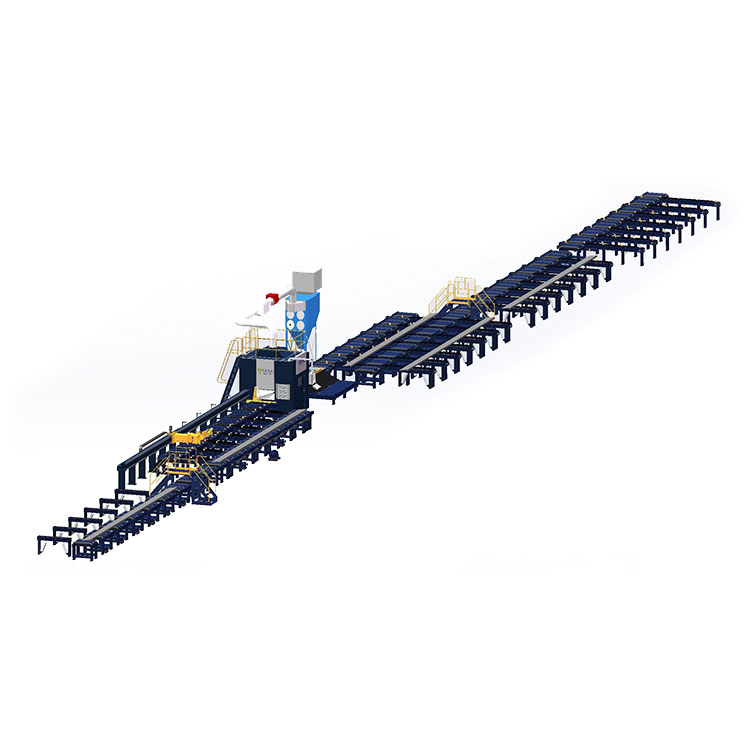
Core Safety Systems in a Modern Profile Plasma Cutting Line
The following table outlines the primary safety categories and the specific technologies that define a modern, compliant Profile Plasma Cutting Line:
| Safety Category | Key Feature | Functional Benefit |
|---|---|---|
| Electrical Protection | Ground fault monitoring + emergency stop (E-stop) chain relays | Instantaneous power cut-off upon leakage or manual trigger |
| Collision Avoidance | Torch collision sensor (breakaway clutch) with auto-reset | Prevents torch damage and reduces fire risk from unintended contact |
| Thermal Management | Water-cooled torch heads + temperature sensors on power supplies | Prevents overheating of consumables and cable harnesses |
| Fume & Dust Control | Integrated downdraft table or fume extraction hood with spark arrestors | Captures 99% of particulates; reduces explosion hazard |
| Motion Safety | Light curtains and floor-pressure mats around the cutting gantry | Halts carriage movement if an operator enters the danger zone |
| Software Interlocks | Parameter-based speed and height limits (torch-to-work distance) | Prevents arc instability and back-strike incidents |
Mechanical and Passive Safety Design
Beyond active electronic systems, the physical construction of a Profile Plasma Cutting Line plays an equally critical role. Look for fully enclosed cable tracks that shield high-voltage lines from abrasive dust. JINFENG machines feature flame-retardant polyurethane tubing and galvanised steel casing for all high-current connections. Additionally, the gantry beam incorporates anti-vibration dampers, which not only improve cut quality but also reduce mechanical fatigue that could lead to sudden rail derailment—a hidden safety hazard in long-span cutting lines.
Operational Intelligence for Risk Reduction
Modern safety is not purely reactive; it is predictive. A superior Profile Plasma Cutting Line now includes automatic torch height control (ATHC) with arc voltage feedback, which adjusts the torch standoff in real time. This prevents the electrode from diving into the plate—a common cause of slag ejection and flashback. JINFENG equips its systems with a dual-gas pressure monitor that locks the cutting process if oxygen or plasma gas pressure deviates beyond ±5%, ensuring the plasma arc remains stable and contained within the nozzle.
FAQ: Common Safety Questions About the Profile Plasma Cutting Line
Q1: Does a Profile Plasma Cutting Line require special operator training beyond standard CNC plasma machines?
A1: Yes, and the training must be system-specific. A Profile Plasma Cutting Line often includes multi-torch configurations, bevel cutting heads, and heavy-duty height sensors that are not found on light-duty tables. Operators must understand emergency stop reset procedures, torch collision recovery, and how to interpret fault codes on the HMI (Human-Machine Interface). JINFENG provides on-site commissioning and structured training modules covering both electrical lockout/tagout (LOTO) and daily pre-start inspection checklists. Without this targeted training, even the best safety hardware can be bypassed through improper manual overrides.
Q2: How often should the fume extraction filters and spark arrestors be inspected on a Profile Plasma Cutting Line?
A2: In a high-production shop running 16-hour shifts, filter differential pressure should be checked every 40 operating hours. Spark arrestor baskets—which trap incandescent particles before they enter the main ductwork—must be emptied at least once per week. JINFENG designs its extraction plenum with quick-access hatches and visual pressure gauges, allowing maintenance crews to perform inspections without dismantling the ducting. Neglecting this schedule can lead to clogged filters, reduced suction, and a dangerous buildup of combustible fine dust inside the exhaust pathway.
Q3: Can a Profile Plasma Cutting Line automatically shut down if it detects abnormal vibration or tilt on the rail system?
A3: Modern high-end lines can, and this is a key differentiator. JINFENG integrates accelerometer-based vibration sensors on both the gantry and the slave carriage. When vibration exceeds a factory-set threshold (indicating potential rail misalignment or bearing failure), the control system initiates a controlled deceleration stop rather than an emergency crash-stop. This gradual shutdown prevents sudden jerks that could shift heavy plates off the support rollers. This feature is especially valuable for shipyard applications where plate weights exceed 20 tonnes, as uncontrolled movement poses severe crushing risks.
Comparative Checklist: Essential vs. Optional Safety Add-Ons
| Safety Component | Essential (Must-Have) | Optional (Upgrade) |
|---|---|---|
| Emergency stop pull-cords along both rails | ✔ | |
| Real-time arc voltage monitor with alarm | ✔ | |
| Automatic fire extinguishing system over the cutting zone | ✔ | |
| Remote diagnostic port for safety relay monitoring | ✔ | |
| RFID-based operator access control | ✔ | |
| Thermal camera for hotspot detection on power cables | ✔ |
Regulatory Compliance and Documentation
A credible Profile Plasma Cutting Line must carry CE, UL, or CSA certification, depending on your region. However, certification alone is insufficient. Request the supplier’s risk assessment report and verification of SIL (Safety Integrity Level) ratings for all logic controllers. JINFENG provides a complete safety dossier with every machine, including validated stop-time measurements and electrical insulation test results—documents that are often overlooked but essential for insurance audits and OSHA-style inspections.
Final Recommendation and Call to Action
Selecting a Profile Plasma Cutting Line is a long-term commitment to both production efficiency and workforce protection. Passive guards and emergency buttons are baseline requirements; the true benchmark lies in intelligent interlocks, predictive diagnostics, and robust mechanical architecture that anticipates failure modes before they occur. JINFENG has engineered its entire product range around these principles, offering customisable safety packages that align with your shop floor layout and material handling workflow.
For a detailed safety comparison sheet, site-specific risk evaluation, or to schedule a live demonstration of our Profile Plasma Cutting Line with full safety features enabled, please contact our engineering support team directly. Visit the JINFENG official website to speak with a regional safety specialist who can tailor a solution to your production requirements. Your team’s safety is our design priority—reach out today and secure your cutting line with confidence.