

What Safety Precautions Should I Follow When Operating a Pneumatic Blanking Die
2026-10-22
Operating a Pneumatic Blanking Die safely requires more than basic machine guarding—it demands a structured approach to pressure control, lockout/tagout, tooling inspection, and operator training. At Junssen, we design and manufacture pneumatic blanking systems for sheet metal producers who prioritize both output and workplace safety, and the guidance below reflects the practices we recommend to every customer before a die goes into production.
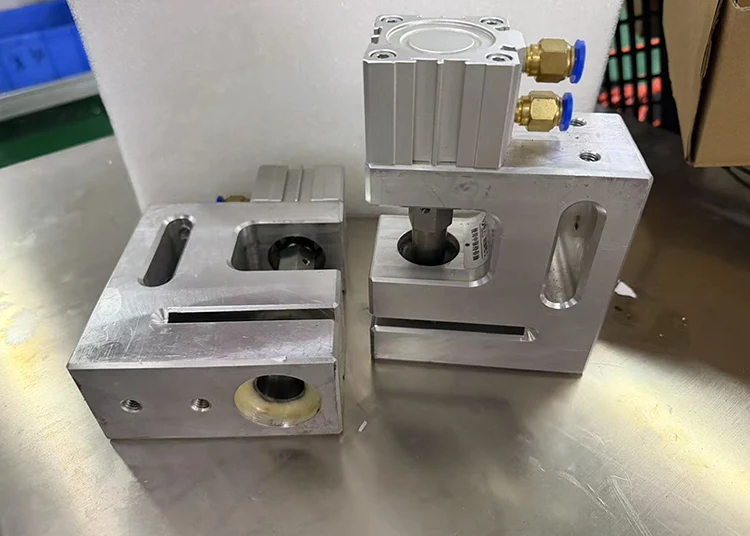
Core Safety Precautions for Pneumatic Blanking Die Operation
| Safety Area | Key Precaution | Why It Matters |
|---|---|---|
| Air pressure management | Verify pressure against the die specification before every shift; install a dedicated regulator and gauge | Overpressure causes die damage and unexpected ram motion |
| Lockout/tagout (LOTO) | Isolate and bleed all pneumatic lines before maintenance or tool changes | Stored compressed air can release suddenly and cause serious injury |
| Point-of-operation guarding | Use fixed guards, light curtains, or two-hand controls rated for the press cycle | Prevents hand access during the blanking stroke |
| Tooling inspection | Check punch edges, stripper springs, and seals for wear at defined intervals | Worn components increase ejection force and jam risk |
| Operator training | Certify operators on pressure settings, emergency stop locations, and jam clearance | Human error remains the leading cause of press accidents |
| Housekeeping | Keep lubricants, offcuts, and tools clear of the die area | Reduces slips and unintended contact with moving parts |
Pneumatic Blanking Die systems store significant energy in the air circuit. Even after the press stops, residual pressure can hold a stripper plate or ram in position. Junssen recommends fitting every die with a manual bleed valve and a pressure switch interlocked to the press control, so the machine cannot cycle until pressure is verified.
Practical Operating Checklist
-
Confirm the regulator is set to the pressure stated on the Pneumatic Blanking Die data plate.
-
Test the emergency stop and light curtain before the first stroke of each shift.
-
Inspect air lines for leaks, kinks, and moisture buildup; drain filters daily.
-
Never reach into the die area to clear a jam—use a push stick and follow LOTO.
-
Record inspection results in a maintenance log to support traceability.
Pneumatic Blanking Die FAQ
Q: What air pressure should a Pneumatic Blanking Die run at?
A: Always follow the pressure specified on the die data plate and in the manufacturer's documentation—typically within a narrow band chosen for the material thickness and punch geometry. Running above specification increases punch load and seal wear, while running below it causes incomplete blanking and stripper malfunctions. Install a dedicated regulator with a visible gauge at the press, verify the setting at the start of each shift, and never adjust pressure to compensate for worn tooling.
Q: How often should a Pneumatic Blanking Die be inspected?
A: Perform a visual and functional check daily before production, a detailed inspection of punches, strippers, and seals at weekly or defined cycle intervals, and a full teardown inspection according to the maintenance schedule in the die manual. Any die involved in a jam, overpressure event, or abnormal noise should be inspected immediately before returning to service, and all findings should be logged for traceability.
Q: Can a Pneumatic Blanking Die be serviced while the press is running?
A: No. All maintenance, tool changes, and jam clearance must be performed under full lockout/tagout with the air supply isolated and residual pressure bled from the circuit. Stored compressed air can actuate the ram or stripper without warning. Only trained personnel should service the die, and the press must be verified as de-energized before any guard is removed.
Junssen supports customers with die-specific safety documentation, pressure specifications, and operator training materials. Contact us today to review your Pneumatic Blanking Die safety setup, request a compliance checklist, or speak with our engineering team about a customized solution for your press line.