

What Safety Valves Are Required on a Bitumen Transportation Tank by DOT Regulations
2026-07-16
Operating a Bitumen Transportation Tank involves handling a material that is stored and moved at extremely high temperatures—typically between 150°C and 180°C. This viscous, adhesive substance presents unique risks: thermal expansion, pressure buildup from entrained water or volatiles, and the potential for catastrophic rupture if internal pressure is not rigorously controlled. For fleet operators and owner-operators, compliance with U.S. Department of Transportation (DOT) hazardous materials regulations (49 CFR Parts 100–185) is not merely a legal formality—it is the cornerstone of safe, reliable operations. At CXTCM, we engineer Bitumen Transportation Tank solutions that integrate DOT-mandated safety valving with real-world durability, ensuring every haul meets federal standards without compromising operational efficiency.
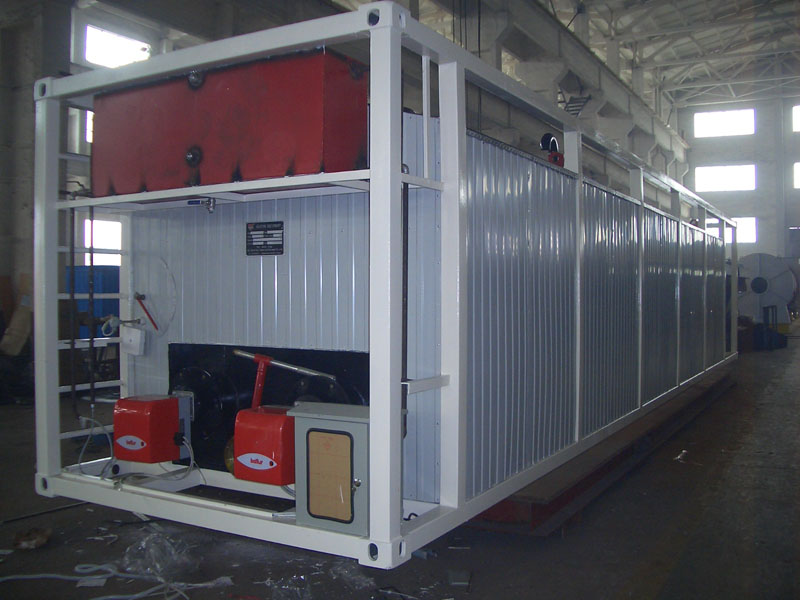
The Core Mandate: Pressure Relief Under All Conditions
DOT regulations do not specify a single "magic" valve model. Instead, they establish performance-based requirements under 49 CFR §178.337 (specifically for MC-307 and DOT-407 tank cars, which are commonly used for hot bitumen). The governing principle is that every Bitumen Transportation Tank must be equipped with pressure relief devices capable of preventing internal pressure from exceeding the tank's design MAWP (Maximum Allowable Working Pressure) by more than 10% during normal service, including fire exposure. This leads to a layered valve system, not a single device.
Mandatory Valve Types for DOT-Compliant Bitumen Tankers
The table below outlines the essential safety valves required, their primary functions, and the regulatory basis.
| Valve Type | Primary Function | DOT Reference | Typical Set Pressure |
|---|---|---|---|
| Primary Spring-Loaded Pressure Relief Valve | Releases excess vapor or gas pressure build-up from heating or agitation. | 49 CFR §178.337-8(a) | Set at 80–90% of MAWP |
| Secondary (Emergency) Relief Valve | Provides additional relief capacity if primary valve fails or is overwhelmed (e.g., fire exposure). | 49 CFR §178.337-8(b) | Set at 95–100% of MAWP |
| Vacuum Breaker (Inhalation Valve) | Prevents tank collapse during unloading or rapid cooling by admitting atmospheric air. | 49 CFR §178.337-9 | Opens at 1–2 psi negative pressure |
| Remote Shut-off Valve (Internal Valve) | Automatic closure in case of loss of hydraulic or pneumatic supply; also acts as a shear section. | 49 CFR §178.337-11 | Not pressure-set; flow-activated |
| Thermal Expansion Relief Valve | Dedicated small-orifice valve to relieve liquid expansion from solar radiation or ambient heat gain. | Interpretive guidance (HM-216) | Typically 5–10 psi above MAWP |
Critical Design and Maintenance Requirements
DOT mandates that all pressure relief valves on a Bitumen Transportation Tank must be:
-
Directly mounted on the tank shell or dome, with no intervening shut-off valves (except for isolation during maintenance, which requires lockout/tagout procedures).
-
Tamper-proof—settings must be sealed with a wire and lead seal after calibration.
-
Re-certified at intervals not exceeding 12 months, per §180.407(g), with documented test results showing bubble-tight seating at 90% of set pressure.
-
Sized to handle the worst-case flow scenario: a fully engulfing fire for 30 minutes, maintaining pressure below 120% of MAWP.
For a standard 6,000-gallon Bitumen Transportation Tank, the combined relieving capacity of primary and secondary valves must be at least 600,000 SCFH (standard cubic feet per hour) of air—a figure that demands carefully matched valve orifice areas.
Why Valve Selection Directly Impacts Bitumen Quality
Beyond compliance, improper valving introduces moisture or air ingress, which degrades bitumen via oxidation or foaming. CXTCM recommends using stainless steel or Monel trim for valve internals to resist corrosion from hydrogen sulfide (H₂S) that naturally evolves from hot bitumen. Additionally, all valve discharge outlets must be routed to the top of the tank—never downward—to prevent ejected hot bitumen from contacting tires or personnel.
Bitumen Transportation Tank FAQ – Common Compliance Questions
Q1: Can I use a single combination relief valve instead of separate primary and secondary valves on my Bitumen Transportation Tank?
A1: Yes, DOT allows a single "combination" pressure relief valve that incorporates both primary and secondary functions within one body, provided it meets the total required flow capacity for both normal venting and fire exposure. However, this type must be explicitly certified under the ASME Boiler and Pressure Vessel Code, Section VIII, and must include a visible telltale indicator showing if the primary section has lifted. In practice, most operators prefer separate valves because a single failure disables all relief, whereas dual valves allow partial functionality during maintenance. CXTCM typically recommends the dual-valve configuration for Bitumen Transportation Tank fleets running cross-country routes, as it offers greater redundancy and easier field servicing.
Q2: How do I test the set pressure of a vacuum breaker on my Bitumen Transportation Tank without removing it from the trailer?
A2: Field testing a vacuum breaker without removal is possible using a portable vacuum test pump with an adaptor flange. You isolate the breaker, attach the pump to the inlet port, and gradually apply negative pressure (vacuum) while observing the opening point with a calibrated digital manometer. The breaker should open within ±0.5 psi of its rated set point. If it fails to open or leaks at 0.5 psi below set, it must be replaced. DOT does not permit field adjustment of vacuum breakers—they are factory-set and sealed. For operators using CXTCM-built Bitumen Transportation Tank units, our standard procedure includes a quick-connect test port next to each breaker, reducing test time from 45 minutes to under 10 minutes per tank.
Q3: What documentation must I carry on the truck to prove my Bitumen Transportation Tank's relief valves are DOT-compliant during a roadside inspection?
A3: You must carry three documents: (1) the manufacturer's test certificate for each valve, showing the set pressure and flow capacity, dated within the last 12 months; (2) a calibration log recording every re-certification event, including the technician's ASME stamp number; and (3) a current visual inspection report (signed and dated) that verifies the valve caps, seals, and discharge piping are free of bitumen buildup or physical damage. During an FMCSA Level 1 or Level 2 inspection, officers will check these against the valve tags. CXTCM provides a laminated valve data card that attaches directly to the tank head, so you have all critical set points and serial numbers visible without rummaging through the cab—a practice that has significantly reduced inspection violation rates for our clients.
Operational Best Practices for Valve Longevity
Bitumen's tacky nature means valves can become fouled if not properly purged. After each unloading, operators should cycle the primary relief valve manually (using the lift lever) for 3–5 seconds to dislodge any residual material from the seat. Furthermore, all Bitumen Transportation Tank units should undergo a "hot hold" test monthly: heating the tank to operating temperature while all valves are isolated, then monitoring pressure rise over one hour—any increase exceeding 5 psi indicates a leaking valve or blocked vent.
The Financial Case for Premium Valving
Skimping on relief valves is a false economy. A single over-pressurization event can warp a tank shell, costing $15,000–$25,000 in repairs and weeks of downtime. DOT fines for missing or out-of-certification valves start at $1,200 per violation per day. CXTCM partners with certified valve manufacturers to offer pre-assembled, pre-tested valve manifolds that arrive with full paperwork, ready for bolt-on installation. This reduces your initial procurement effort and ensures every Bitumen Transportation Tank leaves our facility 100% audit-ready.
Conclusion – Secure Your Compliance Today
Navigating DOT valve regulations for a Bitumen Transportation Tank is detailed but entirely manageable when you follow the layered approach: primary spring-loaded relief, secondary emergency relief, vacuum breaker, thermal expansion valve, and remote shut-off—all tested and sealed to federal standards. Remember, compliance is not a one-time event; it is a weekly discipline of inspections, logging, and timely re-certification.
Contact CXTCM today for a complimentary valve configuration review of your existing fleet. Our engineering team will map your current setup against the latest DOT interpretations, provide upgrade recommendations, and supply turnkey valve kits with factory-fresh certifications. Call us, email our support desk, or fill out the quick-quote form on our website—we will respond within 4 business hours with a tailored plan for your Bitumen Transportation Tank operations. Your safety, your compliance, and your bottom line are our only priorities. Reach out now and haul with confidence.