

Where Should an SCR Dual-Reactor Evaluation Unit Be Installed for Optimal Performance
2026-10-27
Selecting the right location for an SCR Dual-Reactor Evaluation Unit is one of the most consequential decisions in flue gas denitrification projects. XINYU HUACHUANG has supported numerous power plants, industrial boilers, and marine engine applications in determining optimal installation positions, and the experience shows that placement directly influences NOx removal efficiency, ammonia slip, pressure drop, and long-term maintenance cost. This blog breaks down the key siting criteria, compares common installation configurations, and answers the questions engineers ask most often.
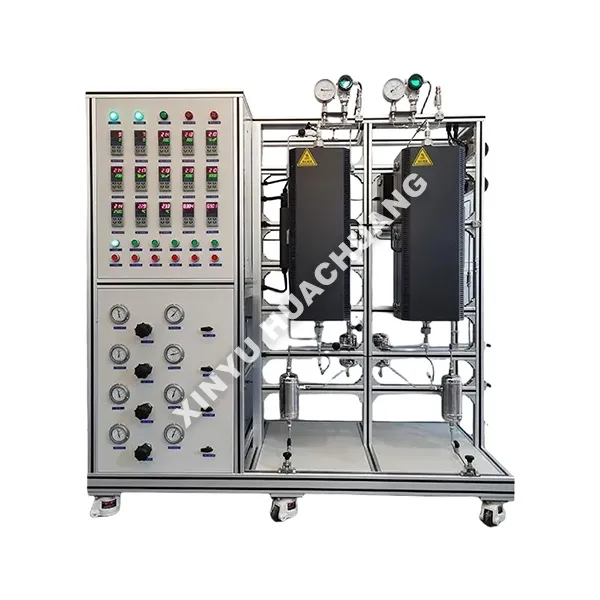
Key Siting Criteria for an SCR Dual-Reactor Evaluation Unit
Before choosing a position, evaluate the following technical parameters:
-
Flue gas temperature window: The SCR Dual-Reactor Evaluation Unit must sit where gas temperature stays within the catalyst's active range (typically 300–420 °C for vanadium-based catalysts).
-
Flow uniformity: Sufficient straight duct length upstream and downstream (generally 4–6 hydraulic diameters) to allow proper mixing and uniform velocity distribution.
-
Ammonia injection point: Located upstream of the reactor with adequate mixing distance to avoid local over-injection.
-
Dust loading and ash characteristics: Placement affects catalyst fouling and erosion rates, particularly in high-dust configurations.
-
Accessibility for maintenance: Space for catalyst replacement, soot blowing, and inspection must be reserved.
-
Structural and thermal expansion: Support design must accommodate thermal growth without stressing the reactor shell.
Comparison of Common Installation Configurations
| Configuration | Typical Position | Advantages | Limitations |
|---|---|---|---|
| High-dust | Upstream of air preheater and ESP | Highest gas temperature, compact layout | Severe ash erosion, frequent maintenance |
| Low-dust | Downstream of ESP, upstream of air preheater | Reduced erosion, cleaner catalyst surface | Requires reheating in some cases |
| Tail-end | Downstream of FGD, before stack | Lowest catalyst poisoning risk, easy retrofit | Needs flue gas reheating, higher energy cost |
| Dual-reactor series | Two reactors in series with inter-stage mixing | Higher overall conversion, flexible staging | Higher pressure drop, larger footprint |
For most retrofit projects, XINYU HUACHUANG recommends a low-dust or tail-end arrangement when the temperature profile permits, as these positions extend catalyst life and reduce maintenance frequency.
Placement Considerations by Application
-
Coal-fired power plants: Low-dust configuration downstream of the ESP is preferred to limit erosion.
-
Industrial boilers: High-dust placement is often unavoidable due to layout constraints; use erosion-resistant catalyst.
-
Marine engines: Compact dual-reactor arrangements with short mixing distances require careful CFD validation.
-
Cement and steel plants: Tail-end placement helps avoid catalyst poisoning from heavy metals and alkali dust.
FAQ: SCR Dual-Reactor Evaluation Unit
Q: What is the ideal flue gas temperature range for installing an SCR Dual-Reactor Evaluation Unit?
A: Most vanadium-based catalysts used in an SCR Dual-Reactor Evaluation Unit operate efficiently between 300 °C and 420 °C. Below 300 °C, ammonium bisulfate formation and catalyst deactivation risk increase; above 420 °C, catalyst sintering and thermal aging accelerate. The installation point should therefore be selected where the gas temperature remains stable within this window across the full load range.
Q: How does installation position affect pressure drop in an SCR Dual-Reactor Evaluation Unit?
A: Position determines duct length, turning vanes, and mixing devices, all of which contribute to system resistance. A tail-end SCR Dual-Reactor Evaluation Unit typically adds 800–1500 Pa, while high-dust arrangements with longer duct runs can exceed 2000 Pa. Proper CFD-guided layout and optimized diffuser angles keep pressure drop within the fan's available margin.
Q: Can an SCR Dual-Reactor Evaluation Unit be installed downstream of the FGD system?
A: Yes. Tail-end installation downstream of FGD is technically feasible and offers low catalyst poisoning risk, but it requires flue gas reheating to reach the catalyst activation temperature. This adds energy cost, so a techno-economic comparison against low-dust placement should be performed before finalizing the location.
Final Recommendation
Installation position should be decided through combined CFD simulation, temperature profile analysis, and lifecycle cost evaluation—not layout convenience alone. XINYU HUACHUANG provides site-specific engineering support, from flue gas mapping to reactor placement optimization, ensuring your SCR Dual-Reactor Evaluation Unit delivers stable performance over its full service life. Contact us today to request a technical consultation and installation feasibility assessment for your project.