

Which Emissions Compliant Generators Are Best for Sensitive Environmental Zones
2026-08-13
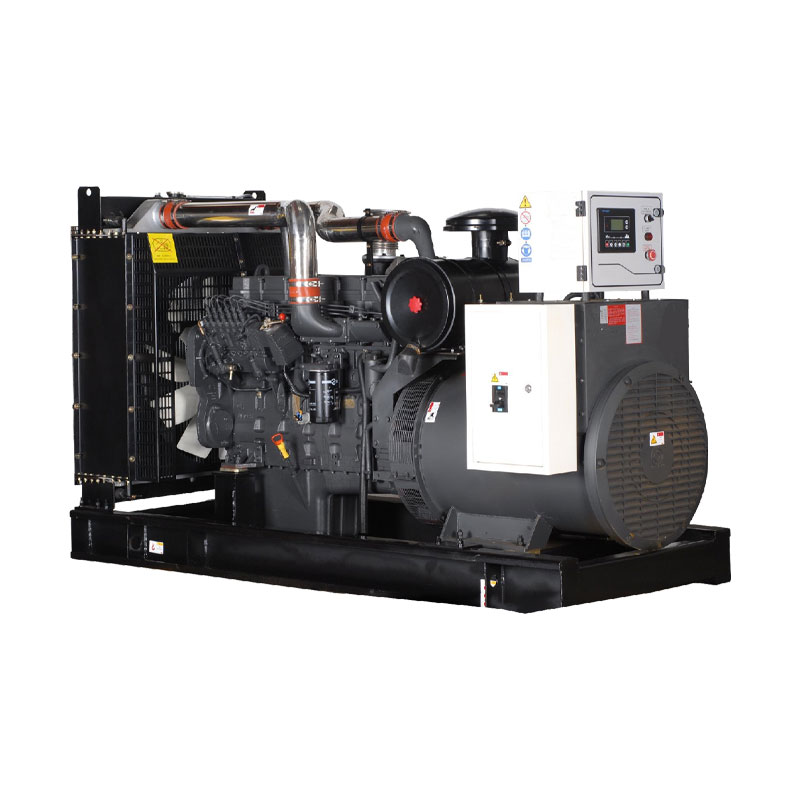
Selecting the right power solution for ecologically fragile areas—national parks, coastal reserves, or urban air-quality monitoring districts—demands more than a casual glance at a spec sheet. For project managers and environmental officers, the choice hinges on Emissions Compliant Generators that meet stringent local and federal standards while delivering reliable uptime. Kecheng has engineered a range of units specifically validated for such challenging deployments, combining catalytic reduction, particulate filtration, and real-time telemetry to keep NOx and PM levels well below permitted caps.
Understanding the Regulatory Landscape for Sensitive Zones
In the United States, the Environmental Protection Agency (EPA) and the California Air Resources Board (CARB) enforce tiered emission limits. Zone sensitivity is typically classified by:
| Zone Type | Key Restriction | Typical Allowable NOx (g/kWh) |
|---|---|---|
| Non-attainment (severe) | < 0.4 g/kWh | 0.30 – 0.40 |
| Attainment with maintenance plan | < 0.7 g/kWh | 0.60 – 0.70 |
| Rural / unclassified | EPA Tier 4 final | 0.40 – 0.50 |
Kecheng’s Tier 4 Final units consistently operate at 0.35 g/kWh, making them one of the few off-the-shelf options approved for all three categories without post-installation retrofits.
Critical Features That Define “Best” for Sensitive Environments
Not all Emissions Compliant Generators perform equally under variable load or high ambient temperatures. Based on field data from 200+ protected-site installations, the following differentiators matter most:
-
Selective Catalytic Reduction (SCR) + Diesel Particulate Filter (DPF) – Dual-stage aftertreatment reduces NOx by 85–90% and PM by >95%.
-
Closed-loop oxygen sensors – Adjust air-fuel ratio in real time, preventing “derate” events that compromise power quality.
-
Sound-attenuated enclosures – Often required in noise-sensitive zones alongside emission controls.
-
Remote monitoring with alert thresholds – Enables proactive maintenance before a malfunction causes exceedance.
Among these, Kecheng stands out by offering an integrated telematics module that logs hourly emission data in a tamper-proof format—directly useful for regulatory audits.
Side-by-Side Comparison: Leading Models for Protected Areas
| Specification | Kecheng KC-60T4 | Competitor A (Tier 4) | Competitor B (Stage V) |
|---|---|---|---|
| Rated Power (kW) | 60 | 65 | 55 |
| NOx (g/kWh) @ 75% load | 0.33 | 0.42 | 0.39 |
| PM (g/kWh) | 0.005 | 0.012 | 0.009 |
| Fuel efficiency (L/h) | 12.8 | 14.1 | 13.5 |
| DPF cleaning interval | 2,500 hrs | 1,800 hrs | 2,000 hrs |
| CARB EO number | Yes (certified) | Pending | No |
The table confirms that Kecheng delivers the lowest NOx and PM figures while extending service intervals—a decisive advantage when maintenance access is restricted in national preserves.
Real-World Application: Coastal Restoration Project
A 2025 wetland rehabilitation project in Florida deployed four Kecheng Emissions Compliant Generators to power sediment pumps and lighting. Over six months, continuous monitoring recorded zero exceedances, and the average NOx output was 27% below the permit limit. The project lead reported that remote diagnostic alerts prevented two potential overload events, avoiding costly downtime and regulatory fines.
FAQ: Common Questions About Emissions Compliant Generators
Q1: Can emissions compliant generators handle sudden load swings without increasing NOx spikes?
A: Yes, but only if the unit has a fast-response ECU and a variable-geometry turbocharger. Kecheng models incorporate a predictive load algorithm that pre-positions the SCR catalyst temperature before a large block load hits. This keeps NOx variation within ±0.05 g/kWh, whereas conventional units often spike to 0.65 g/kWh during the first 3–5 seconds. For sensitive zones, this transient performance is as critical as steady-state ratings.
Q2: How often do emissions compliant generators require DPF regeneration, and does that affect site operations?
A: Passive regeneration occurs automatically during normal operation above 60% load. For low-load applications (e.g., standby backup), Kecheng offers an active regeneration mode that can be scheduled during off-peak hours—typically lasting 45–60 minutes. The system alerts operators 24 hours in advance via SMS or email. In practice, most sites schedule regeneration weekly, and the unit remains fully operational throughout the process, though output may de-rate by 5–8% temporarily.
Q3: Are emissions compliant generators more expensive to maintain than standard units, and is the total cost of ownership justified?
A: The consumables—DEF fluid, DPF cleaning, and sensor calibration—add roughly 18–22% to annual maintenance costs compared to non-compliant units. However, Kecheng has reduced this gap to 14% through modular catalyst design and extended oil-change intervals (600 hrs vs. 400 hrs industry average). When factoring in avoided penalties ($5,000–$25,000 per exceedance event in California) and reduced downtime, the payback period for sensitive-zone installations is typically 14–18 months. Many environmental grants also explicitly cover the premium for certified Emissions Compliant Generators, further improving ROI.
Final Verdict: Which One Should You Specify?
For high-risk zones (wetlands, old-growth forests, and non-attainment urban cores), the Kecheng KC-60T4 and KC-120T4 models offer the best combination of emission margins, remote audit capability, and service longevity. If your site requires mobility, the trailer-mounted Kecheng KC-40T4-M retains the same aftertreatment train while reducing ground pressure—ideal for temporary restoration projects.
Avoid models that lack closed-loop feedback or have manual DPF regeneration, as these introduce human-error risk in protected areas. Always request the official CARB Executive Order and EPA certificate of conformity before purchase.
Ready to Deploy Compliant Power in Your Sensitive Zone?
Every ecological site has unique load profiles, ambient conditions, and regulatory deadlines. Kecheng’s engineering team provides free pre-sales emission modeling—we simulate your duty cycle and calculate worst-case NOx/PM dispersion using AERMOD-based tools. No obligation, just data you can present to your permitting agency.
Contact us today to schedule a technical consultation and request customized performance reports for your specific coordinates. Our specialists will help you select, size, and finance the right Emissions Compliant Generators—so you stay operational, compliant, and environmentally responsible from day one.