
Which Foam Density Works Best When Using a Prop Foam Carving Machine for Movie Props
2026-05-28
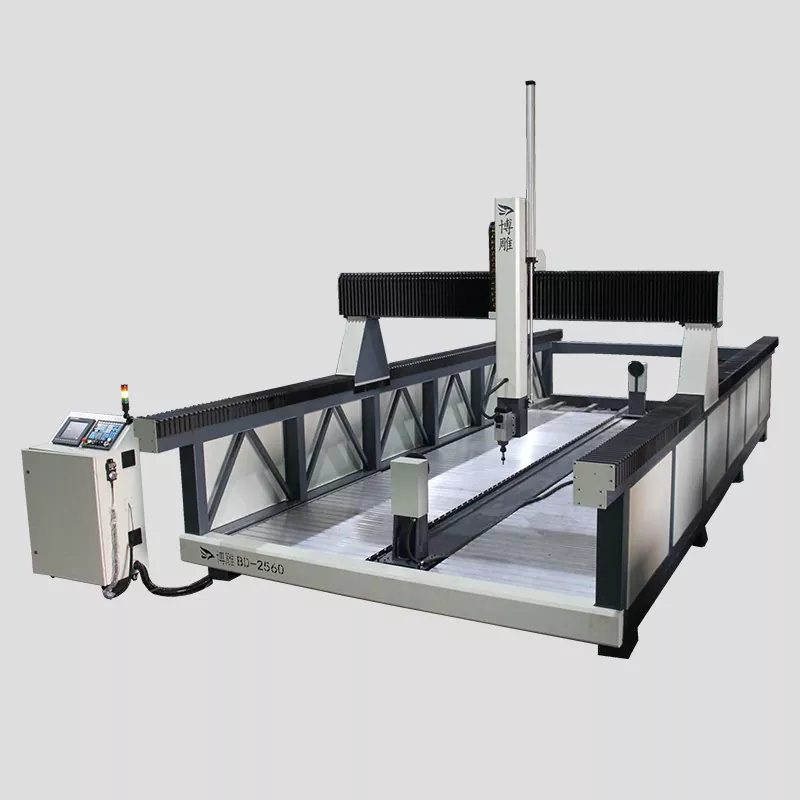
When operating a Prop Foam Carving Machine for professional movie prop fabrication, selecting the correct foam density is not merely a technical detail—it is the foundation of successful prop durability, carving precision, and surface finishing. BoDiao, a trusted name in precision foam carving equipment, consistently emphasizes that density choice directly impacts how well a Prop Foam Carving Machine translates digital designs into physical props that withstand the demands of film sets.
Understanding Foam Density for Movie Prop Carving
Foam density is measured in pounds per cubic foot (PCF) or kilograms per cubic meter (kg/m³). The table below outlines the most common densities used with a Prop Foam Carving Machine in professional film production.
| Density (PCF) | Common Name | Best For | Carving Ease | Durability |
|---|---|---|---|---|
| 1.0 - 1.5 PCF | Ultra-light | Background props, set dressing | Very easy | Low |
| 2.0 - 2.5 PCF | Standard | Hero props, armor pieces | Moderate | Medium |
| 3.0 - 4.0 PCF | High-density | Weapon grips, detailed masks | Challenging | High |
| 5.0+ PCF | Tooling foam | Mold masters, repeated casts | Hard | Very high |
The Optimal Density Range for Movie Props
For most movie prop applications using a Prop Foam Carving Machine, the optimal density falls between 2.0 and 3.5 PCF. Within this range, the foam holds fine details from CNC carving, resists crumbling during sanding, and remains light enough for actors to handle comfortably. BoDiao machines are engineered to handle up to 4.0 PCF without excessive tool wear, making them ideal for prop shops that require both speed and finish quality.
Density Recommendations by Prop Type
-
Lightweight background props (1.0-1.5 PCF): Suitable for items that appear briefly or in deep background. These stress the Prop Foam Carving Machine minimally but produce dusty chips.
-
Hero props and armor (2.0-2.5 PCF): The industry standard. Works flawlessly with BoDiao rotary and hot wire attachments.
-
Close-up detailed props (3.0-3.5 PCF): Excellent for facial prosthetics molds and weapon grips. Requires slower feed rates on any Prop Foam Carving Machine.
-
Mold masters (4.0+ PCF): Used when the carved foam becomes a master for silicone molding. BoDiao machines maintain precision at these densities but benefit from upgraded tooling.
Prop Foam Carving Machine FAQ
What happens if I use foam that is too dense for my Prop Foam Carving Machine
Using excessively dense foam (above 5.0 PCF) on a standard Prop Foam Carving Machine can lead to several problems including accelerated bit wear, motor overheating, rough surface finishes, and potential stepper motor skipping due to increased cutting resistance. For BoDiao machines, the recommended upper limit is 4.0 PCF for regular use. If you must carve denser foams, reduce spindle speed by 30%, decrease feed rate by half, and use single-flute carbide bits. Exceeding density limits also increases fire risk from friction heat, so always monitor chip color—dark brown or black chips indicate excessive heat.
Can I carve multiple densities on the same Prop Foam Carving Machine without recalibration
Yes, but some adjustments are necessary for optimal results. A quality Prop Foam Carving Machine like those from BoDiao can switch between 1.5 PCF and 3.5 PCF without mechanical recalibration, but you must adjust cutting parameters. When moving from low to high density, reduce spindle RPM by 15-20% and decrease feed rate by approximately 40%. The machine should also be re-zeroed because denser foams compress less under the probing pressure. For BoDiao users, the control software includes preset density profiles that automatically adjust feed rates and stepover percentages. Without such presets, always run a small test carve when changing density by more than 1.0 PCF.
How do I prevent surface fuzzing when carving low-density foam on a Prop Foam Carving Machine
Low-density foams (below 1.8 PCF) are notorious for producing a fuzzy or hairy surface after carving. To solve this with any Prop Foam Carving Machine, use these proven methods: first, increase spindle speed to the maximum safe RPM while reducing feed rate by 30-40%—this shears rather than tears the foam cells. Second, use a down-cut spiral bit which pushes chips downward and compresses the foam surface during cutting. Third, apply a light mist of water or isopropyl alcohol before the final finishing pass; this temporarily stiffens the foam fibers. BoDiao machines equipped with vacuum tables also reduce fuzzing by holding the foam rigidly. After carving, a quick pass with a heat gun or torch on low setting will melt microscopic fuzz without distorting details. For the cleanest results, some prop makers apply one thin coat of shellac or PVA before the final carving pass.
Professional Recommendations from BoDiao
Based on extensive testing with BoDiao Prop Foam Carving Machine systems, the safest and most versatile density for movie prop workshops is 2.2 PCF (expanded polystyrene with fine cell structure). This density offers the best balance of detail retention, chip evacuation, and post-processing workability. For hero props requiring paint and handling, 3.0 PCF polyurethane foam is superior, though it demands sharper tooling and more frequent dust extraction.
Contact Us
Ready to optimize your foam carving workflow with the right density and equipment Contact BoDiao today for personalized recommendations on selecting the perfect Prop Foam Carving Machine configuration for your film prop studio. Our engineering team provides free material testing and density sampling to ensure your first carve is production-ready. Reach out via the contact form on our website or call our prop fabrication support line—let us help you bring your movie props to life with precision and reliability.