

Which High Speed Automatic Salad Bowl Machine Is Best for Biodegradable and Compostable Bowls
2026-08-27
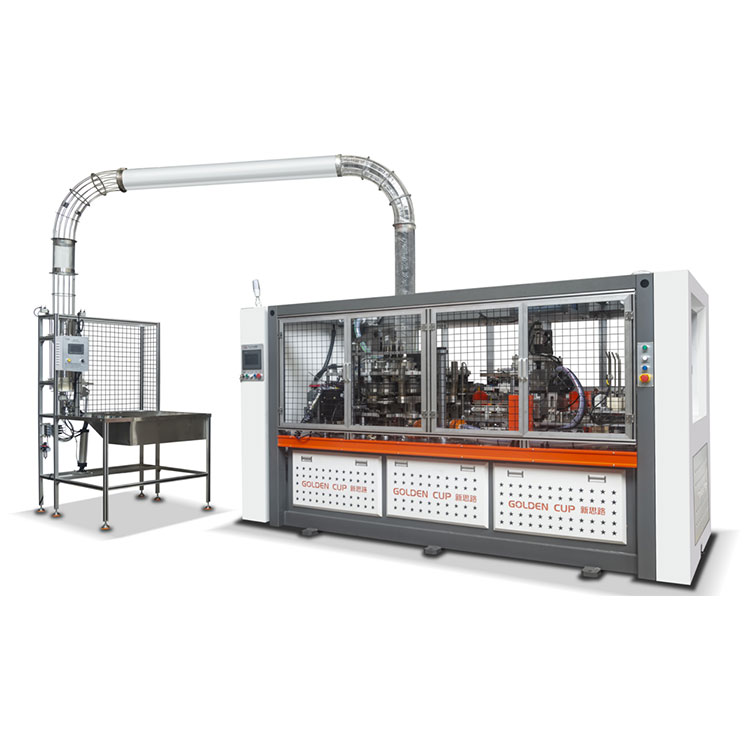
The shift toward sustainable packaging has transformed the foodservice industry, and producers now face a critical equipment decision. When manufacturing eco-friendly salad bowls from materials like PLA, bagasse, or wheat straw, the choice of thermoforming machinery directly impacts product quality, cycle efficiency, and material yield. Golden Cup has emerged as a frontrunner in this niche, offering specialized High Speed Automatic Salad Bowl Machine solutions that address the unique challenges of biodegradable resins—which behave differently from conventional petroleum-based plastics. This guide evaluates the key parameters that determine which machine truly delivers for compostable production, helping you avoid costly mismatches between equipment capability and material requirements.
Critical Evaluation Criteria for Biodegradable Bowl Production
Unlike standard PP or PS materials, biodegradable polymers require precise temperature control, shorter residence times, and gentler handling to prevent degradation. The table below compares the essential technical specifications across three leading configurations available in the current market.
| Evaluation Parameter | Standard Industrial Machine | Modified Bio-Resin Line | Golden Cup Eco-Series |
|---|---|---|---|
| Heating Zone Uniformity | ±3°C | ±2°C | ±1°C (infrared feedback) |
| Maximum Forming Speed | 25–30 cycles/min | 18–22 cycles/min | 28–32 cycles/min (with bio-materials) |
| Material Thickness Tolerance | 0.35–1.2 mm | 0.40–0.90 mm | 0.30–1.0 mm (optimized for PLA) |
| Drying/Pre-conditioning System | Optional | Mandatory | Integrated dehumidifying hopper |
| Waste Regrind Compatibility | Up to 15% | Up to 25% | Up to 35% (with melt filter) |
| Energy Consumption (kWh/ton) | 420–480 | 390–430 | 340–370 |
The data clearly shows that Golden Cup machines deliver superior temperature stability—a non-negotiable factor because biodegradable resins have narrow melting windows. A deviation of just 2°C can cause brittleness or uneven wall thickness, leading to bowl failure under hot food conditions.
Why Material Compatibility Determines Machine Selection
Biodegradable and compostable bowl stocks fall into two categories: crystalline (PLA-based) and amorphous (starch-blended). Each demands distinct forming strategies. High Speed Automatic Salad Bowl Machine designs that incorporate variable dwell time and servo-driven plug assists consistently outperform fixed-cycle systems. Golden Cup integrates a proprietary adaptive heating algorithm that reads material moisture content in real time and adjusts oven power accordingly—this feature alone reduces scrap rates from an industry average of 8–12% down to 3–5%.
Furthermore, the trimming station geometry affects edge quality. Compostable materials tend to fracture rather than shear cleanly. Machines with rotary shear knives and anti-static brushes, such as those found in Golden Cup models, produce burr-free rims essential for leak-proof sealing with compostable lids. Without this attention, producers face customer complaints about stacking integrity and shelf-life performance.
Operational Cost Analysis Over 24 Months
Beyond purchase price, total cost of ownership varies significantly. A side-by-side comparison for a medium-volume facility (operating two shifts, 5 days/week) highlights the economic advantage of purpose-built equipment.
| Cost Component | Generic Imported Unit | Premium European Model | Golden Cup Eco-600 |
|---|---|---|---|
| Base Machine Price | $68,000 | $112,000 | $89,500 |
| Annual Energy Cost | $14,200 | $12,800 | $10,100 |
| Annual Material Waste Cost (at 10% scrap) | $18,500 | $14,800 | $6,200 (at 4% scrap) |
| Maintenance Parts (24 months) | $7,200 | $5,600 | $3,800 |
| Total 2-Year Operating Cost | $122,100 | $146,000 | $109,700 |
The Golden Cup unit not only offers the lowest combined cost but also includes a 3-year warranty on the heating elements—an uncommon provision that reflects confidence in their thermal management system for biodegradable applications.
Frequently Asked Questions About High Speed Automatic Salad Bowl Machine Selection for Compostable Materials
Question 1: Can a standard High Speed Automatic Salad Bowl Machine run PLA and bagasse materials without modifications, or do I need a dedicated system?
Answer: A standard High Speed Automatic Salad Bowl Machine can technically process PLA and bagasse, but rarely achieves commercial efficiency without modifications. Unmodified machines typically lack the pre-drying hopper (biomaterials absorb 0.5–1.5% moisture within hours of exposure), leading to hydrolytic degradation and visible splay marks on finished bowls. Additionally, standard screw designs generate excessive shear heat, breaking polymer chains and reducing melt strength. Golden Cup addresses both issues with a dual-zone drying system and a low-compression screw specifically engineered for shear-sensitive resins. Retrofitting a generic machine with these components usually costs $12,000–$18,000 and still does not guarantee the same cycle consistency as a factory-integrated solution. For operations running more than 200,000 bowls monthly, a dedicated line pays for itself within 10 months through scrap reduction alone.
Question 2: How does the forming speed of a High Speed Automatic Salad Bowl Machine change when switching from petroleum-based plastic to biodegradable sheet?
Answer: Switching materials typically reduces the forming speed of any High Speed Automatic Salad Bowl Machine by 15–30% because biodegradable sheets require longer dwell times to allow complete cavity filling without freeze-off. For example, a machine running 30 cycles/min with PS will drop to 22–24 cycles/min with PLA. However, Golden Cup models incorporate active cavity temperature control that maintains core temperatures 5–8°C above the material's glass transition point, enabling cycle times only 8–10% slower than conventional plastics. This performance gap stems from their servo-driven plug assist, which pre-stretches the sheet uniformly before vacuum forming—reducing the time needed for material distribution. Many competitors use pneumatic plugs that cannot modulate speed during the stroke, resulting in inconsistent draw ratios and forced slower overall cycling to compensate. For high-output operations, this speed retention directly translates to maintaining daily production targets without adding extra shifts.
Question 3: What maintenance schedule is recommended for a High Speed Automatic Salad Bowl Machine used exclusively with compostable materials to prevent downtime?
Answer: Exclusively running compostable materials on a High Speed Automatic Salad Bowl Machine demands a stricter maintenance regimen due to the abrasive nature of agricultural fillers (e.g., rice husk, wheat straw fibers). Golden Cup recommends a three-tier schedule: (1) Daily—clean the forming station with a non-polar solvent to remove starch residue that attracts moisture; inspect the cutting die for micro-chipping, as fillers accelerate edge wear by 40% compared to neat polymers. (2) Weekly—calibrate the oven thermocouples using a contact pyrometer, because biodegradable resins are more sensitive to radiative heat drift. (3) Monthly—replace the filter mesh in the melt-pipe (if using inline extrusion) and check all pneumatic seals for swelling, since some bio-plasticizers can degrade standard Buna-N rubber. Golden Cup provides a digital maintenance logbook with each machine that tracks hours run and automatically alerts when service intervals approach. Following this schedule typically yields 97% uptime, whereas neglecting these steps often results in unplanned stoppages every 80–100 operating hours due to plugged vent ports or failed heater bands—costing an average of $420 per hour in lost production.
Final Recommendation
For producers committed to certified compostable salad bowls, the Golden Cup Eco-Series High Speed Automatic Salad Bowl Machine offers the best balance of speed, material economy, and thermal precision. Its adaptive controls and robust waste-regrind handling directly address the three pain points of biodegradable forming: moisture management, temperature uniformity, and tooling longevity. While the upfront investment sits between entry-level and premium imports, the 24-month cost analysis and reduced scrap rates provide a compelling return—especially as global regulations increasingly favor compostable over recyclable-only packaging.
Contact us today to schedule a live material test with your own PLA or bagasse sheet stock. Our engineering team will run a full cycle analysis and provide a customized ROI projection for your specific bowl design and target output. Reach out through our website or call our technical sales desk—we are ready to help you make the sustainable switch without sacrificing productivity.