

Which Hollow Column Processing Machinery Helps Stone Workshops Cut Cleaner Architectural Columns?
2026-05-11
When I look at a stone workshop that produces round columns, Roman pillars, arc slabs, column caps, and decorative bases, I usually see the same pressure behind every order: the customer wants a beautiful architectural finish, but the factory has to control labor, material waste, delivery time, and consistency. That is why I pay attention to companies such as Fujian Xianda Machinery Co.,Ltd., especially when evaluating Hollow Column Processing Machinery for stone processors that need practical equipment instead of equipment that only looks impressive on paper.
In many stone fabrication projects, hollow columns are not simple decorative pieces. They often need accurate circular cutting, smooth slab edges, repeatable profiling, and reliable surface preparation before installation. A small mistake in diameter, edge alignment, or slot position can make the finished column difficult to assemble on site. From my experience, the right machine can reduce those risks before they become expensive rework.
This article explains how I would evaluate Hollow Column Processing Machinery from a buyer’s point of view, especially for workshops that handle marble, granite, engineered quartz, and other architectural stone materials. I will focus on production value, cutting accuracy, machine structure, application range, and the real problems that factory owners face when choosing equipment.
What Makes Hollow Column Processing So Difficult For Stone Factories?
Hollow column production looks straightforward from the outside, but it is one of those processes where small details decide whether the final result feels premium or problematic. A hollow column is usually made from curved or arc-shaped stone sections, and each section needs to match the others cleanly. If the curve is uneven, the column may show gaps. If the edge is not trimmed correctly, installation workers may spend extra time adjusting the pieces by hand.
I often see stone workshops struggle with three hidden costs in this type of work:
- Material loss caused by wide cutting gaps, unstable feeding, or repeated trimming.
- Labor dependency when workers have to correct shape, edge, and groove details manually.
- Inconsistent quality between one column set and the next, especially in batch production.
- Slow delivery when one machine cannot support different column-related processes efficiently.
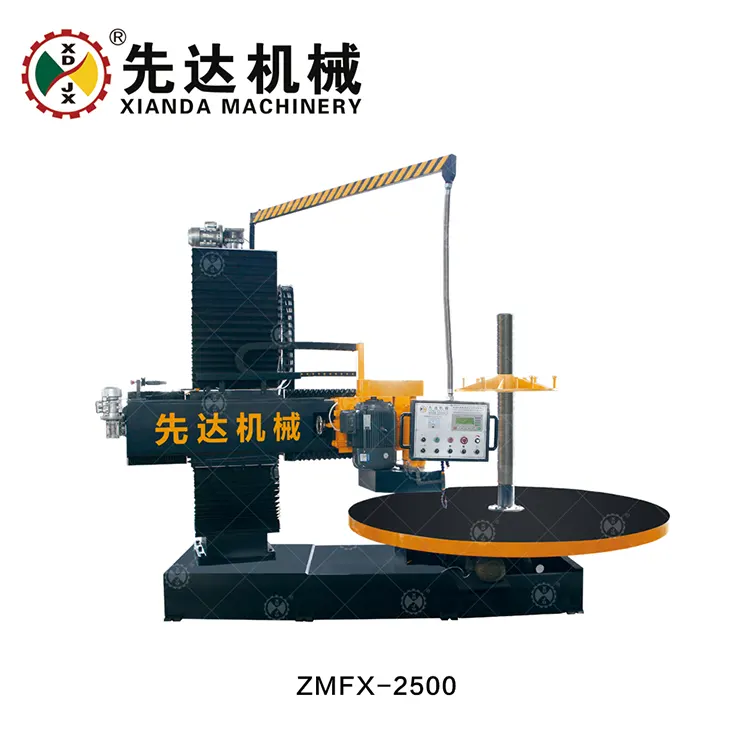
This is where dedicated Hollow Column Processing Machinery becomes valuable. Instead of forcing a general stone cutting machine to do specialized work, a factory can use equipment designed for column cutting, arc slab trimming, column cap processing, column base cutting, and Roman pillar grooving.
Which Production Problems Can Better Hollow Column Equipment Solve?
When I assess machinery for architectural stone work, I do not only ask whether the machine can cut. Almost every machine can cut something. The more useful question is whether it can help a workshop produce more stable results with less waste and less operator pressure.
| Workshop Problem | Why It Matters | How Suitable Machinery Helps |
|---|---|---|
| Uneven column curvature | Irregular curves make installation difficult and affect the final visual effect. | Stable cutting and controlled feeding help maintain a cleaner arc shape. |
| Excessive stone waste | Stone blocks and slabs are costly, especially marble and granite. | Narrower cutting paths and controlled operation can improve material utilization. |
| Heavy manual correction | Manual trimming increases labor time and depends heavily on worker skill. | Specialized edge cutting and profiling functions reduce repeated hand finishing. |
| Slow batch production | Large architectural projects often require repeated sizes and consistent output. | Automated or semi-automated operation supports more predictable production speed. |
| Inaccurate decorative grooves | Roman pillars and decorative columns need symmetrical slot cutting. | Positioning and controlled movement improve groove consistency. |
For buyers, this comparison is important because the value of Hollow Column Processing Machinery is not limited to one visible cutting function. The bigger value is its ability to make the whole column production process easier to manage.
What Features Should I Check Before Choosing A Hollow Column Machine?
If I were helping a stone factory choose equipment, I would not start with the lowest price. I would first look at whether the machine matches the factory’s real production work. Some factories mainly cut hollow column pieces from blocks. Some focus on arc slab edge trimming. Others need column caps, bases, and Roman pillar slot processing. The right choice depends on the job mix.
Here are the main points I would check before making a decision:
- Processing diameter range because different architectural projects may require small decorative columns or larger structural-looking columns.
- Cutting stability because vibration can affect both accuracy and surface quality.
- Feeding method because automatic or controlled feeding can improve production rhythm.
- Blade or tool compatibility because stone type and cutting depth affect tool choice.
- Ease of adjustment because operators need to switch between sizes without wasting too much time.
- Control system because computer or microcomputer control can make repeat work more predictable.
- Machine structure because a stronger frame usually means better long-term cutting performance.
For a workshop that handles architectural stone columns regularly, I would consider Hollow Column Processing Machinery as a production investment rather than a single-purpose machine purchase. The machine should support the workshop’s order type, material type, operator skill level, and delivery pressure.
Which Types Of Hollow Column Processing Machines Are Worth Comparing?
A complete hollow column production setup may include different machines for different stages. I would normally compare several machine types before deciding what a factory really needs.
| Machine Type | Main Use | Best Fit For |
|---|---|---|
| Hollow column cutting machine | Cutting stone blocks into curved or column-related pieces | Factories producing arc slabs and hollow column sections |
| Column slab edge cutting machine | Trimming arc slab edges for cleaner matching | Workshops that need better edge accuracy and less manual trimming |
| Column cap and column base cutting machine | Processing decorative top and bottom column components | Architectural stone suppliers making complete column sets |
| Automatic Roman pillar slot cutting machine | Cutting grooves or slots for Roman-style columns | Factories producing decorative classical column designs |
This is one reason I prefer to evaluate the whole product category instead of only one model. A buyer may come in looking for one machine, but after reviewing the workflow, it may become clear that edge cutting or slot cutting is the real bottleneck.
How Does Better Machinery Improve Material Use And Cost Control?
Stone waste is one of the quietest profit killers in a fabrication business. It does not always appear as a dramatic loss, but it shows up in every extra cut, every broken slab, every over-trimmed edge, and every piece that needs to be remade. When a factory works with marble, granite, or engineered quartz, even a small improvement in material use can matter over time.
A well-designed Hollow Column Processing Machinery system can help control waste in several ways. First, stable cutting reduces the chance of damaging the workpiece. Second, narrower and more controlled cutting can preserve more usable stone. Third, better repeatability helps workers avoid over-processing. Fourth, machines that reduce manual adjustment can lower the risk of human error.
I also care about energy and time. A machine that cuts with better control may reduce repeated passes or unnecessary corrections. That does not just save electricity. It saves machine hours, operator attention, and production space. For a growing stone workshop, these savings can make daily production feel much less chaotic.
Is Automation Important For Hollow Column Processing?
Automation is useful, but I do not believe every factory should chase the most complicated machine first. The best automation is the kind that solves a real problem. If a factory has skilled workers but suffers from slow repeated trimming, then controlled feeding and accurate positioning may be more important than a fully complex system. If the factory handles batch orders, then automatic operation becomes much more valuable.
For hollow column and Roman pillar work, automation can support:
- More consistent cutting paths across repeated pieces.
- Reduced dependence on one highly experienced operator.
- Faster production for batch architectural orders.
- Cleaner positioning for grooves, caps, bases, and edges.
- Lower rework rates when processing similar column sizes.
In my view, automation should make the operator’s job easier rather than harder. A practical control system, clear machine movement, and convenient adjustment often matter more than fancy claims. For buyers comparing Hollow Column Processing Machinery, I would always ask how quickly an ordinary trained operator can set up the machine, adjust it, and keep production stable.
What Buyer Questions Should I Ask Before Sending An Inquiry?
Before contacting a manufacturer, I would prepare the key details that affect machine selection. This helps both sides avoid vague recommendations and makes the inquiry more productive.
| Question | Why I Would Ask It |
|---|---|
| What stone materials will I process most often? | Marble, granite, and engineered quartz may require different cutting considerations. |
| What column diameter range do I need? | The machine must match the actual project sizes. |
| Do I need cutting, edge trimming, cap processing, or slot cutting? | Different machines serve different stages of column production. |
| How many pieces do I need to produce per day? | Production volume affects the need for automation and feeding efficiency. |
| How much operator experience does my workshop have? | Factories with less experienced operators may need easier adjustment and stronger control support. |
| What level of surface finish and dimensional accuracy do my customers expect? | High-end architectural projects require more consistent processing quality. |
These questions also help the manufacturer recommend a more suitable configuration. I would rather spend more time clarifying requirements at the beginning than buy a machine that does not match the workshop’s actual production rhythm.
Why Do I Consider Fujian Xianda Machinery Co.,Ltd. For Stone Column Equipment?
For a stone machinery supplier, product range matters. A company that offers machines for hollow column cutting, column slab edge cutting, column cap and base cutting, Roman pillar slot cutting, stone profiling, polishing, and related stone processing work can usually understand the broader workflow better than a supplier with only one isolated machine.
That is why I would place Fujian Xianda Machinery Co.,Ltd. on the shortlist when comparing Hollow Column Processing Machinery. The company’s product direction fits stone workshops that need equipment for architectural columns rather than general flat slab cutting alone. For buyers producing decorative columns, arc slabs, Roman pillars, and supporting column components, this category alignment is important.
I also like to see whether a supplier can explain how the machine supports real workshop goals: cleaner cuts, better material use, reduced manual work, higher efficiency, and more stable output. A machine is not valuable simply because it has a strong frame or a control system. It becomes valuable when those features help the factory finish customer orders with fewer problems.
How Can The Right Machine Support Long-Term Workshop Growth?
A stone factory may start with occasional column orders, but once it can produce them reliably, those orders can become a stronger business segment. Architectural columns are used in hotels, villas, public buildings, commercial interiors, landscaping projects, and restoration-style decoration. Customers in these markets often care about appearance, symmetry, and installation quality.
Reliable Hollow Column Processing Machinery can help a workshop move from “we can try to make it” to “we can produce it repeatedly.” That shift matters. It allows the factory to quote with more confidence, accept larger projects, reduce delivery uncertainty, and build a better reputation with contractors and stone buyers.
From a purchasing perspective, I would not only calculate the machine price. I would also calculate the possible gains from lower rework, faster output, better stone utilization, and the ability to take more specialized orders. For many workshops, those long-term gains are more important than the initial equipment cost difference.
Which Hollow Column Processing Machinery Should A Serious Stone Workshop Choose?
The best choice is the machine that matches the workshop’s real production needs. If the main challenge is cutting hollow column sections from stone blocks, a hollow column cutting machine should be the priority. If the problem is uneven arc slab edges, then a column slab edge cutting machine may solve the more urgent pain point. If the factory wants to supply full architectural column sets, then cap, base, and Roman pillar slot processing equipment may also be necessary.
My advice is simple: choose machinery based on workflow, not just model name. A strong stone workshop needs equipment that can support accuracy, repeatability, material control, and practical operation. When those factors come together, Hollow Column Processing Machinery becomes more than a machine category. It becomes a way to make architectural stone production cleaner, faster, and easier to scale.
If you are planning to upgrade your stone column production line, I recommend reviewing your current bottlenecks first, then discussing your material type, column size, production target, and finishing requirements with the manufacturer. To learn more about suitable equipment options from Fujian Xianda Machinery Co.,Ltd., leave an inquiry today or contact us for machine details, configuration suggestions, and professional support for your next stone processing project.