

Which Quick Mold Change System Improves Injection Molding Efficiency?
2026-09-29
Article Summary
In modern manufacturing, reducing machine downtime and improving production flexibility have become critical challenges for injection molding factories. A Quick Mold Change System provides a practical solution by simplifying mold replacement, improving operator safety, and creating a more stable production workflow. This article explains which factors determine the right quick mold change solution, how the system works, what components are required, and how manufacturers can achieve higher equipment utilization with ADCS technology.
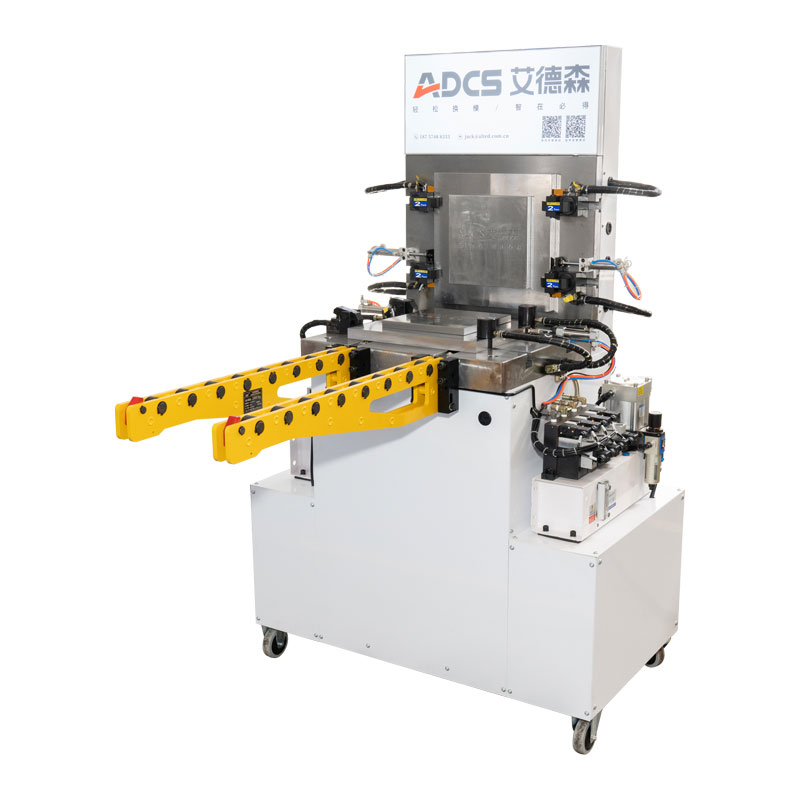
Which Problems Does a Quick Mold Change System Solve?
For many molding factories, the biggest production loss does not always happen during machining or molding cycles. A large amount of valuable production time is often consumed during mold replacement. Traditional mold changing processes usually require multiple workers, manual tightening operations, alignment adjustments, and repeated inspection steps.
When production schedules include frequent product changes, these small delays accumulate into significant capacity losses. A Quick Mold Change System is designed to simplify this process by replacing complicated manual operations with controlled clamping, positioning, and connection solutions.
- Long machine downtime during mold replacement
- Unstable changeover time between different operators
- Heavy manual workload and safety risks
- Difficulty managing high-mix, low-volume production
- Repeated mold positioning adjustments
Instead of spending extended time removing bolts and manually adjusting molds, operators can complete mold replacement through a more standardized process. This helps manufacturers maintain production continuity while reducing unnecessary waiting time.
Which Components Build a Complete Mold Change Solution?
A reliable Quick Mold Change System is not only a single clamping device. It is a coordinated solution combining mechanical structures, hydraulic or pneumatic systems, positioning components, and control technology.
| Component | Main Function | Production Value |
|---|---|---|
| Hydraulic Mold Clamps | Secure the mold quickly and provide stable holding force | Reduce manual tightening work and improve consistency |
| Power Unit | Supply hydraulic pressure for clamp operation | Ensure stable and reliable system performance |
| Mold Positioning System | Maintain accurate mold alignment | Reduce setup adjustment time |
| Quick Connection System | Support faster utility connection and disconnection | Improve changeover efficiency |
| Control System | Manage operation sequence and safety protection | Create a safer working environment |
ADCS focuses on developing practical mold change solutions that match different machine structures and production requirements. Each system configuration needs to consider machine size, mold weight, working environment, and expected change frequency.
Hydraulic Clamping Technology
Hydraulic clamping is widely applied in industrial mold change applications because it provides strong holding force with controlled operation. Compared with traditional manual fixing methods, hydraulic clamps help achieve faster locking and releasing while maintaining stable mold positioning.
Precision Positioning Control
Accurate mold positioning directly influences product quality. A small deviation during installation may affect molding precision, cycle stability, and final product consistency.
A well-designed positioning system reduces repeated adjustment work and allows operators to complete mold replacement with greater confidence.
Which Benefits Can Manufacturers Gain?
The purpose of adopting a Quick Mold Change System is not only faster mold replacement. The real value comes from improving the entire production process.
Higher Machine Utilization
Shorter mold change periods mean more available production hours. Factories can increase output without immediately adding additional machines.
Improved Production Flexibility
Manufacturers producing multiple product models can switch between molds more efficiently and respond faster to customer orders.
Better Operation Safety
Reducing manual mold handling operations lowers physical workload and decreases potential risks during changeover procedures.
More Stable Quality
Standardized mold installation helps reduce human differences and supports consistent production conditions.
| Traditional Mold Change | Quick Mold Change System |
|---|---|
| Multiple manual fastening steps | Controlled automatic clamping process |
| Long setup adjustment time | Fast positioning and repeatable operation |
| Depends heavily on operator experience | More standardized workflow |
| Higher physical workload | Reduced manual intervention |
Which Factors Should Be Considered Before Installation?
Selecting a Quick Mold Change System requires careful evaluation. A suitable solution should match the actual production environment instead of simply focusing on speed.
Machine Compatibility
Before installation, manufacturers should check machine specifications including:
- Machine tonnage
- Platen dimensions
- Mold weight range
- Existing hydraulic or electrical connections
- Available installation space
Production Requirements
Different factories have different priorities. A company producing thousands of identical parts may focus on maximum uptime, while a manufacturer producing customized products may require frequent and flexible mold switching.
| Production Situation | Recommended Focus |
|---|---|
| High-frequency mold replacement | Fast clamping and automated operation |
| Heavy molds | Strong support and stable positioning |
| Multiple product models | Flexible mold switching capability |
| Continuous production lines | Reliable safety control |
Long-Term Maintenance
A good mold change system should not only perform well after installation but also remain reliable during long-term operation. Easy maintenance access, quality components, and professional technical support all influence the overall service experience.
Which Industries Need Quick Mold Change Technology?
As manufacturing moves toward flexible production, quick mold changing technology is becoming valuable across different industries.
- Automotive Parts Manufacturing: frequent component updates require flexible production capability.
- Consumer Electronics: short product cycles create demand for faster mold switching.
- Medical Products: stable production conditions are essential for precision components.
- Packaging Industry: multiple packaging designs require efficient changeover.
- Home Appliance Manufacturing: different product models benefit from reduced setup time.
For manufacturers facing increasing customization requirements, a Quick Mold Change System helps create a more adaptable production environment.
How ADCS Supports Efficient Mold Change Solutions
ADCS provides industrial mold change solutions designed around real manufacturing challenges. From system configuration to installation requirements, every project requires detailed consideration of machine conditions, production goals, and operational safety.
With professional engineering experience and a focus on practical application, ADCS helps customers improve mold replacement efficiency, reduce unnecessary downtime, and build more flexible production systems.
Frequently Asked Questions
Q1: What is a Quick Mold Change System?
A Quick Mold Change System is a solution designed to simplify and accelerate mold replacement operations through components such as hydraulic clamps, positioning devices, power units, and control systems.
Q2: Which machines can use a Quick Mold Change System?
It can be applied to various molding equipment including injection molding machines, die casting machines, and other production equipment requiring frequent mold replacement.
Q3: Does a Quick Mold Change System improve production efficiency?
Yes. By reducing mold replacement time and minimizing manual operations, manufacturers can improve machine utilization and production flexibility.
Q4: How does ADCS customize a mold change solution?
ADCS evaluates machine specifications, mold characteristics, production frequency, and customer requirements before designing a suitable configuration.
Q5: What should manufacturers prepare before installing the system?
Manufacturers should provide machine details, mold information, production requirements, and installation conditions to ensure proper system matching.
Improve Your Mold Change Efficiency with ADCS
A faster mold replacement process can create more production capacity, improve flexibility, and reduce operational pressure. If you are looking for a reliable Quick Mold Change System solution for your manufacturing equipment, ADCS is ready to provide professional technical support and customized recommendations.
Contact us today to discuss your production requirements and discover how ADCS can help optimize your mold change process.