

A rubber sheet production system plays an important role in converting mixed rubber compounds into consistent, manageable sheets for downstream manufacturing. However, uneven thickness, excessive sticking, insufficient cooling, unstable conveying, material waste, and frequent manual handling can limit factory productivity. This guide explains the major stages of rubber sheet production, the functions of key machines, and the practical factors manufacturers should evaluate when selecting an integrated system. It also covers cooling methods, process control, quality inspection, equipment maintenance, and common purchasing mistakes to help rubber processors build a more reliable and efficient production workflow.
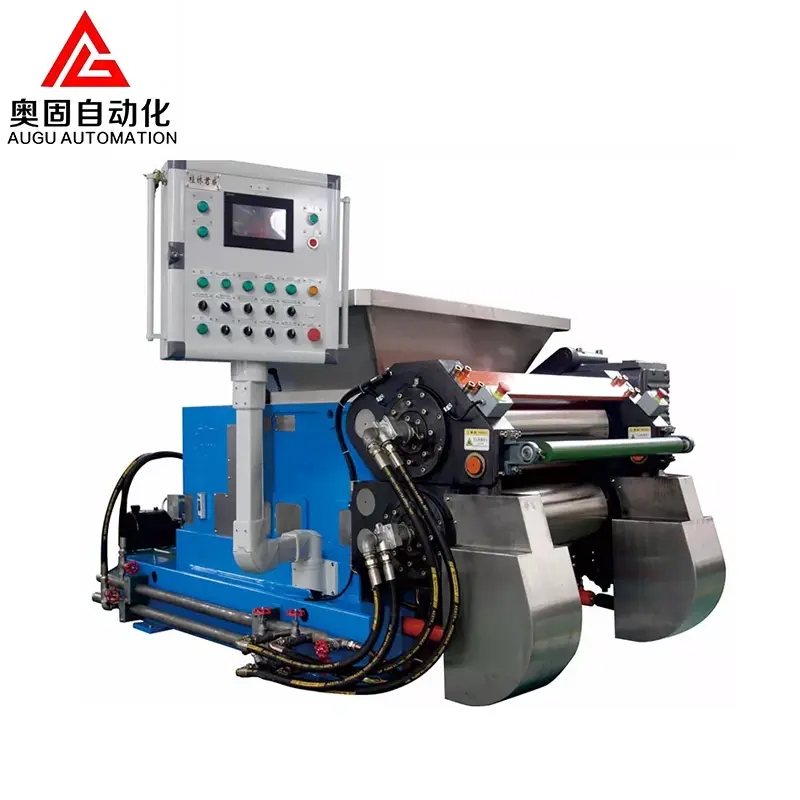
What Is a Rubber Sheet Production System?
A rubber sheet production system is an integrated arrangement of machinery designed to process rubber compounds into sheets with controlled dimensions, consistent quality, and suitable handling characteristics. Depending on the application, the system may include rubber feeding equipment, mixing and milling equipment, extrusion or calendering machinery, cooling lines, conveyors, cutting devices, and stacking or winding units.
These systems are widely relevant to tire manufacturing and other rubber-processing operations where intermediate rubber sheets must be prepared for subsequent production stages. For example, rubber compounds used in tire components may require controlled thickness, stable temperature, and clean surfaces before they can move to the next operation.
The exact configuration depends on the rubber formulation, sheet dimensions, required output, downstream process, and factory layout. A system designed for one material or product specification may not deliver the same results when used for another without suitable adjustments.
The objective is not simply to produce rubber sheets quickly. A well-configured system must also maintain material consistency, control temperature, minimize sticking and deformation, and deliver sheets in a form that downstream equipment can process reliably.
Manufacturers should therefore evaluate the complete production workflow rather than treating each machine as an isolated purchase. A bottleneck at the cooling, conveying, or stacking stage can reduce the output of an otherwise high-capacity production line.
Which Production Problems Can a Well-Designed System Address?
Rubber processing involves materials whose behavior changes with temperature, formulation, processing history, and mechanical handling. Even when the rubber compound is prepared correctly, problems can emerge as the material moves between machines.
1. Uneven Sheet Thickness
Thickness variation can affect material consumption, product weight, downstream processing, and final product consistency. Possible causes include unstable feeding, incorrect machine settings, inconsistent compound conditions, or wear in the forming equipment.
Suitable process controls, stable feeding, and regular measurement help operators identify variation before it spreads across an entire production batch.
2. Rubber Sticking During Conveying
Warm rubber sheets may adhere to rollers, belts, or adjacent layers. Sticking can interrupt material flow, damage sheet surfaces, increase manual handling, and create unplanned cleaning work.
Appropriate cooling, compatible contact surfaces, suitable conveying arrangements, and carefully selected anti-adhesion measures can help reduce this risk.
3. Inconsistent Cooling
If cooling is uneven, different areas of a sheet may have different handling characteristics. This can contribute to deformation, sticking, or unstable stacking and winding.
A suitable cooling arrangement should account for sheet dimensions, line speed, material characteristics, airflow or water distribution, and the required condition at the line outlet.
4. Excessive Manual Handling
Manual transfer between separate machines creates additional labor requirements and opportunities for contamination, handling damage, and production delays. Coordinated conveyors, automated cutting, and suitable stacking equipment can make material transfer more consistent.
5. Frequent Production Interruptions
Unplanned stops may result from material buildup, conveyor misalignment, sensor faults, inconsistent feeding, or poor coordination between machines. An integrated control strategy can help operators detect interruptions earlier and coordinate equipment more effectively.
| Production Challenge | Possible Cause | Practical Improvement |
|---|---|---|
| Uneven thickness | Unstable feeding or forming settings | Check feed consistency and verify thickness at defined intervals |
| Sheet sticking | Insufficient cooling or unsuitable contact surfaces | Review cooling performance and material handling methods |
| Sheet deformation | Uneven temperature or excessive handling tension | Improve temperature uniformity and adjust conveying conditions |
| High labor demand | Manual transfer, cutting, and stacking | Consider coordinated conveying and automated handling |
| Frequent line stops | Material buildup, control faults, or poor synchronization | Improve interlocks, preventive maintenance, and process monitoring |
| High material waste | Inconsistent dimensions or damaged sheets | Strengthen process monitoring and investigate recurring defects |
How Does the Rubber Sheet Production Process Work?
Although production arrangements differ by application, many rubber sheet processing workflows follow a sequence of preparation, forming, cooling, inspection, and material handling. Understanding the purpose of each stage makes it easier to identify the right equipment and locate production bottlenecks.
Material Preparation
Rubber and required ingredients are prepared according to the production formulation. Consistent material preparation supports stable processing and helps reduce batch variation.
Mixing and Plasticizing
The compound is mixed and processed to achieve the required material characteristics. Mixing conditions should follow the formulation and established process parameters.
Sheet Forming
Depending on the process, the compound passes through suitable extrusion or calendering equipment to form a continuous rubber sheet with the required dimensions.
Cooling and Stabilization
The hot sheet travels through a cooling arrangement designed to remove heat and prepare the material for subsequent handling.
Inspection and Cutting
Operators or integrated inspection equipment check relevant dimensions and visible defects. Cutting equipment can prepare the material for the next production stage.
Stacking or Winding
Finished sheets are stacked, separated, or wound according to the product specification and the requirements of the downstream process.
Not every factory needs every stage in the same configuration. Some operations use existing mixing or forming machinery and need only an upgraded cooling and handling line. Others may require a more comprehensive solution to connect separate production processes.
Before purchasing equipment, manufacturers should identify where their current process loses time, material, or consistency. This assessment helps establish whether the main requirement is increased cooling capacity, more stable sheet forming, improved automation, or better coordination across the entire line.
Which Machines Are Essential to a Rubber Sheet Production System?
The most suitable equipment combination depends on the product and the existing factory process. The following machines and modules are common considerations when planning or upgrading a rubber sheet production line.
Rubber Mixing and Feeding Equipment
Consistent feeding helps maintain a stable supply of compound to the forming process. Depending on the factory's needs, material handling and weighing equipment may also help improve ingredient management and reduce repetitive manual work.
Extrusion or Calendering Equipment
These machines form the rubber into a continuous sheet. The choice depends on the compound, desired dimensions, production method, and downstream application. The machine should be matched to the required throughput rather than selected on maximum capacity alone.
Rubber Sheet Cooling Line
A cooling line receives hot rubber sheets and reduces their temperature under controlled handling conditions. Depending on the design, it may incorporate rollers, conveyors, spray or immersion cooling, and water-removal sections.
Cooling systems may also be configured with additional functions such as powder application, thickness measurement, cutting, or automatic winding when these functions are appropriate for the production requirements.
Conveying, Cutting, and Stacking Equipment
These modules move sheets between stages, prepare material to the required length or format, and organize finished sheets for transfer or storage. Their speed and working dimensions should be compatible with the forming and cooling equipment.
| Equipment Type | Main Function | Key Selection Consideration |
|---|---|---|
| Material feeding system | Provides a consistent supply of compound | Material characteristics and required feed rate |
| Extruder or calender | Forms the rubber sheet | Thickness, width, compound behavior, and output |
| Cooling line | Removes heat and supports stable handling | Cooling capacity, line speed, and sheet dimensions |
| Powder application unit | Helps control sticking where the process requires it | Material compatibility and application uniformity |
| Cutting system | Produces specified sheet lengths or sections | Cutting accuracy, cycle rate, and product format |
| Stacking or winding unit | Prepares material for transfer and storage | Handling method, space, and downstream requirements |
Why Is Cooling Critical to Rubber Sheet Quality?
Cooling is a key stage because rubber sheets can remain warm and deformable after forming. If they are transferred or stacked before reaching an appropriate handling condition, they may stick together, become distorted, or create difficulties during subsequent processing.
A properly configured rubber sheet cooling system should remove heat while maintaining stable sheet movement. Cooling requirements depend on the compound, initial material temperature, sheet thickness, width, line speed, ambient conditions, and the acceptable outlet condition.
Common Cooling Line Configurations
- Flat or floor-standing cooling lines: These can suit layouts where a horizontal material path is preferred and sufficient floor space is available.
- U-shaped batch-off lines: A folded material path can help organize the cooling process within a suitable factory footprint.
- Overhead cooling lines: These can help use vertical space where the building structure and material-handling requirements permit overhead installation.
- Roller-based cooling arrangements: Roller configurations can support controlled sheet transport and can be selected according to the production process.
Each configuration has different layout, maintenance, access, and handling implications. No single arrangement is automatically the best for every factory.
What Should Be Checked During Cooling Line Selection?
- Confirm the normal and maximum sheet width and thickness.
- Identify the required line speed and expected production volume.
- Determine the temperature and handling condition required at the outlet.
- Review water distribution, drainage, and water-removal requirements if water cooling is used.
- Check whether the sheet requires an anti-sticking treatment or separation process.
- Confirm that the conveying path will not introduce excessive tension or deformation.
- Provide sufficient space for operation, cleaning, inspection, and maintenance.
Important: More cooling capacity does not automatically guarantee better results. The cooling line must be matched to the material and production speed, and its performance should be validated under representative operating conditions.
How Should You Evaluate a Rubber Sheet Production System?
Choosing equipment solely by price or advertised production speed can create expensive problems later. A more reliable decision considers the actual production requirements, the factory environment, and the total cost of operating the system.
1. Define Product Specifications
Start with the rubber compound, product application, sheet width, thickness range, acceptable dimensional variation, and downstream handling requirements. These details establish the foundation for equipment selection.
2. Calculate Realistic Production Demand
Estimate the required hourly or shift output and consider product changeovers, cleaning, maintenance, and other planned interruptions. The target should reflect sustainable production rather than an ideal maximum speed that may be difficult to maintain.
3. Check Compatibility With Existing Machinery
For a factory upgrading an existing line, verify conveyor heights, transfer points, electrical supply, control interfaces, available floor space, and the capacity of upstream and downstream equipment.
4. Compare Automation Requirements
Some operations may benefit from basic speed synchronization and simple material transfer. Others may need integrated controls, automatic cutting, sensors, or coordinated stacking. Automation should address a clearly identified production need.
5. Evaluate Maintenance and Serviceability
Ask how frequently routine maintenance is expected, which components require regular inspection, how easily worn parts can be accessed, and what technical support is available. A machine that is difficult to service may create avoidable downtime over its operating life.
6. Confirm the Scope of Customization
Rubber processing requirements differ considerably between factories. A supplier should be able to clarify which dimensions, conveyor arrangements, cooling methods, controls, and auxiliary functions can be adapted to the application.
| Evaluation Factor | Questions to Ask | Why It Matters |
|---|---|---|
| Product range | What widths, thicknesses, and compounds must be processed? | Establishes the equipment's operating range |
| Output | What is the sustainable target speed and shift output? | Helps avoid bottlenecks and excessive capacity investment |
| Factory layout | How much floor space and vertical clearance are available? | Determines practical equipment arrangement |
| Automation | Which tasks should be automatic, and which remain manual? | Matches investment to actual operational needs |
| Quality requirements | How will thickness, temperature, and surface condition be checked? | Supports consistent production and defect prevention |
| Service | What training, spare parts, and technical support are provided? | Helps manage long-term operating risk |
How Can Manufacturers Improve Rubber Sheet Quality Control?
Reliable rubber sheet production requires more than a machine that runs smoothly. Quality must be monitored throughout the process so that deviations can be identified early and corrected before large quantities of material are affected.
Monitor Thickness and Width
Measure dimensions at defined intervals and whenever product settings change. Where suitable measurement equipment is available, automated monitoring can help identify trends and alert operators to deviations.
Track Temperature and Cooling Conditions
Temperature readings at relevant stages help operators assess whether the cooling process is stable. The appropriate target depends on the compound and the next operation, so limits should be established from product and process requirements.
Inspect Surface Condition
Check for visible contamination, tears, wrinkles, sticking marks, uneven surfaces, and handling damage. Defects should be recorded consistently so recurring patterns can be traced to their likely causes.
Keep Production Records
Useful records include product specifications, machine settings, production speed, inspection results, downtime events, cleaning activities, and material waste. Comparing these records helps teams understand whether a change in process settings actually improves performance.
Establish Clear Acceptance Criteria
Quality limits should be defined for each product type. Operators need to know which deviations can be corrected during production, which require the line to stop, and which require material to be isolated for further inspection.
These controls create a repeatable process rather than relying entirely on individual operator experience. They also make troubleshooting easier when the production line changes to a different compound or sheet specification.
How Can Automation Improve Rubber Sheet Production Efficiency?
Automation can reduce repetitive manual tasks and improve coordination between production stages. Its value is especially clear when separate machines need to maintain a consistent material flow or when handling errors contribute to quality losses.
Depending on the system design, useful automation functions may include:
- Coordinated conveyor and roller speed control.
- Automatic start and stop sequences between connected machines.
- Temperature or process-condition monitoring.
- Automatic cutting to defined dimensions.
- Integrated powder application where required by the process.
- Automatic stacking, winding, or transfer of finished material.
- Fault indicators and control-system alarms.
These functions can help reduce handling time and improve production repeatability. However, automation does not eliminate the need for appropriate process settings, preventive maintenance, operator training, and quality checks.
When calculating the business case for an automated system, manufacturers should consider several factors together: labor requirements, material waste, downtime, cleaning time, product changeovers, energy use, and maintenance costs. A realistic evaluation compares these factors with the purchase price and integration costs.
A practical automation strategy starts with the bottleneck. If cooling limits output, upgrading a cutting unit alone may have little effect. If manual stacking causes repeated delays, a suitable handling module may deliver more value than increasing the capacity of the forming machine.
Which Maintenance Practices Help Reduce Unplanned Downtime?
Preventive maintenance helps keep a rubber sheet production system operating within its intended conditions. The maintenance schedule should follow equipment documentation, operating hours, material characteristics, and the severity of the production environment.
Daily or Shift-Based Checks
- Inspect conveyors, rollers, and material transfer points.
- Check for rubber buildup, unusual vibration, or abnormal noise.
- Observe the consistency of cooling and material movement.
- Confirm that guards, emergency stops, and safety devices function correctly.
- Record recurring production interruptions and visible defects.
Periodic Maintenance
- Inspect bearings, drive components, belts, chains, and rollers.
- Check electrical connections, sensors, and control components.
- Clean cooling sections and inspect water distribution or drainage where applicable.
- Verify the condition and alignment of conveyors and transfer equipment.
- Inspect cutting devices and replace or service components according to their condition.
- Review spare parts availability and update maintenance records.
Plan for Safe Maintenance
Before maintenance begins, isolate energy sources and follow the site's lockout procedures. Moving rollers, conveyors, cutters, and other mechanical components can present serious hazards. Work should be performed only by trained personnel using the required protective measures.
A useful maintenance record identifies the equipment, inspection date, observed condition, work performed, replaced parts, and follow-up actions. Over time, these records help factories identify recurring failures and improve maintenance planning.
How Does Qingdao Augu Automation Equipment Co.,Ltd. Support Rubber Processing?
Choosing a production system is easier when the equipment supplier understands how different machines interact across the rubber manufacturing process. The cooling line, conveying arrangement, material handling method, and downstream equipment must work together to support stable production.
Qingdao Augu Automation Equipment Co.,Ltd. provides automation equipment and production solutions for rubber processing and tire manufacturing. Its product range includes rubber sheet cooling systems, batch-off cooling lines, twin-screw extruding sheet machines, and related equipment for rubber and tire production.
When discussing a project with a supplier, manufacturers should provide clear information about their current production process, material specifications, expected output, factory layout, and quality requirements. These details help establish a more practical equipment configuration and identify the functions that genuinely need customization.
Before confirming an order, it is also useful to clarify the installation scope, electrical and utility requirements, commissioning arrangements, operator training, spare parts, and after-sales technical support.
A well-planned system should fit the factory's actual workflow instead of forcing the production process to adapt to unsuitable equipment. Careful project evaluation helps reduce integration risks and supports more predictable operation over the equipment's service life.
Frequently Asked Questions About Rubber Sheet Production Systems
Its main purpose is to process rubber compound into sheets with suitable dimensions and handling characteristics for subsequent manufacturing. Depending on the configuration, the system may include feeding, forming, cooling, conveying, cutting, and stacking equipment.
The required equipment depends on the production method. A typical line may use mixing or feeding equipment, an extruder or calender, a cooling line, conveyors, and suitable cutting or stacking equipment. Existing factory machinery should be considered before deciding which modules to purchase.
A cooling line removes heat from freshly formed rubber sheets and helps prepare them for subsequent handling. Appropriate cooling can reduce sticking and deformation risks and support more stable material transfer, provided the line is correctly matched to the compound and production speed.
Consistency depends on stable material preparation, suitable forming equipment, controlled process settings, and regular dimensional checks. Operators should monitor changes and investigate deviations rather than relying only on occasional final-product inspection.
Possible causes include insufficient cooling, unsuitable material handling conditions, the characteristics of the rubber compound, and inadequate separation measures where needed. The appropriate corrective action depends on the actual material and process conditions.
In many cases, selected stages can be upgraded with coordinated conveyors, control systems, automatic cutting, monitoring equipment, or stacking modules. Compatibility with existing machinery, available space, control interfaces, and production requirements should be assessed first.
Consider the required sheet width and thickness, production speed, cooling requirements, factory floor space, available vertical clearance, handling method, and maintenance access. The final configuration should be confirmed against actual operating requirements.
Maintenance frequency depends on the equipment manufacturer's instructions, operating hours, working conditions, and the components involved. Routine inspections should be combined with scheduled servicing and additional checks whenever abnormal noise, vibration, buildup, or production variation appears.
Prepare the rubber compound information, sheet width and thickness range, target production speed, cooling requirements, factory layout, existing equipment details, automation preferences, and applicable quality criteria. Clear specifications help the supplier evaluate the proposed system more accurately.
A suitably configured system may reduce waste caused by unstable conveying, inconsistent dimensions, sticking, and unnecessary manual handling. Actual improvement depends on the existing process, equipment configuration, operating discipline, and the quality of process control.
Build a More Reliable Rubber Sheet Production Process
A reliable rubber sheet production system depends on more than the performance of an individual machine. Material preparation, sheet forming, cooling, conveying, cutting, and stacking must work together to maintain product quality and production continuity.
By identifying current bottlenecks, defining product specifications, selecting compatible equipment, and establishing consistent quality checks, manufacturers can make more informed investment decisions. Appropriate automation and preventive maintenance can further support stable operation while helping control labor requirements, material waste, and unplanned downtime.
Whether you are planning a new rubber processing line or upgrading existing equipment, a clear understanding of your production requirements is the best starting point.
Looking for a Rubber Sheet Production Solution?
Every rubber factory has different requirements for sheet dimensions, production capacity, cooling performance, and material handling. Qingdao Augu Automation Equipment Co.,Ltd. can help you explore suitable rubber processing and cooling equipment for your application.
Share your production requirements, existing line configuration, and target output with our team. Contact us to discuss your rubber sheet production system and explore an equipment solution tailored to your manufacturing needs.