

Which Sausage Stuffer Machine Is Easier to Clean – Stainless Steel or Plastic Gear Models
2026-07-07
Cleaning a Sausage Stuffer Machine is often the most dreaded part of the sausage-making process. Grease, meat fibers, and salt residue cling to every crevice, and if not removed properly, they can harbor bacteria and ruin future batches. For home butchers and small-scale producers, the choice between stainless steel and plastic gear models is not just about price or durability—it is fundamentally about cleaning efficiency, food safety, and long-term maintenance. In this guide, we break down the cleaning differences with professional rigor, highlight why SYBO prioritizes stainless-steel architectures, and help you decide which Sausage Stuffer Machine truly fits your workflow.
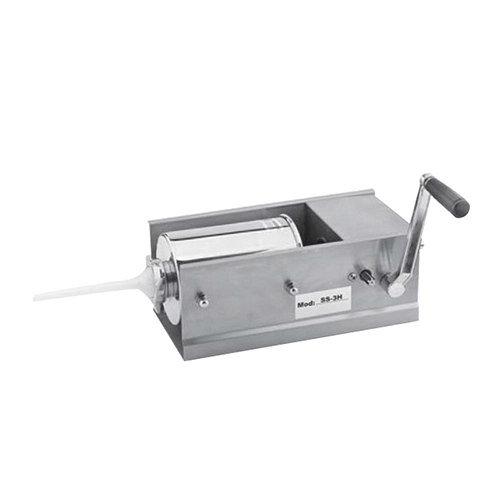
The Core Cleaning Challenge
Every Sausage Stuffer Machine has three high-risk zones for contamination:
-
The cylinder and piston (direct meat contact)
-
The stuffing tube and horn (narrow passages)
-
The gear housing and base (where grease and moisture accumulate)
Stainless steel models (especially those from SYBO) address these zones with seamless welded construction and electropolished interiors. Plastic gear models, while lighter and cheaper, introduce porous surfaces, hidden clips, and oil-absorbent polymers that trap odors.
Side-by-Side Comparison: Cleaning Factors
| Criteria | Stainless Steel Model (e.g., SYBO) | Plastic Gear Model |
|---|---|---|
| Surface Porosity | Non-porous, bactericidal effect when dried | Micro-scratches trap meat proteins |
| Disassembly Speed | Tool-free quick-release clamps (under 1 min) | Requires screwdrivers for gear cover removal |
| Dishwasher Safe | Yes (all metal parts) | No – high heat warps gears |
| Odor Retention | Zero – rinse with vinegar water | Retains garlic/onion smells for weeks |
| Corrosion Risk | None (food-grade 304/316) | Gear shafts rust if plating chips |
| Recommended Clean Time | 5–7 minutes | 15–20 minutes |
| Long-Term Cost | Higher upfront, near-zero replacement | Gears replace every 6–12 months |
Step-by-Step Cleaning Protocol (Professional Standard)
For a SYBO Stainless Steel Sausage Stuffer Machine, the process follows HACCP-inspired logic:
-
Immediate Rinse – Flush the cylinder with warm (not hot) water within 5 minutes of use to prevent protein coagulation.
-
Disassemble – Remove the piston, gasket, stuffing tube, and O-rings. Place all in a soapy soak (mild, non-chlorinated detergent).
-
Brush Interiors – Use a soft nylon brush for the cylinder; never steel wool (which scratches and creates bacterial hideouts). For the narrow tubes, a dedicated pipe cleaner is mandatory.
-
Sanitize – Wipe with a food-safe sanitizer (peracetic acid or quaternary ammonium). SYBO recommends a final 70% isopropyl alcohol wipe for the gasket seat.
-
Air-Dry – Invert all parts on a clean rack. Never towel-dry, as lint introduces cellulose fibers.
For plastic gear models, the same steps apply, but you must:
-
Remove the gear housing cover (typically 4–6 screws)
-
Manually extract ground meat that sneaks past the piston seal into the gear cavity
-
Lubricate the gears after every wash with food-grade grease, as water strips factory lubrication
Why SYBO Engineers Reject Plastic Gear Designs
From a tribology (friction science) perspective, plastic gears in a Sausage Stuffer Machine experience cyclic stress and thermal expansion. When washed, water infiltrates the gear mesh, and without immediate disassembly, rust forms on the steel drive shaft—even if the gears themselves are plastic. SYBO eliminates this failure point by using a sealed stainless-steel gearbox with a drainage port. This means your cleaning routine never involves greasy gear inspection unless you choose to perform quarterly maintenance.
3 Sausage Stuffer Machine FAQ – Common Cleaning Questions
Q1: Can I put my Sausage Stuffer Machine parts in a home dishwasher?
A: Only if every metal component is stainless steel and the manufacturer explicitly states dishwasher-safe. For SYBO models, the cylinder, piston, and tubes are 304 stainless and dishwasher-safe on the top rack (low heat). However, the rubber gaskets and O-rings should always be hand-washed to preserve elasticity. For plastic gear machines, never use a dishwasher—the high temperature warps the gear teeth, leading to uneven pressure and splattered meat casing. A warped gear also creates elliptical piston motion, which causes inconsistent stuffing diameters. Always check your manual; if it says "wipe only," that is a red flag for deep-cleaning difficulty.
Q2: How do I remove stubborn dried meat residue from the cylinder walls?
A: Fill the cylinder with warm water and add one tablespoon of baking soda per quart. Let it soak for 20 minutes—never longer, as alkaline solutions can degrade aluminum components if present. For stainless steel (like SYBO), use a plastic scraper or credit-card-edge tool to gently lift residue without scratching. If residue persists, make a paste of coarse salt and white vinegar, apply it to the stain, and let it sit for 10 minutes before scrubbing with a non-abrasive pad. For plastic gear models, avoid vinegar on painted exteriors, as it dulls the finish. In professional kitchens, we use steam wands for stainless cylinders, but for home use, the baking-soda soak is the gold standard.
Q3: How often should I fully disassemble the gear housing for cleaning?
A: For a stainless steel sealed-gearbox Sausage Stuffer Machine (e.g., SYBO), you never need to open the gear housing unless you notice grinding noises or oil leakage—typically every 2–3 years for heavy use. The housing is greased for life and sealed with a double-lipped gasket. For plastic gear open-frame models, you must open and clean the housing after every 3 uses, because meat juice and brine inevitably migrate past the piston seal. Inside, you will find a mixture of grease, salt water, and meat particles that become acidic and corrode the steel shaft. A full cleaning involves degreasing with a citrus-based solvent, re-greasing with NSF-rated food-grade lubricant, and checking gear teeth for chips. Neglecting this leads to gear stripping mid-stuff, which ruins your casing and wastes meat.
The Verdict: Which Is Easier to Clean?
The stainless steel Sausage Stuffer Machine wins unequivocally. With SYBO’s design, you spend under 7 minutes on post-use cleanup, and you never worry about hidden grease traps, odor absorption, or gear corrosion. Plastic gear models force you into a trade-off: save money upfront, but pay in cleaning time, replacement parts, and the anxiety of bacterial biofilm formation in microscopic scratches.
For serious home sausage makers and boutique producers, cleaning is not a chore—it is a quality control step. A perfectly clean Sausage Stuffer Machine ensures that your next batch of bratwurst or chorizo tastes exactly as intended, without cross-contamination from yesterday’s garlic-heavy recipe. SYBO stainless steel models are engineered with removable drip trays, rounded interior corners (no 90° angles), and polished welds that make every swipe of a cloth effective.
Ready to Simplify Your Cleanup Routine?
Stop wrestling with greasy gears and stripped screws. Upgrade to a SYBO Stainless Steel Sausage Stuffer Machine today and experience what professional butchers have known for decades: the right metal makes all the difference. Whether you process 5 lbs or 50 lbs per session, SYBO offers sizes and accessories that match your production scale.
Contact us now for a personalized recommendation, cleaning demonstration videos, and bulk-order discounts. Our team of food-equipment specialists is standing by to help you choose the perfect Sausage Stuffer Machine that fits your kitchen, your budget, and your hygiene standards. Reach out via our website or call our support line—we reply within 2 business hours. Your next clean, flavorful batch starts with a single conversation.