

Which Titanium Rod Pointing Machine Is Best for Small-Batch and Large-Scale Production
2026-10-26
Selecting the right Titanium Rod Pointing Machine depends heavily on production volume, tolerance requirements, and changeover frequency. FangRong has supported rod mills and wire producers across both small-batch job shops and high-volume lines, and the difference in machine architecture is significant. This guide breaks down what matters at each production scale so you can match equipment to real operating conditions rather than marketing claims.
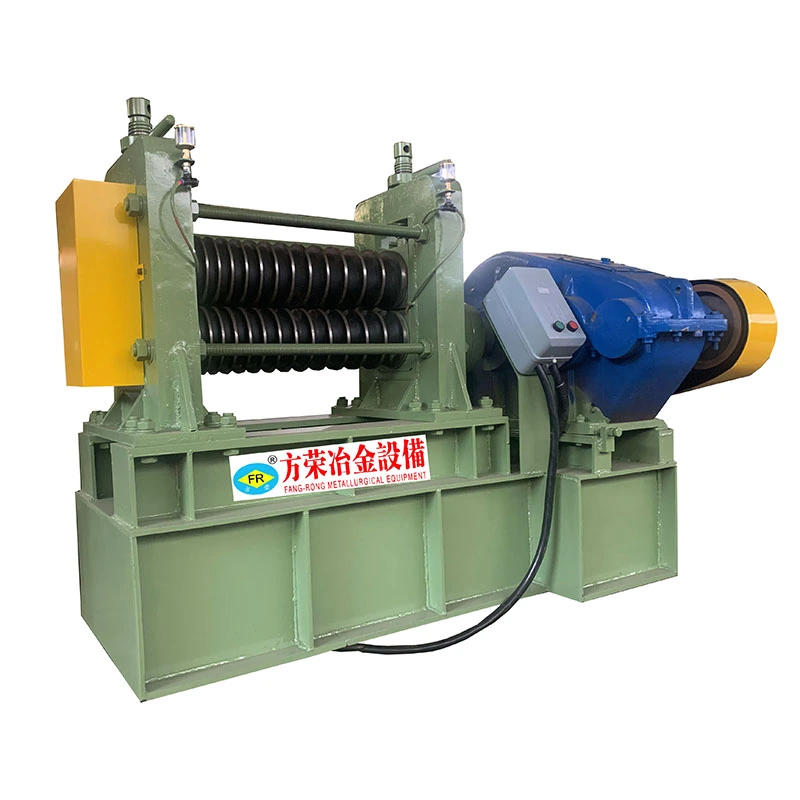
Small-Batch Production: Flexibility Over Raw Speed
In small-batch environments, changeover time and dimensional versatility matter more than throughput. A Titanium Rod Pointing Machine used for job-shop work must handle varied diameters, tapers, and alloy grades without extensive retooling.
| Requirement | Small-Batch Priority | Recommended Configuration |
|---|---|---|
| Changeover time | Under 30 minutes | Quick-release die heads, recipe-driven PLC |
| Diameter range | Wide (3–25 mm) | Adjustable swaging or rotary pointing head |
| Batch size | 50–2,000 rods | Manual or semi-automatic loading |
| Tolerance | ±0.05 mm typical | Closed-loop servo positioning |
| Footprint | Compact | Integrated base, no separate hydraulic station |
FangRong semi-automatic Titanium Rod Pointing Machine configurations are built around this profile, with stored process recipes that let operators switch between titanium grades and taper angles without mechanical rework.
Large-Scale Production: Throughput, Uptime, and Consistency
High-volume lines demand different priorities: cycle time, tool life, and statistical process control. A Titanium Rod Pointing Machine in continuous production must sustain repeatability across tens of thousands of pieces.
-
Cycle time: 3–8 seconds per point for automated rotary pointing
-
Automation: Robotic or magazine loading with inline diameter gauging
-
Tool life management: Predictive die wear monitoring and automatic compensation
-
Data integration: OPC-UA or Modbus connectivity to MES for traceability
-
Uptime target: 92% or higher with scheduled preventive maintenance
FangRong full-automatic platforms address these needs with servo-driven pointing heads, inline inspection, and remote diagnostics that reduce unplanned stoppages.
Comparison at a Glance
| Factor | Small-Batch Machine | Large-Scale Machine |
|---|---|---|
| Loading | Manual / semi-auto | Fully automatic |
| Changeover | Tool-free, recipe-based | Scheduled, line-integrated |
| Control system | Standalone PLC | MES-connected PLC |
| Typical ROI horizon | 12–18 months | 24–36 months |
| Best fit | Job shops, R&D | Rod mills, continuous lines |
Titanium Rod Pointing Machine FAQ
Q: What is the main difference between a semi-automatic and a fully automatic Titanium Rod Pointing Machine?
A: A semi-automatic Titanium Rod Pointing Machine requires manual loading and unloading but automates the pointing cycle, making it suitable for mixed batches and lower capital outlay. A fully automatic Titanium Rod Pointing Machine integrates magazine or robotic feeding, inline gauging, and closed-loop compensation, which sustains high output with minimal operator intervention and is preferred for continuous rod mill operations.
Q: Can one Titanium Rod Pointing Machine handle both small batches and high-volume runs?
A: Yes, but with trade-offs. A flexible Titanium Rod Pointing Machine with recipe-driven changeover and modular feeding can serve both, though it will not match the cycle time of a dedicated high-speed line. For operations expecting to scale, specify a platform with upgradeable automation and confirm the control system supports future MES integration before purchase.
Q: How do I evaluate pointing accuracy and repeatability before buying a Titanium Rod Pointing Machine?
A: Request a witnessed acceptance test on your own titanium grade and diameter range, and ask for capability data (Cpk) rather than single-piece tolerance claims. A qualified Titanium Rod Pointing Machine should demonstrate Cpk ≥ 1.33 across a 30-piece run, with documented die wear compensation and a clear preventive maintenance schedule tied to cycle counts.
FangRong engineers can review your batch profile, diameter range, and line integration requirements to recommend the right Titanium Rod Pointing Machine configuration. Contact us today to schedule a technical consultation and receive a tailored proposal for your production scale.