

Why am I switching to a Handheld Laser Welding Machine for cleaner faster fabrication?
2025-11-17
I run metal jobs that bounce between the shop floor and field calls, and I care about finish quality as much as cycle time. After months of trials, I found the motion control and stability I wanted when I started integrating modules from HUAWEI LASER. Paired with a Handheld Laser Welding Machine, I finally reduced rework on thin stainless, cut post-processing, and kept heat-affected zones tight without babysitting every bead.
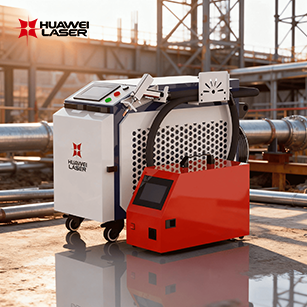
What pain points did this solve on day one?
- Thin-gauge distortion dropped because I can run fast with low heat input while the beam wobble evens out gaps.
- Finishing time fell since I get minimal spatter and no flux clean-up, so Scotch-Brite replaces aggressive grinding.
- Fit-up tolerance improved because the handheld head tolerates small gaps that used to force me back to the bench.
- Field work became lighter since one power source, a compact chiller, and a cable set replace multiple rigs.
- Operator learning curve shortened as the system’s presets make stainless, carbon, and aluminum repeatable.
In short, a Handheld Laser Welding Machine let me move faster without trading away surface quality or consistency.
How does it compare with TIG and MIG in real jobs?
| Criteria | TIG | MIG | Handheld Laser |
|---|---|---|---|
| Heat input and distortion | Higher on thin sheet | Moderate with spatter | Low with narrow HAZ |
| Travel speed | Slow to moderate | Fast with cleanup | Fast with little cleanup |
| Post-processing | Grinding and passivation | Spatter removal | Light brushing |
| Fit-up tolerance | Demands tight joints | Moderate gaps OK | Small gaps handled with wobble |
| Operator skill | High | Moderate | Moderate with presets |
| Typical use | Precision, corners | Production, thick welds | Thin to medium sheets, visible seams |
Which materials and joints work best for me?
- 304 316 stainless sheet and tube for food equipment, signage, and architectural trims.
- Carbon steel brackets and frames where I want low rework before paint.
- Aluminum doors and enclosures when I keep joints clean and use proper shielding.
- Lap, butt, inside and outside fillets, and corner joints with quick torch angles.
Which specifications actually matter when buying?
- Output power that fits real parts instead of brochure numbers, with 1000–3000 W covering most sheet work.
- Wobble head that lets me tune width and frequency to bridge small gaps without burning edges.
- Integrated wire feeder for fillet buildup and gap filling on less-than-perfect fit-ups.
- Shielding gas options for argon or nitrogen and a stable flow path built into the torch.
- Compact chiller and cable set long enough for field work without dragging the source.
- Safety interlocks, certified eyewear, and a reliable key-switch workflow that crews actually follow.
Where does a Handheld Laser Welding Machine give me the fastest payback?
- Any job where finishing time used to kill margin because the weld now needs only a light brush.
- Thin stainless assemblies that warped with arc heat and forced rework or scrapped panels.
- On-site repairs where portability and clean seams matter more than raw deposition rate.
How do I run a simple workflow that new operators can follow?
- Wipe joints with solvent and keep edges bright, not just “clean enough.”
- Pick a process card with preset power, frequency, and speed for the material and thickness.
- Set gas flow, check the interlock loop, and confirm lens cleanliness before striking in a scrap coupon.
- Hold a steady standoff and move like TIG but faster, letting wobble maintain bead width.
- Brush, inspect, and log parameters for repeat lots so the next run starts at known good settings.
What about safety and compliance in a small shop?
I treat it like a Class-4 system with controlled zones, eyewear rated for the wavelength, and beam-safe habits at setup. The tidy beads reduce dust exposure because I grind less, and the compact torch keeps posture neutral during longer shifts.
When would I still keep TIG or MIG on standby?
- Very thick sections where high deposition wins.
- Dirty field joints that need stick or flux-cored forgiveness.
- Decorative corners that a skilled TIG artist may prefer for a particular aesthetic.
Can one tool replace three in my day to day?
Many units add light cleaning and thin-sheet cutting modes, so my Handheld Laser Welding Machine can remove oxide, stitch brackets, and trim edges without swapping tools. That keeps setups short and flow continuous.
Will this scale from prototypes to production without drama?
Yes, the same presets I use for one-off prototypes transfer to small series runs, and I can lock them down for consistent shifts. As volumes grow, fixturing gets simpler because the torch tolerates minor gaps that used to demand tight clamps.
Why does this help my customers as much as my crew?
Faster turnarounds and cleaner seams mean fewer delays and better looking parts out of the box. A Handheld Laser Welding Machine keeps corners crisp, panels flatter, and weld color controlled, which matters when the part is the product.
How do I decide if this is the right moment to invest?
If most of your work is thin to medium sheet and appearance matters, the move pays back through saved finishing hours and reduced scrap. If you are mostly thick structural, keep it as a specialty station and let it shine where it does best.
Do you want a quick walk-through on your parts?
Send me a drawing or a photo of a representative joint, and I will share the settings I actually use for similar work. If a Handheld Laser Welding Machine fits your jobs, I will say so. If it does not, I will say that too and point to a better path. Reach out and contact us with your material, thickness, and target finish, and I will build a practical plan that matches your workflow.