

Why Are Wire Drawing Machines Important for Precious Metals?
2026-09-17
1. What Makes Precious Metals Different From Other Metals in Wire Drawing?
Precious metals—gold, silver, platinum, and palladium—have unique properties that make wire drawing more challenging than drawing copper, aluminum, or steel. The first difference is cost. The raw material cost per kilogram is orders of magnitude higher, so any waste is financially significant. The second difference is softness. Gold and silver are soft and ductile, which means they can be drawn to very fine diameters, but they also tend to adhere to the dies, causing galling and surface defects. The third difference is work hardening. Platinum and its alloys work harden rapidly, which means that the wire becomes brittle after a few passes and must be annealed before further reduction. The fourth difference is surface finish. Precious metal wire is often used in jewelry, electronics, and medical devices, where surface quality is critical. A Wire Drawing Machine must be designed to handle these specific challenges.
Material loss comparison: In a poorly controlled drawing process, precious metal loss can range from 2 to 5 percent of the input weight. In a well-controlled process using a high-quality Wire Drawing Machine with proper lubrication and die maintenance, the loss can be reduced to 0.5 to 1 percent. For a facility processing 100 kg of gold per month, this difference is worth $150,000 to $300,000 per year.
Shenzhen Alpha Tech Co., Ltd. has been manufacturing Wire Drawing Machine units for the precious metals industry for over 12 years. Our factory designs machines that are specifically optimized for the soft, ductile, and work-hardening characteristics of gold, silver, and platinum alloys.
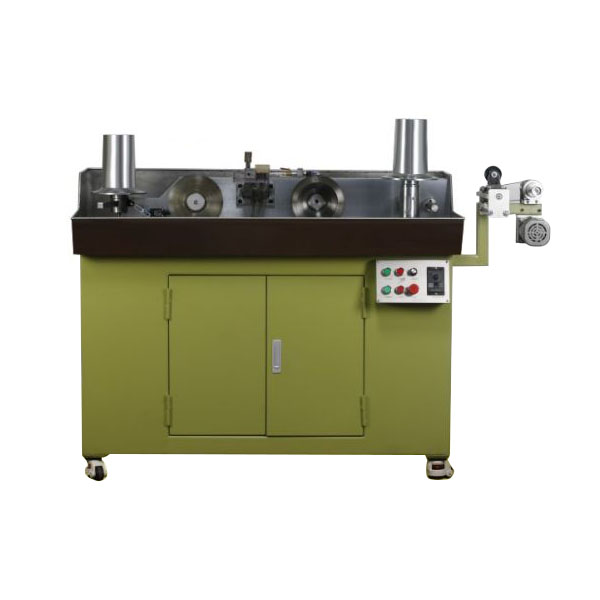
2. What Are the Key Components That Determine the Performance of a Wire Drawing Machine?
The performance of a Wire Drawing Machine is determined by five key components: the die holder, the capstan, the lubrication system, the tension control system, and the annealing system. The die holder must hold the die precisely in alignment with the wire path to prevent eccentricity and ovality. The capstan pulls the wire through the die and must have a surface that grips the wire without scratching it. The lubrication system must deliver a consistent film of lubricant to the die and the wire to reduce friction and heat. The tension control system must maintain constant tension between the capstan and the die to prevent wire breakage. The annealing system must heat the wire to the correct temperature to relieve work hardening without causing grain growth. The table below shows the specifications of our standard precious metal wire drawing machine models.
| Parameter | Model AT-WD200 | Model AT-WD400 | Model AT-WD600 |
| Input wire diameter (mm) | 0.5 – 2.0 | 0.8 – 3.0 | 1.0 – 5.0 |
| Output wire diameter (mm) | 0.05 – 0.5 | 0.08 – 0.8 | 0.10 – 1.2 |
| Max drawing speed (m/min) | 300 | 250 | 200 |
| Number of dies | 12 – 24 | 10 – 20 | 8 – 16 |
| Annealing power (kW) | 5 | 10 | 15 |
| Tension accuracy (%) | ±1.0 | ±1.0 | ±1.5 |
Our factory uses precision-ground capstans with a surface hardness of 62 HRC to resist wear and prevent wire slippage. The lubrication system is a closed-loop design that filters and recirculates the lubricant, which reduces consumption and ensures consistent quality. The tension control system uses a servo motor with closed-loop feedback to maintain the set tension regardless of speed changes.
3. How Does Die Selection and Maintenance Affect Material Yield?
The die is the most critical consumable in the wire drawing process. A worn or incorrectly sized die will cause the wire to break, create surface defects, or produce out-of-tolerance diameter. In precious metals processing, the die material is typically diamond or tungsten carbide. Diamond dies are used for fine wire (below 0.2 mm) because they maintain their size longer and produce a better surface finish. Tungsten carbide dies are used for coarser wire because they are more economical. The die angle and the bearing length must be matched to the material and the reduction ratio. The table below shows the recommended die specifications for different precious metals.
| Metal | Recommended die material | Die angle (degrees) | Bearing length (% of diameter) | Typical reduction per pass (%) |
| Gold (99.99%) | Diamond (fine) / Carbide (coarse) | 12 – 14 | 30 – 40 | 15 – 20 |
| Silver (99.9%) | Diamond (fine) / Carbide (coarse) | 10 – 12 | 25 – 35 | 18 – 22 |
| Platinum (99.95%) | Diamond | 14 – 16 | 35 – 45 | 12 – 16 |
| Palladium | Diamond | 14 – 16 | 35 – 45 | 12 – 16 |
| Gold alloys (14K, 18K) | Carbide (coarse) / Diamond (fine) | 12 – 15 | 30 – 40 | 15 – 20 |
In our factory, we recommend a die inspection schedule that includes measuring the die diameter every 50 hours of operation. If the diameter has increased by more than 0.5 percent, the die should be replaced or resized. We also recommend using a die lubricant that is specifically formulated for precious metals. Standard lubricants may contain sulfur or chlorine, which can cause staining or corrosion on gold and silver.
4. What Are the Key Parameters for Quality Control in Precious Metal Wire Drawing?
Quality control in precious metal wire drawing focuses on four parameters: diameter tolerance, surface finish, tensile strength, and elongation. The diameter tolerance is typically ±0.005 mm for fine wire and ±0.01 mm for coarser wire. The surface finish is measured as surface roughness (Ra), and it should be below 0.4 microns for jewelry and electronics applications. The tensile strength and elongation are determined by the annealing process and must be matched to the final application. The table below shows the typical quality control specifications for precious metal wire.
| Parameter | Specification for gold wire | Specification for silver wire | Specification for platinum wire |
| Diameter tolerance (mm) | ±0.005 | ±0.005 | ±0.005 |
| Surface roughness (Ra, μm) | < 0.3 | < 0.4 | < 0.3 |
| Tensile strength (MPa) | 200 – 350 | 180 – 300 | 250 – 400 |
| Elongation (%) | 15 – 25 | 15 – 30 | 10 – 20 |
| Ovality (%) | < 1.0 | < 1.0 | < 1.0 |
Shenzhen Alpha Tech Co., Ltd. provides a quality control package with every Wire Drawing Machine that includes a diameter gauge, a surface roughness tester, and a tensile tester. We also offer on-site training for the quality control team.
Frequently Asked Questions About Wire Drawing Machines for Precious Metals
Summary for Precious Metals Production Managers
The Wire Drawing Machine is a critical piece of equipment in any precious metals processing facility. It determines the material yield, the surface quality, and the mechanical properties of the finished wire. The selection of the right machine depends on the type of metal, the required output diameter, and the production volume. Shenzhen Alpha Tech Co., Ltd. has been manufacturing Wire Drawing Machine units for the precious metals industry for over 12 years and supplies to jewelry manufacturers, electronics companies, and medical device producers worldwide.
Shenzhen Alpha Tech Co., Ltd. manufactures multi-die and single-die Wire Drawing Machine units with closed-loop lubrication, servo tension control, and programmable annealing. We provide full technical specifications and on-site training for our customers.