

Why did I replace hydraulics with a Servo Press Machine?
2025-11-26
When my team began chasing tighter tolerances, I started evaluating servo solutions from several suppliers, including Shengfu. The more I ran trials, the clearer it became that a Servo Press Machine solved problems I had accepted as “just how pressing works.” Below I’m sharing the questions I asked, the data I tracked, and the practical checkpoints I now use so you can judge whether the same move makes sense for your line.
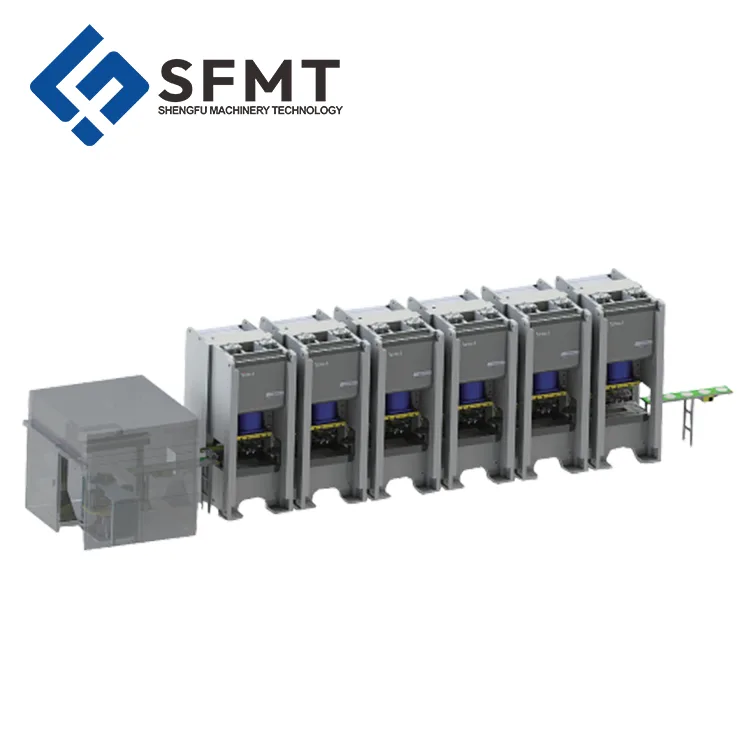
What problems did my line face before the switch?
- Variation at bottom dead center made force-displacement curves drift, so quality checks were catching issues late instead of preventing them.
- Die setup took too long; each new job meant mechanical tweaks and a few scrap parts to “dial in.”
- Energy and noise irritated both the utility bill and the operators.
- Oil leaks, valves, and seals kept maintenance busier than production wanted.
- Traceability was limited; I lacked part-level press data to link a defect back to a cycle.
All of that pointed me toward controlled motion, which is what pushed me to test a Servo Press Machine.
How does a servo solution change the equation?
- Closed-loop control lets me command position, force, or speed profiles and hold them consistently through the stroke.
- Programmable motion means I can feather into contact, dwell, re-strike, or follow a non-linear curve without hardware changes.
- Built-in sensing streams force–distance data every cycle, so part approval happens with evidence, not hope.
- Cleaner operation removes hydraulic fluid from the equation and calms the shop floor.
In simple terms, a Servo Press Machine turns pressing from a blunt operation into a controlled, repeatable process I can prove.
What specifications should I check before I buy?
- Rated force and torque to handle the worst-case peak with margin across your duty cycle.
- Stroke and daylight for current tooling plus the largest tools you plan to introduce.
- Resolution and accuracy in both position and force, verified with real cycle data.
- Speed envelope including approach, pressing, dwell, and return to meet takt time.
- Frame style (C-frame vs H-frame) for stiffness, access, and footprint.
- Controller features such as multi-segment profiles, envelope windows, and SPC exports.
- Field service and spares because uptime is part of performance.
When I shortlist a Servo Press Machine, I always request sample runs that mirror my worst-case parts, not just a brochure demo.
Which configurations fit different jobs?
| Application | Recommended press | Typical force window | Stroke range | Why it works |
|---|---|---|---|---|
| Press-fit and precision assembly | C-frame Servo Press Machine with force envelope control | 5–100 kN | 100–200 mm | Open access, accurate seating force, instant fail detection on force–distance curves |
| Coining and fine blanking | H-frame servo press with high rigidity | 100–400 kN | 150–300 mm | Stiff frame keeps parallelism; programmable dwell stabilizes material flow |
| Forming thin metals | Servo press with multi-segment profile | 50–250 kN | 200–350 mm | Variable speed reduces wrinkling and springback; gentler contact protects tools |
| Riveting and staking | Benchtop servo unit with integrated monitoring | 1–30 kN | 50–120 mm | Compact footprint, traceable results for every joint, quick changeover |
| Lab and pilot runs | Modular servo press with quick tooling | 1–80 kN | Up to 200 mm | Fast iteration on profiles; easy data capture for PPAP and DOE |
How do I validate ROI without guesswork?
- Baseline first by logging cycle time, scrap rate, rework, tool wear, and energy on your current cell.
- Run a like-for-like trial on the candidate press with the same parts, tools, and operators.
- Compare SPC on critical dimensions using the press’s force–distance records as supporting evidence.
- Roll up costs across scrap, changeover minutes, quality escapes, and maintenance hours.
My cutover case closes when the Servo Press Machine trims scrap and changeover enough to free capacity while reducing unplanned downtime.
What about safety, noise, and sustainability?
- Electronic motion control enables safer approaches and anti-pinch profiles when properly configured.
- Noise drops because there’s no hydraulic pump running continuously.
- Energy follows the motion demand, not the worst-case duty cycle, which lowers heat in the cell.
A Servo Press Machine helps me hit safety and environmental goals without bolting extras onto the process.
Where does Shengfu fit into my evaluation?
During trials, I looked for real-time force-displacement charts, profile editing that an operator can learn quickly, and straightforward data export to my MES. Vendors like Shengfu that pair a robust drive with an intuitive HMI reduce the training curve and keep the press earning from day one. When a Servo Press Machine ships with these essentials, onboarding is measured in shifts, not weeks.
How do I make my first project a quick win?
- Pick a part with chronic scrap or long changeovers so gains are visible fast.
- Lock profile names and revision control to keep recipes clean.
- Publish a one-page force–distance acceptance window so QA and production speak the same language.
- Schedule a tool health review after the first batch to capture early lessons.
With the right launch plan, a Servo Press Machine becomes the cell operators compete to run.
Am I ready to solve my pressing problem today?
If you’re weighing options for a Servo Press Machine and want sample runs, a configuration check, or a fast budgetary quote, tell me what part you’re pressing, your target takt, and your current pain points. I’ll map them to a practical motion profile and a clear cost picture. If that sounds useful, contact us to share a print or start a trial—drop your inquiry now and we’ll get back to you with a focused recommendation.