

Why Does a Flatbed Screen Printing Machine Make Such a Big Difference in Product Quality?
2026-04-07
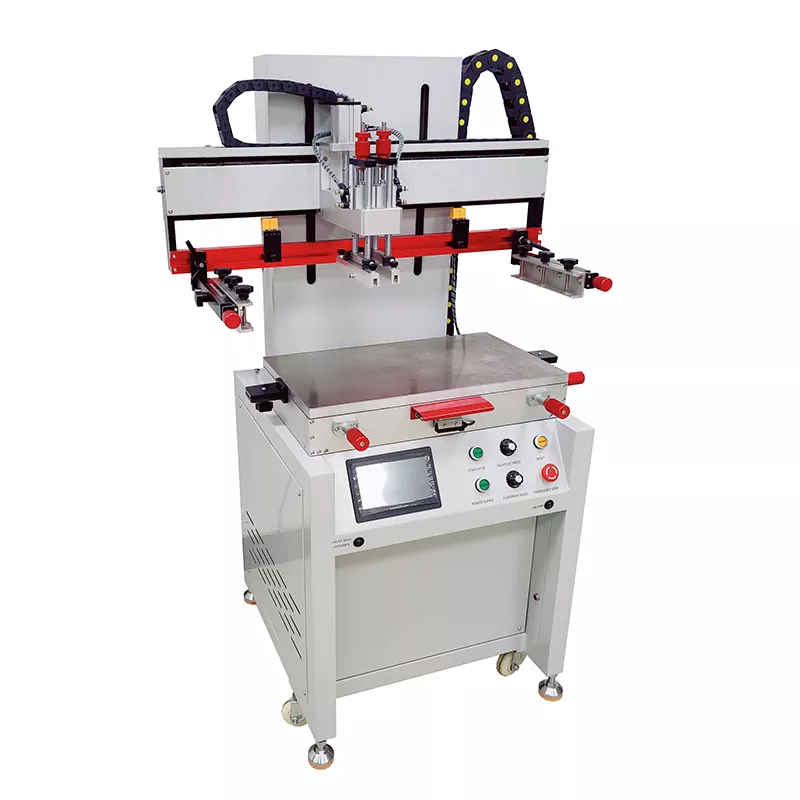
When I look at how manufacturers try to improve print consistency on flat materials, I often find that the real turning point is not just ink selection or operator skill. It is the machine platform itself. That is where Dongguan Hoystar Machinery Co., Ltd. gradually comes into the conversation. In many production environments, a reliable Flatbed Screen Printing Machine is what helps turn unstable printing results into repeatable, saleable output. If I need to print on plastic sheets, paper, film, acrylic, glass, or other flat substrates, I care most about registration accuracy, surface stability, labor efficiency, and ease of setup. A well-designed machine solves these problems in a practical way rather than in a theoretical one.
For buyers, the challenge is rarely about whether screen printing works. The challenge is whether the equipment can keep quality steady while reducing waste, downtime, and operator stress. That is why I see more buyers paying attention to machine structure, table stability, print area options, and workflow design before making a purchasing decision.
What Problems Do Buyers Usually Face Before Choosing the Right Printing Equipment?
Before I invest in a new machine, I usually think less about brochures and more about the daily problems happening on the shop floor. Most printing businesses are not struggling because they lack orders. They are struggling because the wrong machine creates avoidable production friction.
- Printed images shift because the material does not stay firmly in place
- Ink coverage becomes uneven on larger flat products
- Operators spend too much time on manual positioning
- Different product sizes require constant compromise
- Defect rates increase when production speed goes up
- Machines are difficult to adapt to varied materials and short-run jobs
These pain points matter because they affect cost in ways buyers feel immediately. A rejected print is not just a cosmetic issue. It means wasted substrate, wasted labor, wasted ink, and delayed delivery. That is why choosing a Flatbed Screen Printing Machine is often less about buying a machine and more about fixing a chain of recurring production problems.
How Can a Flatbed Screen Printing Machine Improve Stability on Flat Materials?
From my perspective, stability is the first reason this type of equipment stands out. Flat materials may look easy to print, but they are often the most unforgiving. A slight movement during printing can ruin edge sharpness, image alignment, and color uniformity. That is why the structure of the worktable matters so much.
When a machine is designed to hold flat items securely, the printing stroke becomes more controlled. That leads to cleaner graphics, more reliable repeatability, and better visual consistency from one piece to the next. I find this especially important when printing on products that require a neat, commercial appearance, such as packaging sheets, control panels, plastic plates, decorative panels, labels, acrylic pieces, or glass surfaces.
In real production, stable printing performance brings several direct benefits:
- Sharper pattern edges
- Better ink distribution across the print area
- Reduced substrate movement during operation
- Lower reject rate on repeated jobs
- More confidence when handling medium and large flat workpieces
That is why I do not treat a Flatbed Screen Printing Machine as a niche purchase. I see it as a practical production tool for companies that need dependable flat-surface decoration or marking.
Why Does the Worktable Design Matter So Much in Daily Production?
If I had to point to one feature that affects print consistency more than buyers initially expect, it would be the table design. A secure working surface changes everything. When the substrate stays fixed during printing, the operator does not have to fight the machine or compensate for movement by trial and error.
This matters even more when dealing with lightweight film, PVC sheets, paper products, thin plastic pieces, or smooth-surface materials that are prone to slipping. A stable table setup helps maintain more reliable contact between the screen and the printing surface, which improves the overall finish of the printed result.
| Production Concern | What Buyers Often Experience | What a Stable Table Setup Helps Achieve |
|---|---|---|
| Material movement | Misalignment and blurred edges | Better positioning during the print cycle |
| Large flat products | Uneven pressure or registration drift | More consistent image placement |
| Thin materials | Shifting, curling, or poor contact | Improved handling and cleaner output |
| Operator fatigue | Frequent manual adjustments | Smoother and more repeatable workflow |
| Batch consistency | Variation between pieces | Higher repeat accuracy across runs |
For me, this is not a small detail. It is one of the reasons why the right Flatbed Screen Printing Machine can help a business move from inconsistent output to dependable production standards.
Which Industries Benefit Most from This Type of Printing Solution?
I would never limit this equipment to a single niche. One of its biggest strengths is its versatility. If a business prints on flat items, there is a strong chance this machine type can fit the application.
Some of the most common use cases include:
- Packaging materials and printed sheet products
- PVC, PET, and other plastic films
- Acrylic signs and decorative panels
- Glass items and flat glass components
- Membrane switches and control panel graphics
- Labels, rulers, cards, and promotional materials
- Electronic parts and certain industrial flat components
What I like about this range of applications is that it gives buyers room to expand. A company may start with one product category and later use the same machine concept for additional flat-surface jobs. That flexibility can protect the investment and support future growth.
What Should I Compare Before Buying a Flatbed Screen Printing Machine?
If I am comparing suppliers, I do not focus only on the selling price. A lower upfront cost can easily become a higher operating cost if the machine lacks stability, usable size options, or practical support. I prefer to compare equipment based on how well it fits the actual workflow.
Here are the points I would review first:
- Maximum printing area and whether it matches current product dimensions
- Table stability and substrate holding method
- Suitability for the materials I print most often
- Ease of operation for semi-automatic production
- Consistency across repeated production runs
- Maintenance convenience and parts support
- Supplier responsiveness and after-sales communication
| Buying Factor | Why It Matters | What I Would Ask the Supplier |
|---|---|---|
| Print area size | It must fit present and future product ranges | Which machine sizes are available for different flat items? |
| Material compatibility | Not all jobs use the same substrate | Can it handle paper, film, acrylic, plastic sheet, and glass? |
| Production mode | Workflow speed affects labor cost | Is the machine suitable for semi-automatic batch work? |
| Print repeatability | Consistency determines finished product value | How does the machine reduce movement and maintain accuracy? |
| Supplier support | Good support reduces operational risk | What kind of technical help is available after purchase? |
When I ask these questions, I am really trying to understand whether the machine will make production easier next month, not just look convincing today.
Why Do Different Printing Sizes Matter More Than Many Buyers Expect?
One mistake I see buyers make is choosing a machine only for their current bestseller. That feels sensible in the short term, but it can become limiting very quickly. A business that prints small items today may need to handle larger panels, sheets, or promotional pieces later. If the equipment size is too restrictive, growth becomes awkward and costly.
I prefer machine options that allow buyers to choose a print area based on product dimensions and business plans. That flexibility is helpful for companies with diverse order types, seasonal custom work, or plans to serve more than one market segment.
When a supplier offers multiple size configurations, it often means the buyer can:
- Match machine capacity to product dimensions more accurately
- Avoid overpaying for unused capacity
- Reduce compromise on oversized or undersized jobs
- Build a clearer upgrade path for future expansion
That is another reason I see the right Flatbed Screen Printing Machine as a strategic purchase rather than a simple equipment replacement.
Can Semi Automatic Production Really Help Without Making Operation Complicated?
Yes, and this is where many buyers become more confident. Not every factory is ready for a fully automated line, and not every product mix justifies it. In many cases, semi-automatic production is the more sensible choice because it improves efficiency while keeping operation manageable.
I like semi-automatic solutions when I want better speed and consistency but still need flexibility for medium-volume orders, varied product shapes within the flat category, or frequent design changes. This balance is useful for businesses that do not want to sacrifice print quality just to push output faster.
From a practical standpoint, semi-automatic workflow can help by:
- Reducing repetitive manual effort
- Supporting more stable print cycles
- Helping operators maintain quality over longer runs
- Improving throughput without creating an overly rigid process
For many growing businesses, that middle ground is exactly what makes a Flatbed Screen Printing Machine worth serious consideration.
How Does Better Print Consistency Affect Profit More Than Buyers First Assume?
Print quality is easy to admire, but profit is what keeps a workshop alive. When I evaluate equipment, I always connect consistency to cost. A machine that produces steadier results does more than improve appearance. It reduces waste, lowers rework, supports delivery reliability, and helps preserve customer trust.
Here is how consistency affects the business side of printing:
- Fewer rejected products means better material utilization
- Lower reprint rates reduce labor and ink waste
- Predictable output supports stronger delivery commitments
- Cleaner printing helps improve customer confidence in product quality
- Stable production can make quoting and scheduling easier
In my experience, buyers who focus only on initial price often miss this point. A dependable machine can quietly improve margins through small daily advantages that add up across hundreds or thousands of pieces.
What Kind of Buyer Is Most Likely to Benefit from This Investment?
I think this solution makes the most sense for buyers who need repeatable flat-surface printing and want a balance between quality, flexibility, and practical operation. It is especially suitable for companies that are trying to upgrade from unstable manual methods or expand beyond very basic print jobs.
This type of machine is often a smart fit for:
- Manufacturers printing on flat industrial parts
- Packaging and promotional product suppliers
- Workshops handling acrylic, plastic, paper, or glass printing
- Businesses that need consistent short-run and medium-run output
- Buyers looking for a reliable supplier relationship rather than a one-time transaction
If I were advising a buyer, I would say this clearly: the best equipment choice is not the one with the most aggressive sales language. It is the one that solves your production problems with the least friction and the most consistency.
Why Is Now a Good Time to Upgrade My Printing Workflow?
Markets are more demanding than they used to be. Customers expect sharper graphics, cleaner finish quality, shorter lead times, and more dependable delivery. If my current process creates delays, frequent setup problems, or visible inconsistency, waiting rarely makes the situation easier.
Upgrading to a well-matched Flatbed Screen Printing Machine can help me build a more reliable operation without overcomplicating the production line. It can support cleaner prints, better material handling, and a workflow that feels more controlled from setup to output.
If you are reviewing equipment for flat-surface printing and want a solution that supports quality, flexibility, and practical production value, now is the right time to take the next step. Contact us to discuss your substrate, product size, print requirements, and output goals. A clearer machine choice starts with a real production conversation, so send your inquiry today and let us help you find the right printing solution for your business.