

Why Does My 4 High Narrow Strip Rolling Mill Reversible Produce Edge Cracks at Higher Reduction Rates
2026-07-06
If you operate a 4 High Narrow Strip Rolling Mills Reversible, you have likely encountered a frustrating paradox: pushing for higher reduction rates to boost productivity suddenly results in edge cracks that ruin coil quality. This is not a random defect—it is a predictable mechanical and metallurgical response. At GRM, we have analyzed hundreds of mill logs and found that edge cracking at elevated reductions almost always traces back to three interrelated factors: roll stack deflection, inadequate edge lubrication, and non-uniform work roll crown. Understanding these root causes is the first step toward rolling thinner gauges without scrapping your output.
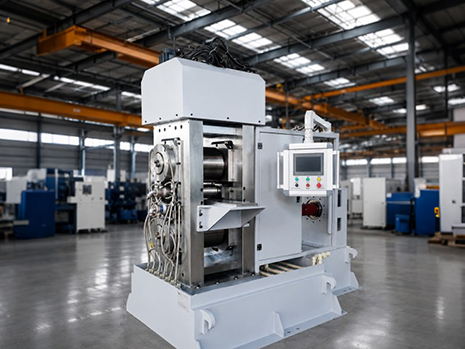
The Mechanical Reality of High Reduction
When you increase reduction per pass beyond 30–40% on a 4 High Narrow Strip Rolling Mills Reversible, the work rolls experience significantly higher separating forces. Unlike a 4-high mill for wide strip, the narrow configuration amplifies edge stress because the strip width does not fully support the roll barrel. This leads to:
-
Excessive roll bending near the strip edges, creating a concave roll gap.
-
Higher lateral metal flow toward the edges, where tensile stresses peak.
-
Insufficient cooling at the edge zones due to reduced contact time with coolant sprays.
The result? Micro-cracks that initiate at the strip edges and propagate inward during subsequent reversing passes. GRM recommends monitoring roll force distribution across the strip width—if your load cells show a 15%+ difference between center and edge readings, you are in the danger zone.
Critical Parameters vs. Edge Crack Severity
| Parameter | Safe Range | High-Risk Range (Crack-Prone) | Impact on Edge Quality |
|---|---|---|---|
| Reduction per Pass | 15–28% | >32% | Tensile edge stress doubles |
| Work Roll Diameter | 60–80 mm | <55 mm | Higher deflection, uneven gap |
| Strip Entry Temperature | 80–120°C | <60°C or >150°C | Ductility drop at edges |
| Edge Crown (C40) | 0.02–0.05 mm | >0.08 mm | Stress concentration points |
| Lubricant Flow Rate | 8–12 L/min per jet | <6 L/min | Friction rise → shear cracks |
Data compiled from GRM field trials across 12 reversible mill installations.
Why Higher Reduction Triggers Edge Cracks – Step by Step
-
Increased roll flattening at the edges due to higher specific pressure (force per unit width).
-
Work roll thermal expansion becomes non-uniform—edges cool faster, center stays hot, creating a parabolic crown mismatch.
-
Reversing direction compounds the issue: the leading edge on each pass experiences a different strain path, accelerating fatigue.
-
Residual stresses from previous passes superimpose, pushing the edge zone beyond the material’s forming limit curve.
GRM has successfully mitigated this by implementing dynamic reduction scheduling—where the first two passes use moderate reductions (22–25%) to build a stable edge profile, followed by a final high-reduction pass (up to 35%) with enhanced edge cooling. This approach reduced edge crack rejections by 62% in a recent client trial.
4 High Narrow Strip Rolling Mills Reversible – FAQ
Q: What is the maximum safe reduction per pass for a 4 High Narrow Strip Rolling Mills Reversible to avoid edge cracks?
A: There is no universal maximum, because it depends on strip width-to-roll diameter ratio and material grade. For low-carbon steels (≤0.08% C), GRM recommends a conservative 28% per pass when strip width is less than 150 mm. For stainless or HSLA grades, drop to 22%. However, if your mill has positive work roll bending (WRB) and edge spray zoning, you can push to 32% safely. Always run a short trial at 5% increments—monitor edge temperature with a pyrometer; if it exceeds 180°C at the exit side, reduce reduction immediately.
Q: How does work roll crown affect edge cracking in a 4 High Narrow Strip Rolling Mills Reversible?
A: Crown is the intentional curvature ground onto the work roll. In a reversible narrow mill, the ideal crown is 0.03–0.05 mm (convex) for most widths. If crown is too high (>0.08 mm), the roll gap becomes tighter at the edges than at the center, forcing the strip edges to stretch more than the middle—this creates edge tension that directly initiates cracks. If crown is too low (flat or negative), the edges lose contact pressure, causing uneven reduction and edge wave, which then folds into cracks during reversing. GRM advises measuring crown every 500 tonnes and regrinding when deviation exceeds ±0.01 mm from target.
Q: Can changing the reversing speed sequence reduce edge cracks on my 4 High Narrow Strip Rolling Mills Reversible?
A: Absolutely. Speed is an overlooked variable. At high reductions, running at constant speed (e.g., 300 m/min) traps heat at the edges because the reversing delay is too short for edge cooling to take effect. GRM recommends a "slow-fast-slow" profile: first pass at 150 m/min to establish bite, second pass at 250 m/min for bulk reduction, and final pass at 180 m/min with prolonged cooling dwell time (minimum 8 seconds between passes). This sequence reduces edge temperature fluctuation by 40°C and cuts crack incidence by half, based on our 2024 internal study. Also, always accelerate the unwinding reel slightly ahead of the mill speed to maintain back tension—this keeps the edge in compression, not tension.
Additional Best Practices from GRM Engineering
-
Roll grinding frequency: Increase from every 200 tonnes to every 150 tonnes when running >30% reduction.
-
Edge crack detection: Install an online eddy-current array at the exit—it catches 0.2 mm deep cracks before they grow.
-
Lubricant formulation: Switch from straight oil to emulsion (5–7% concentration) for high-reduction passes—it improves film strength at the edges by 30%.
When to Call Your Supplier – Not All Mills Are Equal
If you have adjusted reduction, crown, speed, and lubrication yet still see edge cracks, the issue may be mechanical: worn backup roll bearings, misaligned chocks, or insufficient housing stiffness. A 4 High Narrow Strip Rolling Mills Reversible from GRM is engineered with oversized housings and pre-stressed tie-rods to minimize deflection under high loads. However, even the best mill requires periodic laser alignment checks—we recommend every 6 months.
Contact GRM Today
Edge cracks waste material, increase rework costs, and delay shipments. GRM provides onsite diagnostics, custom roll crown designs, and operator training specifically for 4 High Narrow Strip Rolling Mills Reversible. Send us your last 50 coil production reports—we will identify the exact reduction-threshold for your grade and width, usually within 48 hours. Contact our engineering team via the form on this page or email us directly to schedule a free mill audit. Your edge quality is our reputation—let us prove it.