

Why Does My PVC Transparent Vacuum Forming Sheet Equipment Produce Uneven Wall Thickness on Clear Blisters
2026-07-29
For converters running high-clarity medical trays, food clamshells, and retail blister packs, few problems are as frustrating as inconsistent wall thickness. When your PVC transparent vacuum forming sheet equipment delivers blisters with thin corners, heavy bottom corners, or cloudy stress marks, scrap rates climb and customer complaints multiply. At Eaststar, we have diagnosed this exact issue across hundreds of production floors. The root cause is rarely a single factor—it is almost always a chain reaction involving material behavior, thermal profiling, and tooling dynamics.
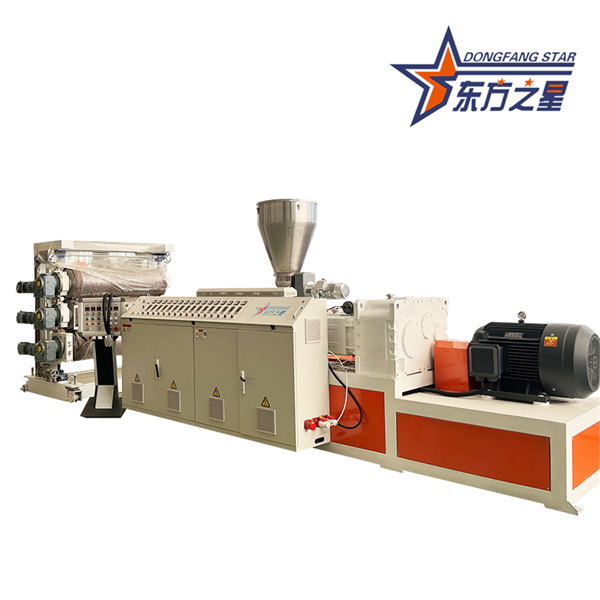
The Physics of Thickness Distribution in Transparent PVC
Unlike opaque materials, clear PVC amplifies every imperfection. Uneven thickness appears as optical distortion, making it visible to the naked eye even at 0.1 mm variations. The fundamental rule is simple: PVC stretches more where it is hotter and less where it is cooler. Your PVC transparent vacuum forming sheet equipment must deliver uniform surface temperature within ±2°C across the entire sheet. Any deviation above that threshold creates a measurable thickness gradient.
| Root Cause Category | Specific Issue | Typical Thickness Variation |
|---|---|---|
| Heating imbalance | IR lamp aging or reflector dirt | ±0.15 – 0.30 mm |
| Sheet sag control | Improper sag depth (>15 mm) | ±0.20 mm in center vs. edges |
| Vacuum speed | Slow draw rate on deep cavities | Corner thinning up to 40% |
| Tool temperature | Cold spots on aluminum mold | Localized thickening (stiff zones) |
| Material viscosity | Inconsistent K-value (58–62) | Batch-to-batch variation ±0.10 mm |
Step-by-Step Diagnostic Protocol
Begin with the heating zone. Most PVC transparent vacuum forming sheet equipment uses ceramic or quartz emitters arranged in zones. Measure the sheet temperature immediately before forming using an infrared line scanner—not a single-point gun. If the center reads 178°C while edges read 168°C, your blister will always exhibit a thin crown and thick flanges.
Next, examine the sag. Transparent PVC requires a controlled sag of 8–12 mm for sheets up to 2.0 mm thick. Excessive sag (>15 mm) pre-stretches the middle section, robbing material from areas that need it most during the vacuum stroke. Eaststar recommends installing a sag sensor with closed-loop feedback, which adjusts upper heater power in real time.
Third, review your vacuum valve timing. A sudden full vacuum (>0.8 bar in 0.5 seconds) freezes the sheet before it can flow into deep corners. Progressive vacuum—starting at 0.3 bar for 1.5 seconds, then ramping to full—reduces corner thinning by up to 35% in our field tests.
Tooling and Material Synergy
Your mold design directly dictates thickness outcomes. For clear blisters with draw ratios exceeding 2:1, aluminum tools with polished surfaces and uniform cooling channels are non-negotiable. Eaststar engineers often find that customers overlook the plug assist: a wooden or phenolic plug that is 15°C hotter than the mold surface helps push material into deep cavities before vacuum forms it.
Also, verify the PVC resin’s rheological data. A K-value of 60 is standard, but if your supplier sends material with K=58, the melt flow increases, causing unpredictable thinning. Always request the melt flow index (MFI) certificate for each batch fed into your PVC transparent vacuum forming sheet equipment.
Practical Corrections You Can Implement Today
-
Clean all reflectors and emitters – dust reduces IR transmission by up to 18%.
-
Reduce top heater power by 5–8% if the upper sheet surface is visibly glossier than the bottom.
-
Increase mold temperature from 45°C to 55°C for deep-draw blisters—this slows freeze-off and allows more even stretching.
-
Add a vacuum accumulator tank to ensure steady negative pressure without pressure spikes.
Frequently Asked Questions (FAQ)
Q: Can uneven wall thickness be fixed by adjusting only the forming pressure, without changing heating settings?
A: No. Forming pressure primarily affects how tightly the sheet conforms to the mold, not the initial thickness distribution. If the sheet has a thermal gradient before forming, higher pressure will actually exaggerate thinning in hot zones because those areas have lower resistance to stretching. The correct sequence is: stabilize heating first (within ±2°C), then optimize vacuum ramp rate, and only finally adjust absolute pressure. Eaststar advises a 3-step tuning order—thermal → timing → pressure—to avoid chasing false solutions.
Q: How often should I calibrate the temperature sensors on my PVC transparent vacuum forming sheet equipment to maintain consistent wall thickness?
A: Calibration intervals depend on your production volume. For continuous 24/7 operations, perform a two-point calibration (using a certified blackbody source at 150°C and 200°C) every 200 operating hours. For single-shift lines, monthly calibration suffices. However, Eaststar recommends a quick daily verification: place a thermocouple-equipped test sheet in the center and corner zones, run a dummy cycle, and compare readings. If any zone drifts beyond ±1.5°C from the setpoint, re-calibrate immediately. Neglecting sensor drift is one of the most common causes of gradual thickness degradation.
Q: Does the type of vacuum pump affect thickness uniformity on deep-cavity clear blisters?
A: Absolutely. Rotary vane pumps deliver high ultimate vacuum (≤0.5 mbar) but have slower pull-down times. Dry claw pumps offer faster evacuation but may create turbulence that cools the sheet locally. For deep cavities (>60 mm depth), Eaststar recommends a two-stage system: a roots blower for rapid initial draw (achieving 0.6 bar within 1.2 seconds) combined with a rotary vane pump for final hold pressure. This combination reduces corner thinning by 25% compared to single-pump setups. Also, ensure your vacuum line diameter is at least 1.5× the mold port size—restrictions create pressure drops that defeat the pump’s capability.
Long-Term Reliability Through Data Logging
The most professional approach is to treat thickness uniformity as a process capability index (Cpk). Record sheet temperature, sag depth, vacuum ramp time, and mold temperature for every 1,000 cycles. When you see Cpk dropping below 1.33, investigate before scrap exceeds 5%. Eaststar integrates these parameters into our control systems, allowing full traceability and automated alerts when any variable trends out of tolerance.
Final Checklist Before Your Next Run
-
□
Infrared scanner calibrated and positioned at 300 mm from sheet plane
-
□
All heater zones within ±2°C of setpoint (measured dynamically)
-
□
Sag depth confirmed between 8–12 mm using laser sensor
-
□
Plug assist temperature set 10–15°C above mold surface
-
□
Vacuum ramp: 0.3 bar (1.5 s) → 0.8 bar (hold 3 s)
-
□
Batch MFI recorded and matched to previous successful run
Contact Us for a Thickness Audit
Achieving consistent wall thickness on clear PVC blisters is not guesswork—it is measurable, controllable, and repeatable when your PVC transparent vacuum forming sheet equipment is properly configured. If you have tried all the steps above and still see variation, Eaststar offers a free on-site or remote diagnostic service. Our team will analyze your thermal profile, vacuum dynamics, and tooling geometry, then deliver a customized correction plan within 48 hours.
Contact Eaststar today – send your current cycle parameters and a photo of your rejected blisters to our technical support team. We will respond with a root-cause analysis and a guaranteed improvement roadmap. Your clarity is our priority.