

Why Is a Brushless Motor Production Line Transforming Global Manufacturing Efficiency?
2025-12-05
A Brushless Motor Production Line is an integrated automated system designed to streamline the entire lifecycle of brushless motor manufacturing, including stator winding, rotor assembly, magnet insertion, shaft pressing, balancing, testing, and final quality verification. With the rising demand for high-efficiency BLDC motors across EVs, drones, home appliances, medical equipment, and industrial automation, manufacturers increasingly depend on production lines that ensure speed, consistency, and micro-level precision.
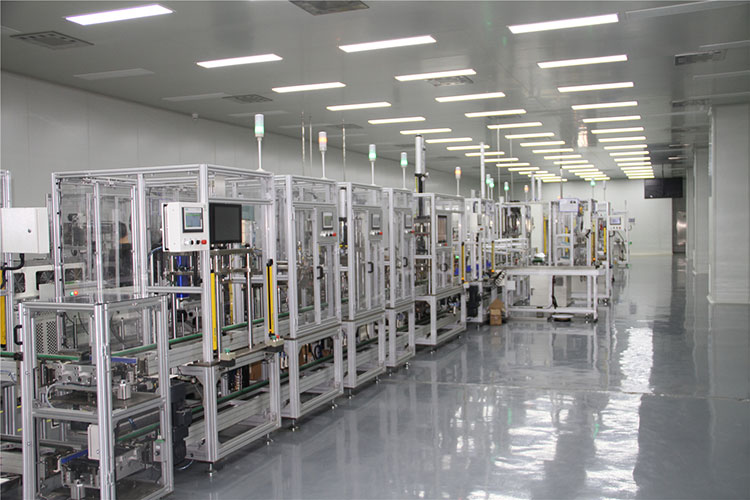
Technical Structure and Core Parameters: How Does an Integrated Production Line Improve Output Stability?
A modern Brushless Motor Production Line optimizes every manufacturing stage through synchronized automation—from copper coil winding to final motor performance verification. By minimizing human intervention and process variability, the system achieves stable production speeds, consistent winding patterns, and precise rotor–stator alignment.
Below is a structured overview of typical system parameters that define performance levels in high-end brushless motor production.
Brushless Motor Production Line – Key Technical Parameters
| Category | Parameter | Specification |
|---|---|---|
| Production Capacity | Output Efficiency | 600–1500 pcs/hour (depending on motor size) |
| Cycle Time | 2.0–4.5 seconds per motor | |
| Stator Manufacturing | Winding Accuracy | ±0.01 mm |
| Winding Speed | Up to 1200 rpm | |
| Slot Quantity Support | 6–48 slots | |
| Rotor Assembly | Magnet Positioning Deviation | < ±0.05 mm |
| Rotor Balancing | Automatic dynamic balance correction | |
| Automation Control | Operating System | PLC + touch screen HMI |
| Communication Protocol | EtherCAT / CANopen / Modbus | |
| Quality Testing | Full-Process Traceability | Yes |
| Electrical Parameters Test | Torque, RPM, vibration, noise, insulation resistance | |
| Safety & Efficiency | Energy Consumption | 15% lower than conventional semi-automatic lines |
| Fault Detection | Real-time diagnostics with automatic shutdown |
The combination of precision winding, consistent magnet alignment, and controlled torque-load testing ensures that each motor meets international quality standards for durability, stability, and long-term operation.
Why Does Automated Brushless Motor Production Deliver Higher ROI?
A well-engineered Brushless Motor Production Line provides manufacturers with substantial advantages beyond simple labor reduction. Its value lies in precision, traceability, and long-term scalability.
How Automation Enhances Efficiency
-
Minimizes production bottlenecks by synchronizing material flow and machine cycles
-
Reduces human error and ensures repeatable processes
-
Supports continuous 24/7 operation with minimal downtime
Why Precision Matters
-
Micro-level accuracy in winding and magnet placement enhances torque output
-
Consistent stator resistance and inductance guarantee stable electrical performance
-
Balanced rotors reduce vibration and noise across applications
What Features Improve Product Reliability
-
Intelligent monitoring alerts operators to abnormal performance trends
-
Data logging enables long-term quality analysis and predictive maintenance
-
Integration with MES supports production scheduling and yield optimization
Key Benefits in Real Manufacturing Environments
-
Higher product consistency due to controlled automatic processes
-
Reduced defect rates through full-stage automated quality inspection
-
Lower operational cost by limiting manual tasks and material waste
-
Fast scaling to meet high-demand markets such as EV and robotics
-
Better global competitiveness through compliance with ISO and CE standards
The system not only strengthens performance but also enables manufacturers to expand product lines without sacrificing quality or efficiency.
How Will Future Brushless Motor Production Lines Evolve?
With industries moving toward electrification and intelligent manufacturing, the next generation of Brushless Motor Production Lines will showcase deeper automation, smarter data interpretation, and greener production models.
How Smart Automation Will Advance Production
-
Predictive maintenance using sensor-based analytics
-
AI-driven torque and inductance calibration for improved motor performance
-
Autonomous robotic arms for magnet insertion and rotor handling
Why Digitalization Will Define Future Competitiveness
-
Cloud-based production monitoring for multi-factory standardization
-
Digital twins to simulate manufacturing processes before implementation
-
Richer production data enabling cost forecasting and defect prevention
What Sustainability Demands Will Change
-
Optimized energy consumption through intelligent motor load control
-
Recycling pathways for copper wire, N42/N52 magnets, and scrap steel
-
Reduced emissions and improved heat management during rotor assembly
How Customization Trends Affect Design
-
More flexible production lines adjustable for micro-motors, mid-sized motors, and large-torque industrial motors
-
Quick-change tooling systems to shorten line-reconfiguration time
-
Modular assembly cells for expanded production capacity
The long-term direction is clear: higher automation, smarter diagnostics, lower cost, and sustainable mass production.
What Do Manufacturers Ask Most About Brushless Motor Production Lines?
Q1: How can a Brushless Motor Production Line ensure consistent coil winding quality across different product models?
A1: The system uses programmable winding controls with adjustable slot parameters, tension regulation mechanisms, and sensor-based wire distribution monitoring. These ensure that coil tension, winding speed, and slot fill rate remain uniform across varying designs. Even when switching between 6-slot, 12-slot, or 24-slot stator configurations, the software automatically recalibrates winding paths to preserve accuracy within ±0.01 mm.
Q2: How is quality verified during the final stages of brushless motor production?
A2: Motors undergo multi-phase testing including torque measurement, RPM analysis, dynamic balancing, electrical resistance checks, inductance consistency evaluation, noise level inspection, and temperature-rise simulation. Each test result is stored within the production line’s traceability system, enabling long-term performance analysis and rapid identification of quality anomalies.
How Can a Professional Brushless Motor Production Line Strengthen Manufacturing Growth?
A Brushless Motor Production Line represents a highly integrated solution for achieving world-class production efficiency, superior winding precision, stable rotor balancing, and consistent electrical performance. Its automation brings immediate operational benefits—higher yield, lower labor costs, improved consistency, and the ability to meet the growing market demand for BLDC motors.
Manufacturers embracing automation gain the flexibility to produce multiple motor models, the scalability to expand with rising demand, and the confidence that each motor leaving the line meets strict global quality standards. The direction of the industry is clear: intelligent, data-driven, and sustainable production will define future competitiveness.
Shuairui® continues to provide advanced Brushless Motor Production Line solutions engineered for precision, reliability, and long-term value. For detailed configuration guidance, technical consultation, or customized system design—contact us to begin building a more efficient and future-ready manufacturing system.