

Why Is a High-Performance Grinding Mill Reshaping Industrial Efficiency?
2025-11-24
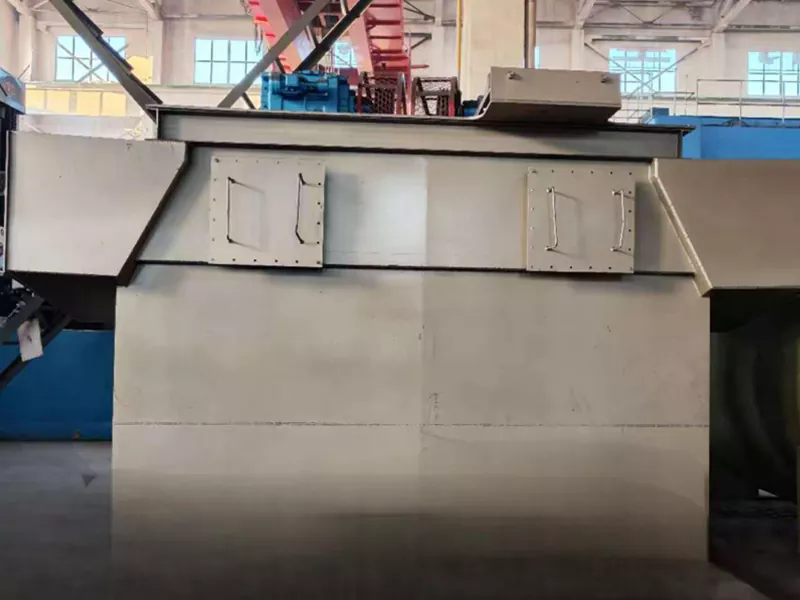
A grinding mill is a precision-engineered industrial machine designed to break, crush, pulverize, or refine solid materials into smaller particle sizes for downstream processing. It plays a foundational role in mining, cement, ceramics, metallurgy, chemical production, refractories, and various material-engineering applications. As industries shift toward higher throughput, tighter particle-size distribution, and lower energy consumption, the evolution of the grinding mill has become a crucial driver of overall plant performance.
What Are the Key Specifications That Determine Grinding Mill Performance?
The performance of a grinding mill is determined by a combination of structural design, material composition, drive system, grinding media characteristics, and operational configuration. Below is a technical parameter overview commonly required by industrial buyers.
Grinding Mill Technical Specifications
| Parameter | Description |
|---|---|
| Model Range | Small lab mills (5–20 kg/h) to large industrial mills (1–200 T/h) |
| Applicable Materials | Minerals, ores, cement clinker, quartz, feldspar, ceramics, chemical raw materials, slag, lime, pigments |
| Motor Power | 7.5 kW – 4500 kW depending on capacity |
| Feeding Size | Typically 5–30 mm depending on mill type |
| Finished Particle Size | Can reach 80–6000 mesh depending on configuration |
| Grinding Method | Dry grinding / wet grinding |
| Material of Grinding Parts | High-chrome alloy steel, zirconia, corundum, manganese steel, wear-resistant ceramics |
| Internal Lining Options | Alloy liner, rubber liner, ceramic liner |
| Core Mechanism | Ball grinding, roller grinding, centrifugal grinding, stirred grinding |
| Control System | PLC/automation optional, real-time monitoring of load & energy consumption |
| Environmental Features | Dust-collector integration, noise-control design, energy-saving motor system |
| Lifetime of Wear Parts | 2–10 times longer for ceramic or alloy linings depending on material hardness |
These parameters define not only the mill’s productivity but also its ability to reduce operational losses, extend equipment lifespan, and stabilize product quality.
Why Do Industrial Plants Rely on Grinding Mills for Process Optimization?
Why does particle-size control matter?
Particle size directly impacts extraction efficiency in mining, packing density in cement, reactivity in chemicals, and sintering quality in ceramics. A controlled and repeatable grinding process ensures consistent output, higher production yield, and reduced material waste.
Why does energy efficiency drive equipment upgrades?
Grinding is one of the most energy-intensive operations in industrial processing. A well-designed grinding mill reduces unnecessary friction, stabilizes the grinding path, and improves the utilization of kinetic energy. This can lower energy consumption by 10–40% compared to older mill structures.
Why does durable internal construction reduce total cost of ownership?
Wear-resistant materials significantly extend the service life of liners and grinding media. When mills incorporate high-chrome alloy or advanced ceramic components, downtime is minimized and maintenance cycles are extended.
Why are modern mills designed for automation?
Automation improves accuracy, real-time monitoring, and safety. For example, a PLC-integrated grinding mill can automatically adjust rotational speed, internal temperature, and material feed rate to achieve optimal grinding performance.
How Does a Grinding Mill Achieve High-Precision Particle Processing?
How does the mechanical structure influence grinding performance?
The grinding chamber, media interaction, rotational speed, and pressure distribution determine the impact, attrition, and shear forces acting on materials. A balanced dynamic design ensures efficient material flow, reduced vibration, and consistent fineness.
How do liners and grinding media enhance durability?
Advanced materials such as wear-resistant ceramics or high-chrome alloys offer:
-
Higher hardness and anti-abrasion capabilities
-
Resistance to thermal shock
-
Reduced contamination to processed materials
-
Extended operating cycles
These features ensure long-term stability even under high-load conditions.
How does controlled airflow or slurry flow improve final output?
Precise control of air or slurry circulation prevents over-grinding, stabilizes particle distribution, and enhances discharge efficiency. This is critical in cement and chemical applications where uniformity impacts downstream processing.
How does intelligent control optimize operations?
Integration with digital monitoring platforms allows continuous tracking of:
-
Motor load
-
Vibration frequency
-
Grinding pressure
-
Temperature and humidity
-
Feed and discharge rates
These parameters enable predictive maintenance and fine-tuned process management.
Deep-Dive: What Problems Does a High-Quality Grinding Mill Solve?
Material Hardness and Processing Difficulty
Ores and minerals with high Mohs hardness require specialized grinding systems with durable liners. High-performance mills ensure smooth processing without excessive wear.
Inconsistent Particle Size
Advanced mills maintain uniform grinding interaction, which minimizes variability in output fineness.
High Maintenance Costs
Durable liner materials and optimized grinding paths reduce downtime, extending the time between maintenance intervals.
Energy Waste
Modern designs use efficient motors and friction-reduction engineering to decrease energy use per ton of processed material.
Dust and Environmental Issues
Dust-collector interfaces and sealed system configurations minimize air pollution and protect workers’ health and safety.
What Future Trends Will Shape the Next Generation of Industrial Grinding Mills?
Trend 1: Full Digital Integration and Smart Monitoring
Future grinding mills will incorporate AI-driven diagnostics, automated load balancing, and sensor-based optimization for self-regulating performance.
Trend 2: Eco-Efficient Grinding Technology
Energy-saving designs, regenerative braking systems, and ultra-low-noise structures will become industry standards as sustainability requirements increase.
Trend 3: Expansion of Wear-Resistant Ceramic Technology
Ceramic liners and ceramic media will grow rapidly due to their superior anti-abrasion performance compared to metal alternatives.
Trend 4: Ultra-Fine Grinding Capabilities
As industries require finer materials—for electronics, new-energy materials, pigments, and advanced ceramics—mills capable of 2500–6000 mesh particle sizes will dominate the market.
Trend 5: Modular and Adaptive Designs
Modular assemblies for easier installation, relocation, and component replacement will reduce total investment costs and accelerate plant upgrades.
FAQs About Grinding Mills
Q1: How long do grinding mill liners typically last?
A ceramic or high-chrome alloy liner can last between 2–10 times longer than standard steel liners, depending on the hardness and abrasiveness of the processed material. In applications such as quartz, feldspar, or clinker grinding, ceramic linings significantly reduce maintenance frequency and prevent contamination of the final powder. Longer liner life also means fewer shutdowns and improved overall production efficiency.
Q2: What factors determine the final particle size produced by a grinding mill?
Several variables affect the eventual particle size: rotational speed, grinding media size, media density, liner design, grinding duration, and airflow or slurry flow control. The feeding size and material hardness also play major roles. Modern systems use digital monitoring to stabilize these factors, ensuring consistent particle-size distribution suitable for downstream processes such as flotation, sintering, or high-precision blending.
How EPIC Supports High-Performance Grinding Solutions
A grinding mill is far more than an industrial machine—it is a foundational system that determines production stability, processing efficiency, and long-term operational cost for countless industries. From minerals and cement to ceramics, pigments, and chemical engineering, the capability to achieve controlled particle size with high throughput is essential to global manufacturing performance.
As industrial demands evolve toward higher precision, lower energy consumption, and longer equipment lifespans, the role of innovative grinding technology becomes increasingly essential. High-efficiency grinding mills with wear-resistant materials, automated controls, and eco-oriented engineering are shaping the future of industrial processing.
EPIC offers advanced grinding mill solutions designed to support global buyers seeking durability, precision, safety, and long-term cost advantages. For professional consultation, technical customization, or product selection guidance, contact us to explore how EPIC can support your production goals with high-performance grinding technologies.