

Why Is a High-Performance Grinding Mill Transforming Industrial Processing Efficiency?
2025-12-02
A Grinding Mill serves as a core piece of equipment across mining, metallurgy, chemical manufacturing, construction materials, and energy industries. It is engineered to reduce raw materials—from minerals to biomass—into precise particle sizes that fit downstream production needs. As global manufacturing trends move toward higher efficiency, lower energy consumption, and more stable output, the role of a technologically advanced Grinding Mill becomes increasingly significant.
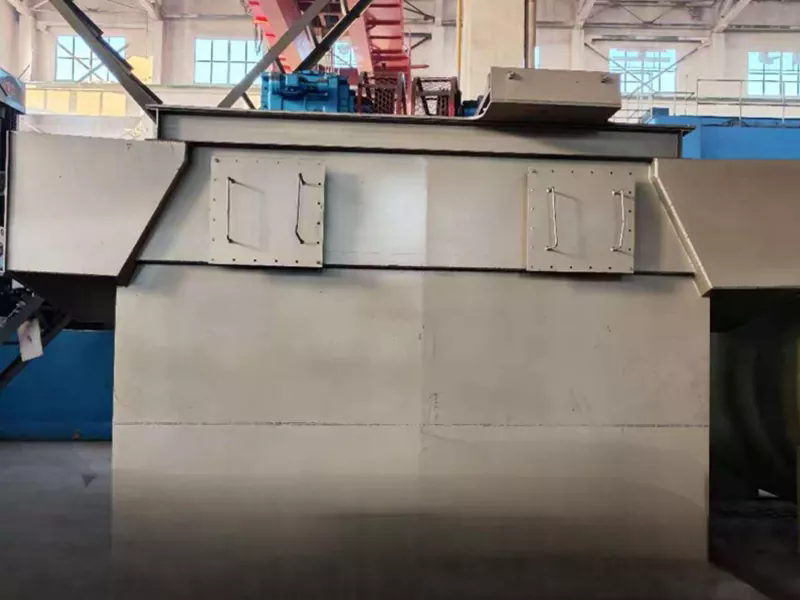
In addition, detailed product specifications, common user questions, and future market trends are included, alongside a natural introduction to the brand EPIC with a final invitation to contact the team for professional guidance.
Technical Structure & Specifications — How Do Engineering Parameters Determine Grinding Mill Performance?
A Grinding Mill’s efficiency is not defined by a single factor—rather, it is the combination of motor power, chamber structure, media selection, feeding system, discharge method, and classification accuracy. These determine grinding fineness, capacity, energy utilization, and long-term stability. The following table presents key parameters designed to support industrial buyers and engineers in comparison and decision-making.
Grinding Mill Technical Specifications
| Parameter | Specification Range | Description & Influence |
|---|---|---|
| Model Capacity | 0.5–50 T/H | Defines hourly throughput; larger models support high-volume industrial operations. |
| Motor Power | 22–315 kW | Higher power allows reduction of harder materials and improves grinding efficiency. |
| Feeding Size | ≤ 20–40 mm | Determines the raw material size that can enter the mill without pre-crushing. |
| Final Particle Size | 20–3000 mesh | Suitable for coarse, fine, and ultra-fine processing depending on industry needs. |
| Grinding Media | Steel balls / ceramic / alloy | Impacts wear resistance, contamination levels, and grinding precision. |
| Control System | PLC intelligent control | Supports automation, real-time data display, and operational safety. |
| Construction Materials | High-manganese / alloy steel | Enhances durability and reduces maintenance cycles. |
| Airflow & Classification | Integrated turbine classifier | Allows precision grading and stable particle distribution. |
| Structure Type | Vertical mill / ball mill / Raymond mill | Different structures offer varying energy savings and fineness levels. |
| Dust & Noise Control | Sealed negative-pressure design | Ensures cleaner production and compliance with industry regulations. |
These specifications reflect the ability of a Grinding Mill to provide consistent fineness control, stable throughput, and long equipment life—even under heavy-duty conditions. Modern engineering designs integrate energy-saving components, optimized airflow paths, and reinforced grinding modules to ensure maximum output reliability.
Functional Advantages — How Does a Grinding Mill Improve Efficiency and Reduce Operational Costs?
A Grinding Mill is engineered not simply to break down materials but to enhance the entire industrial production chain. Its advantages arise from mechanical design, material selection, internal airflow distribution, and automation technology. The following sections explore four major functional strengths that influence industrial competitiveness.
A. How Does Precision Grinding Improve Final Product Quality?
Material fineness directly affects chemical reactions, blending efficiency, thermal stability, and final product performance. A well-engineered Grinding Mill ensures:
-
Consistent particle distribution through turbine classifiers
-
Uniform fineness for improved end-product stability
-
Reduced impurities due to wear-resistant grinding media
-
High repeatability across production batches
When particle size is controlled at the micron or even sub-micron level, downstream processes—such as mixing, sintering, coating, or compounding—become more predictable and efficient.
B. How Does an Optimized Mechanical Structure Reduce Energy Consumption?
Energy efficiency is a major cost factor. Advanced Grinding Mills integrate:
-
High-efficiency motors that reduce wasted power
-
Optimized grinding chamber geometry improving crushing effect
-
High-density grinding media shortening processing time
-
Precision airflow circulation preventing energy loss
These factors can reduce energy consumption by 20–40% depending on material hardness and production requirements.
C. How Does Automation Enhance Stability and Safety?
Modern mills embed sensors and PLC systems that monitor:
-
Real-time load adjustment
-
Vibration and equipment condition
-
Temperature and motor current
-
Air pressure and particle size distribution
Automatic feedback control maintains consistent grinding pressure and speed, reducing human error and ensuring safety in large-scale production.
D. How Does Robust Construction Extend Equipment Lifespan?
Using high-manganese steel, wear-resistant liners, and heavy-duty bearings enhances the lifespan of grinding components. A well-built mill can operate continuously for long cycles, reducing downtime and overall maintenance cost.
Market Outlook & Future Trends — How Will Grinding Mill Technology Evolve in Global Industry?
The Grinding Mill industry is undergoing rapid transformation driven by sustainability, intelligence, and high-precision manufacturing. Understanding future trends helps companies align their equipment strategy with market evolution.
A. How Will AI-Driven Automation Change Industrial Grinding?
Although grinding systems have been automated for years, the next phase focuses on predictive intelligence:
-
Automated load adjustment based on material hardness
-
Real-time prediction of wear and tear
-
Cloud-based monitoring for multi-site factories
-
Autonomous shutdown systems for safety
As industries push to reduce labor intensity and human-dependent variability, intelligent Grinding Mills will become standard.
B. How Will Energy-Saving Designs Influence Equipment Investment?
Energy regulations and carbon-reduction initiatives are accelerating demand for:
-
Low-energy grinding chambers
-
High-efficiency motors
-
Smart airflow management
-
Regenerative braking systems in high-power mills
Companies adopting energy-saving mills can reduce operational costs while complying with regional sustainability mandates.
C. How Are Ultra-Fine Grinding Requirements Changing?
Industries such as:
-
lithium battery manufacturing
-
high-performance coatings
-
pharmaceutical additives
-
fine chemicals
-
new-material engineering
increasingly require 2000–3000 mesh ultra-fine powder. This trend pushes manufacturers toward mills with higher classification accuracy and stable micro-particle control.
D. How Will Material Diversity Expand the Use of Grinding Mills?
Future applications include:
-
biomass materials
-
recycling waste mineral powders
-
silicon-based energy materials
-
composite material production
-
environmental catalysts
A mill that can adapt to multiple materials strengthens long-term industrial capability and investment value.
5. Common Questions — How Do Users Select and Maintain a Grinding Mill?
Below are two detailed, industry-oriented FAQs frequently asked by plant engineers and purchasing managers.
Q1: How to choose the right Grinding Mill model for different production scales?
A1: Selection depends on output requirements, material hardness, moisture levels, desired fineness, and available factory space. For large mining operations, ball mills and vertical mills with higher power (over 150 kW) offer stable performance. For fine chemical and food industries requiring micron-level precision, Raymond mills and ultra-fine mills with integrated classifiers provide better consistency. Evaluating raw material characteristics and downstream processes ensures the most cost-effective model.
Q2: How to properly maintain a Grinding Mill to extend its service life?
A2: Regular maintenance includes checking bearing lubrication, inspecting grinding media wear, cleaning the air ducts, ensuring correct belt tension, and monitoring vibration levels. Using original spare parts, maintaining appropriate load levels, and performing monthly system diagnostics enhance long-term stability. Automated monitoring systems further reduce risk of mechanical failure and extend operational lifespan.
Conclusion — How Does a High-Efficiency Grinding Mill Support Industrial Growth?
A Grinding Mill is more than a mechanical device—it is a crucial component that determines overall production efficiency, energy consumption, material quality, and future scalability. By analyzing its engineering structure, functional advantages, and evolving technological trends, industries can make strategic decisions to ensure competitive performance in demanding markets.
For companies seeking highly reliable, customizable, and technologically advanced Grinding Mills, EPIC provides engineered solutions tailored to different industries and materials. From equipment selection to system integration, EPIC ensures stable output and long-term operational value.
For professional consultation or to discuss customized Grinding Mill requirements, contact us to receive detailed technical support and tailored industrial solutions.