

Why Is an Automatic Cap Threading Machine Better Than a Manual or Semi-Automatic Capper
2026-06-11
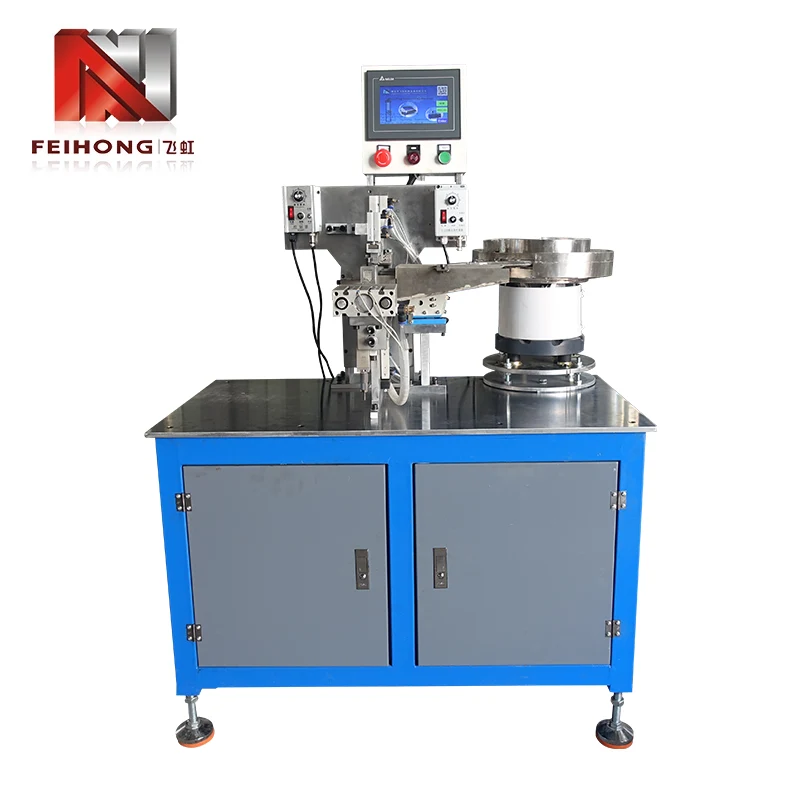
For production lines demanding speed, consistency, and reduced waste, the shift from manual or semi-automatic capping to an Automatic Cap Threading Machine is no longer a luxury—it is a necessity. Feihong has engineered such machines to outperform traditional methods in nearly every measurable metric. While manual cappers rely on operator strength and semi-automatic units require constant intervention, a fully Automatic Cap Threading Machine eliminates human error and maximizes throughput.
Key Differences at a Glance
| Feature | Manual Capper | Semi-Automatic Capper | Automatic Cap Threading Machine (Feihong) |
|---|---|---|---|
| Speed (caps/min) | 10–20 | 20–40 | 60–120+ |
| Torque Precision | Operator-dependent | Basic mechanical stop | Servo-controlled ±0.5% |
| Labor Requirement | 1 dedicated operator | 1 operator feeding | 0 operators (full auto) |
| Cross-Threading Risk | High (human fatigue) | Medium | Near zero (sensor-guided) |
| Integration with Line | Manual transfer | Limited | Fully synchronized |
Why Automation Wins
Manual capping introduces variability—fatigue, distraction, and inconsistent torque. Semi-automatic units reduce some effort but still require an operator to place each cap. A Feihong Automatic Cap Threading Machine uses a vibratory bowl, pick-and-place head, and real-time torque monitoring. The result: every cap is threaded identically, at high speed, 24/7. For industries like pharmaceuticals or food packaging, this consistency directly lowers rejection rates.
3 Frequently Asked Questions About Automatic Cap Threading Machine
Q1: Can an Automatic Cap Threading Machine handle different cap sizes without major changeovers?
A1: Yes. A modern Automatic Cap Threading Machine from Feihong is designed with adjustable guide rails, quick-change turrets, and programmable torque settings. Changeover between cap sizes (e.g., 28mm to 38mm) typically takes less than 10 minutes and requires no special tools. The machine stores up to 50 cap profiles, allowing operators to recall settings instantly. This flexibility makes it ideal for co-packers and multi-SKU production lines.
Q2: What happens if a cap is cross-threaded or missing? Does the machine stop?
A2: Advanced Automatic Cap Threading Machine models integrate smart sensors and rejection systems. When a cap is cross-threaded, the torque sensor detects deviation beyond the preset window. The machine either automatically re-threads the cap or, if correction fails, ejects the container into a reject bin without stopping the line. For missing caps, a photoelectric sensor triggers a no-cap alarm and diverts the container. Feihong machines log each fault for quality traceability.
Q3: How much floor space does a fully Automatic Cap Threading Machine require compared to a semi-automatic unit?
A3: A typical Feihong Automatic Cap Threading Machine occupies approximately 2.5 square meters (e.g., 1800mm L × 1400mm W). A semi-automatic capper with its conveyor and operator station often requires similar or more space because manual access zones are needed. Surprisingly, the fully automatic model uses vertical integration (vibratory bowl above the frame) to reduce its footprint. For most lines, replacing two semi-automatic stations with one automatic machine actually frees up floor space.
Measurable ROI of Switching
-
Labor savings: One Automatic Cap Threading Machine replaces 2–3 manual cappers per shift.
-
Waste reduction: Cross-threading drops from typical 3–5% (manual) to under 0.2%.
-
Output increase: 300–500% higher capping rate compared to semi-automatic.
Feihong supports every machine with remote diagnostics, torque validation certificates, and 24-hour spare parts delivery.
Ready to Upgrade Your Capping Line?
Contact Feihong today for a free line audit and ROI calculation. Our engineers will help you select the right Automatic Cap Threading Machine for your container types and production goals. Reach out via the website or request a live video demonstration. Contact us now to stop wasting caps and start scaling efficiently.