

Why Is My Hydraulic Filaments Cutting Machine Overheating During High-Speed Production Runs
2026-08-27
Overheating in a Hydraulic Filaments Cutting Machine is one of the most frequent and disruptive issues faced by production managers, especially when running continuous high-speed cycles. At WINGS, we have analyzed hundreds of service reports and found that thermal buildup not only reduces cutting accuracy but also accelerates wear on seals, pumps, and valves. Understanding the root causes—and acting on them—can save your line from unplanned downtime and costly part replacements.
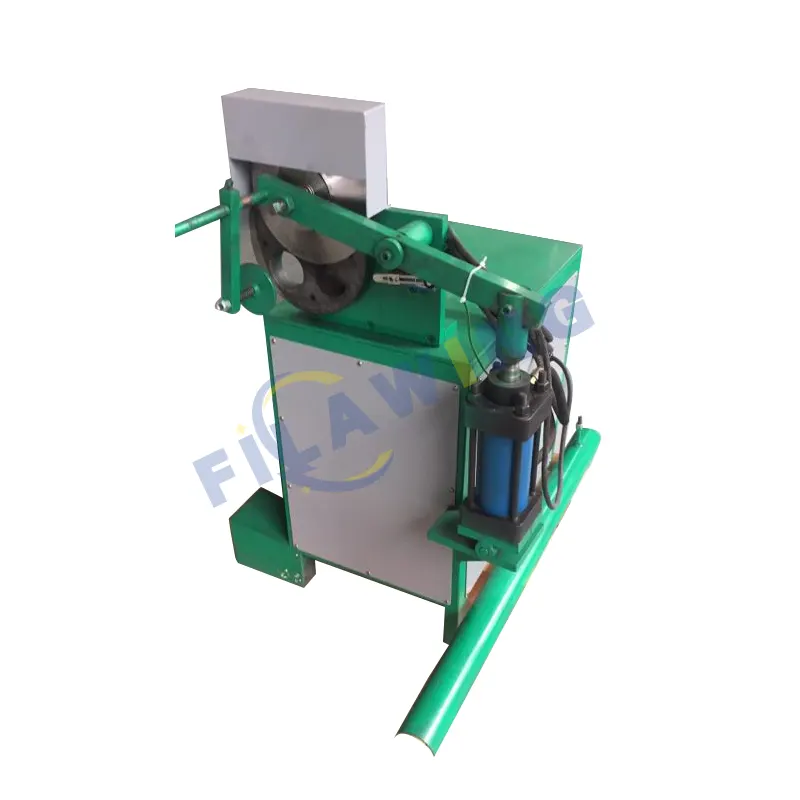
The Physics of Heat Generation in Hydraulic Systems
Every Hydraulic Filaments Cutting Machine converts mechanical power into fluid pressure, and inefficiencies inevitably release heat. Under normal operation, oil temperature should stay between 40°C and 55°C. When you push speeds beyond 80% of the machine’s rated capacity, three primary heat sources amplify:
| Heat Source | Contribution to Overheating | Typical Symptom |
|---|---|---|
| Pump slippage | 45–55% | Whining noise from the pump |
| Pressure relief valve bypass | 25–30% | Hot tank return line |
| Friction in cylinder seals | 15–20% | Erratic blade stroke speed |
| Ambient cooling inefficiency | 5–10% | Radiator fan running constantly |
At WINGS, we design our hydraulic blocks with optimized bypass channels, but even the best engineering cannot compensate for neglected maintenance or improper fluid selection.
6 Operational Reasons Your Machine Runs Too Hot
Below is a checklist derived from WINGS field service data across 200+ installations. If your Hydraulic Filaments Cutting Machine triggers a temperature alarm, verify these items in order:
-
Oil viscosity mismatch – Using ISO 46 instead of ISO 68 at ambient temperatures above 30°C reduces film strength and increases internal leakage by up to 18%.
-
Clogged return-line filter – A differential pressure > 5 bar forces the relief valve to open prematurely, recirculating hot oil without doing useful work.
-
Incorrect blade gap setting – Excessive mechanical resistance forces the hydraulic motor to stall, converting electrical energy directly into heat.
-
Low oil level – Below the minimum mark allows air entrainment, which reduces heat dissipation and causes cavitation erosion.
-
Faulty cooling fan or radiator fins – Dust accumulation reduces heat exchange efficiency by 40% within three months in dusty textile environments.
-
Prolonged idle-pressurization – Keeping the pump running against a closed center valve for more than 10 seconds per cycle generates unnecessary thermal load.
Diagnostic Table – Overheating vs. Production Speed
| Production Speed (cuts/min) | Normal Oil Temp (°C) | Overheat Threshold (°C) | Most Likely Cause |
|---|---|---|---|
| 30 – 40 | 42 – 48 | 58 | Dirty radiator |
| 41 – 55 | 45 – 52 | 60 | Clogged filter + low oil |
| 56 – 70 | 50 – 56 | 62 | Wrong viscosity grade |
| > 70 | 53 – 58 | 65 | Pump wear or relief valve stuck |
Data compiled from WINGS performance logs. If your machine crosses the threshold column, stop production and perform a thermal imaging scan on the pump housing.
Immediate Corrective Actions (Within 1 Hour)
-
Reduce feed rate by 15% temporarily – this lowers system pressure by 20–25 bar, dropping temperature by 3–5°C.
-
Clean the radiator core with compressed air from the inside out – never use water unless the fan is disconnected.
-
Check the oil cooler bypass valve – at WINGS, we install a thermal bypass that should open at 50°C; if it stays closed, replace it.
-
Switch to a higher-grade hydraulic fluid (e.g., ISO 68 instead of 46) for summer production shifts.
For persistent overheating above 62°C, schedule a pump efficiency test. A pump with volumetric efficiency below 88% should be rebuilt or replaced—WINGS offers exchange kits with pre-calibrated clearances.
FAQ – Common Questions About Hydraulic Filaments Cutting Machine Overheating
Q: How often should I change the hydraulic oil in my Hydraulic Filaments Cutting Machine to prevent overheating?
A: Under high-speed production (over 50 cuts/min), change the oil every 1,500 operating hours or every 6 months, whichever comes first. However, oil condition matters more than age. Send a 100 ml sample to a lab for ISO particle count (target ≤ 18/16/13) and water content (< 0.05%). At WINGS, we recommend using a offline kidney-loop filtration system between changes to extend fluid life by 40%. If your oil turns dark brown or smells burnt, replace it immediately—even if hours are lower—because oxidized oil loses viscosity index and doubles heat generation.
Q: Can an undersized cooling fan cause my Hydraulic Filaments Cutting Machine to overheat only at peak afternoon temperatures?
A: Yes, absolutely. Ambient temperature has a direct linear relationship with oil temperature. If your workshop hits 38°C in the afternoon, a fan rated for 25°C ambient will lose approximately 35% of its heat rejection capacity. The solution is not a bigger fan alone—WINGS engineers calculate the required cooling capacity based on your maximum continuous power (kW) and ambient delta-T. For tropical climates, we specify a 20% oversized cooler with a variable-speed fan that ramps up progressively. If retrofitting, measure the actual airflow (m³/min) at the radiator face; it should be at least 2.5 m³/min per kW of hydraulic power.
Q: Why does my Hydraulic Filaments Cutting Machine cool down normally during idle but overheat again within 5 minutes of restarting high-speed cutting?
A: This classic symptom points to a regenerative heat loop – the oil cooler is working, but the system is generating heat faster than it can reject it. The root cause is almost always internal leakage in the directional control valve spool. When the spool wears, high-pressure oil bleeds into the tank return line even during the cutting stroke, adding 4–6 kW of continuous heat. At WINGS, we diagnose this using a flow meter on the return line; if return flow exceeds 15% of pump flow while the cylinder is stationary, replace the valve spool or the entire solenoid-operated directional valve. Also check your accumulator pre-charge pressure – a low nitrogen charge causes the pump to cycle more frequently, adding unnecessary heat spikes.
Long-Term Reliability Strategy
Investing in a thermal management protocol pays back within 3 months of avoided downtime. WINGS recommends:
-
Installing a digital oil temperature transmitter with a PLC alarm set at 58°C.
-
Logging daily peak temperatures and comparing them against production speed records.
-
Replacing all return-line filters every 500 hours, not 1,000, if you process abrasive filaments (glass or carbon fiber).
Remember, every 10°C above 55°C halves the seal life in your Hydraulic Filaments Cutting Machine – so overheating is not just a performance issue; it is a financial liability.
Ready to Stop Overheating for Good?
Your production line deserves more than temporary fixes. WINGS provides on-site thermal audits, custom cooler upgrades, and operator training tailored to your specific filament type and cycle rate. Whether you need a replacement pump, a retrofitted heat exchanger, or a full diagnostic kit, our technical team responds within 24 hours.
Contact us today with your machine model, operating hours, and average oil temperature – we will send you a personalized cooling efficiency report and a fixed-price upgrade proposal. Do not let heat cut into your profits. Reach out to WINGS now and keep your Hydraulic Filaments Cutting Machine running cool, fast, and reliably – shift after shift.