

Why would I bet on a Tube Metal Laser Cutting Machine for my next project?
2025-11-25
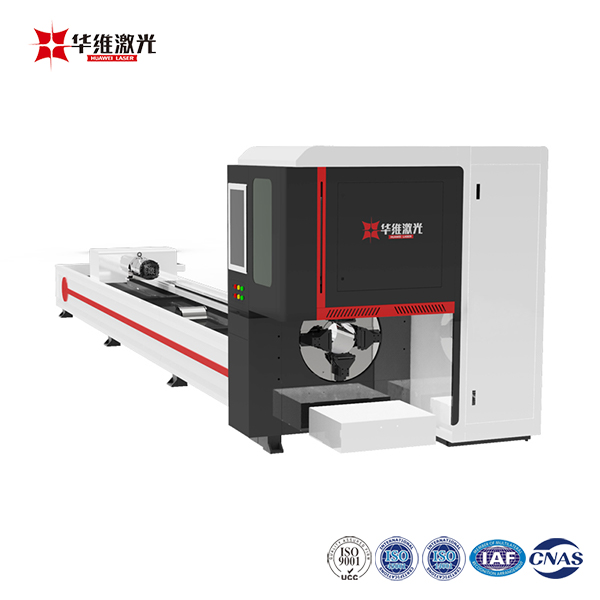
I have spent enough late nights chasing tolerances to know that tooling choices decide whether a job is smooth or stressful. Over time I tried sawing, drilling jigs, and even rotary plasma for odd shapes, but the machines that kept my schedule honest came from makers who sweat the small details. Among them, Huawei Laser stood out in daily use for stability and software polish rather than flashy claims. When I moved to a Tube Metal Laser Cutting Machine, scrap fell, fixturing got simpler, and quoting became predictable in a way my customers noticed.
What real problems does a tube laser solve on a busy shop floor?
- Mixed shapes without drama: round, square, rectangle, angle, channel, and custom profiles cut in one flow.
- No more clamp gymnastics: auto-centering chucks and smart supports reduce manual re-clamping.
- Repeatable fit-ups: clean bevels and slot-tab features make weld prep consistent for different teams.
- Traceable results: part IDs, lot marks, and datum pierces added in the same cycle.
- Quieter quoting: cycle time estimates align closely with reality, so margins stop evaporating.
How do I know a Tube Metal Laser Cutting Machine actually fits my parts?
I map three things before any purchase: the longest stock I need to load, the heaviest section the chuck must carry, and the tightest inside corner I must keep. If a sample part demands a 2 mm web with a sharp transition, I confirm nozzle length, kerf width, and minimum lead-in space on the exact material and finish I will sell, not a showroom coupon.
Which specs matter more than brochures suggest?
- Effective rather than peak power: steady cutting at common gauges beats a headline number you rarely use.
- Acceleration on the rotary and axes: fast repositioning saves minutes over hundreds of micro-features.
- Chuck design: long-tube stability and minimal tail whip matter at speed.
- Edge quality controls: piercing strategies, gas mixing, and real-time power modulation protect small features.
- CAM workflow: nesting, auto-sleeving, and collision checks reduce setup fatigue more than raw wattage.
Why does software often decide the ROI instead of the laser source?
A platform that imports solid models, recognizes tube features, auto-generates notches, and suggests supports turns hours into minutes. I look for uncluttered nesting, one-click bevel paths, and a simulator that flags chuck collisions before I find them on the floor. That is where a Tube Metal Laser Cutting Machine earns its keep day after day.
How did my cost per part change after switching?
I track only what I can control: gas, electricity, nozzle wear, lens life, and labor minutes. The difference is not just faster cutting; it is the removal of downstream grinding and re-work. The table below mirrors what I see when moving repetitive frames and brackets onto a tube laser.
| Pain point | Traditional approach | With tube laser | Impact I observe |
| Compound notches and copes | Band saw plus manual grinding | Single-pass notches with bevel | Prep time cut by 50–70% |
| Weld fit-up variance | Hand-marked tabs and slots | CAM-driven slot-tab features | Clamp time down, gaps consistent |
| Part identification | Stickers or marker pens | Etched IDs during cutting | Mix-ups reduced on multi-SKU runs |
| Short remnant waste | Offcuts hard to reuse | Auto-sleeving and remnant nesting | Material utilization up noticeably |
What materials and finishes work well without babysitting?
Mild steel with nitrogen or oxygen, stainless with nitrogen, and aluminum with nitrogen are straightforward when the machine holds focus and gas stability. For powder-coat finishes, clean edges reduce pre-treatment steps. If I need brushed or mill finish to remain visible, I check spatter control and protective film handling on the actual job mix.
How do I keep uptime high without a dedicated optics technician?
- Routine I can follow: nozzle checks at shift start, lens inspection by hours rather than guesswork.
- Smart alerts: prompts for gas pressure anomalies and focus drift before edges turn dull.
- Quick-change consumables: standard nozzles and lenses keep inventory lean.
- Operator training that sticks: short, scenario-based lessons inside the HMI beat thick binders.
Where does a Tube Metal Laser Cutting Machine reshape my quoting strategy?
Customers accepted tighter windows once they saw consistent results. The biggest effect came from confident repeatability on kits, frames, and store-fixture runs where re-orders are common. A dependable Tube Metal Laser Cutting Machine turned those jobs into low-stress revenue rather than roulette.
What sample tests do I request before I sign anything?
- My ugliest part first: thin webs, tight corners, and mixed hole sizes on the same tube.
- Long stock stability: verify tail support and chuck transition at speed on 6 m or longer lengths.
- CAM honesty: give the vendor my STEP files and watch the nesting and simulation live.
- Edge consistency: measure burr and taper across multiple sides and heat-sinks.
How do I compare machines when all brochures look similar?
I bring a stopwatch to watch setup steps from raw tube to first good part. I note how many touches an operator needs, how clear the interface is, and how the system handles recovery from a pierce failure. Two models with the same wattage can behave very differently in those moments. The one that keeps moving is the one I choose for daily work with a Tube Metal Laser Cutting Machine.
Why did I lean toward the ecosystem around the hardware?
Hardware matters, but support, updates, and library sharing matter more over the life of the machine. With Huawei Laser in my mix, firmware and CAM updates arrived on a cadence that quietly improved cut quality and workflow. That rhythm is hard to price on day one, yet it shows up in fewer surprises and steadier throughput from my Tube Metal Laser Cutting Machine.
What simple checklist keeps new operators confident?
- Load verification with length, wall, and profile check before clamping.
- Nozzle alignment test cut on scrap at the start of each shift.
- Gas and focus recipe pinned to each material and thickness.
- Sim preview and collision watch turned on for every new program.
- First-article sign-off with edge and dimension notes saved to the job.
How do I get started without pausing ongoing orders?
I usually pilot one product family first, then expand. I time setup, log consumables, and gather operator feedback weekly. Within a month the story becomes clear: fewer bottlenecks at welding, fewer quality hiccups, and a steadier schedule anchored by a Tube Metal Laser Cutting Machine.
Would you like help mapping the right path before you invest?
If you want a realistic sample study, a side-by-side cost view, or a short demo plan tailored to your parts, reach out now. Tell me your top three profiles, annual volumes, and tolerance expectations, and I will share a straight answer on where a Tube Metal Laser Cutting Machine fits in your flow. For a quote, technical guidance, or a live run on your models, please contact us today. I read every inquiry and respond with specific steps you can act on this week.